

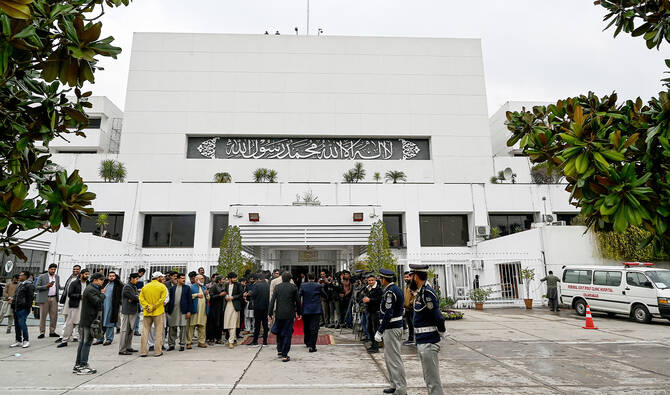

ISLAMABAD: A senior Pakistani minister said on Wednesday the 27th constitutional amendment was expected to be tabled in parliament next week, confirming its broad contours, including changes to an article dealing with the armed forces, while saying the government was trying to build a consensus.
The proposed amendment seeks to introduce sweeping structural changes to Pakistan’s governance and constitutional framework.
According to details shared by top politicians, including Pakistan People’s Party (PPP) Chairman Bilawal Bhutto-Zardari, it aims to establish a new Constitutional Court, restore the powers of executive magistrates, alter judicial transfer procedures, revise the military command clause (Article 243), and potentially adjust provincial revenue shares under the National Finance Commission (NFC) Award — a key mechanism governing fiscal relations between the federation and provinces.
“This entire process will be carried out through mutual consultation,” Defense Minister Khawaja Asif told Geo News in an interview, adding that the government expected clarity on the consensus within the next two or three days, with the 27th Amendment likely to be presented to parliament next week.
“Consultations on amending Article 243 are ongoing […] defense requirements have changed,” he said, referring to the constitutional provision that states the federal government shall have command and control of the armed forces, with the supreme command vested in the president.
Asif said the Pakistan Muslim League-Nawaz (PML-N) government, now attempting to amend the Constitution for the second time in its tenure, was holding discussions with all major political parties on the proposed reform package.
He declined to comment further on the possible wording of the amendment until the draft was finalized.
The minister also confirmed the amendment proposals included creating a separate Constitutional Court with representation from all provinces to handle constitutional cases, which he noted make up a small but complex share of the judiciary’s workload.
He said the government was also considering changes to the procedure for judges’ transfers and the mechanism for resolving deadlocks over the appointment of the Chief Election Commissioner.
Asif additionally warned of constitutional complications arising from delays in Senate elections in Khyber Pakhtunkhwa, saying discussions were underway to ensure senators complete their terms in line with constitutional provisions.


