

NCVC plants 100 million seedlings in Al-Jouf to increase vegetation cover

1 / 2
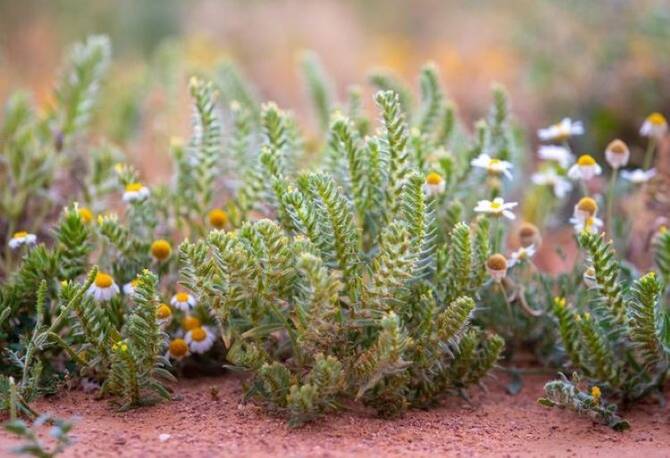
Among the species planted in Al-Jouf were saltbushes, mugworts, Acacia etbaica and Calligonum comosum, distinguished by their ability to survive in harsh and dry climates. (SPA)
2 / 2
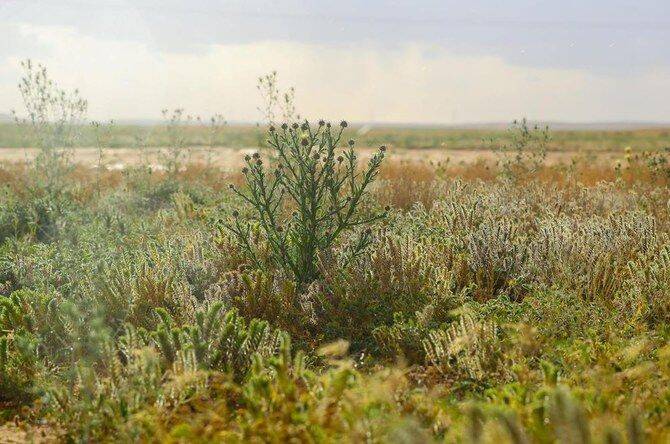
The Kingdom’s northern region has seen considerable efforts lately to improve vegetation cover as part of the country’s sustainable development objectives. (SPA)
Short Url
Updated 04 November 2025
Follow

NCVC plants 100 million seedlings in Al-Jouf to increase vegetation cover

  • Plants play a role in stabilizing soil, combating desertification, absorbing carbon dioxide and providing shelter to bird species
  • National Greening Season 2025 initiative emphasizes the significance of planting native plants, raises awareness of environmentally incorrect practices and encourages volunteer work

RIYADH: Intending to expand vegetation cover across Saudi Arabia, the National Center for Vegetation Development and Combating Desertification has recently planted 100 million seedlings in Al-Jouf province.

Among the species planted were saltbushes, mugworts, Acacia etbaica and Calligonum comosum, distinguished by their ability to survive in harsh and dry climates.

The plants play a role in stabilizing soil, combating desertification, absorbing carbon dioxide and providing shelter to bird species.

The Kingdom’s northern region has seen considerable efforts lately to improve vegetation cover as part of the country’s sustainable development objectives.

These include increasing the amount of greenery, part of the ongoing efforts for the national Saudi Green Initiative.

The center is also focusing on preserving the environment and developing the nation’s natural treasures, and recently announced its National Greening Season 2025.

The initiative emphasizes the significance of planting native plants, raises awareness of environmentally incorrect practices and encourages volunteer work.

Furthermore, NCVC has completed its afforestation efforts in various locations in Al-Jouf, where they planted 19 species at Al-Tamriyat Field Experiment and Wild Seed Production Station, as well as the Basita Pasture Seed Production Station, to produce seeds for the rehabilitation of degraded lands in Saudi Arabia.

The planting season by NCVC has also continued to reach other nature reserves and regions in the nation, such as the King Salman bin Abdulaziz Royal Reserve Development Authority’s participation in planting 2,000 seedlings through a group of volunteers from Al-Asafiyah Center in the Tabuk region.


KSrelief expands aid efforts across 5 nations

Updated 11 November 2025
Follow

KSrelief expands aid efforts across 5 nations

  • Under the agreement, three artesian wells, each about 400 meters deep, will be drilled and equipped with submersible pumps, accessories, and integrated solar power systems

RIYADH: The Saudi aid agency KSrelief continues to make an impact by providing critical assistance to some of the world’s most vulnerable communities.

KSrelief recently signed a cooperation agreement in Riyadh with a civil society organization to improve sustainable access to clean water for residents of Taiz, Yemen.

Under the agreement, three artesian wells, each about 400 meters deep, will be drilled and equipped with submersible pumps, accessories, and integrated solar power systems.

Solar systems will also be installed to operate three existing wells. The project will include community campaigns on water conservation, hygiene, and protection of water sources from pollution.

In Khartoum State, Sudan, KSrelief distributed 800 food parcels, benefiting 5,239 people as part of the Madad project. 

Meanwhile, nine medical volunteers providing eye care in Nigeria screened 32,262 children and provided 1,651 pairs of glasses.

In Chad, KSrelief distributed 500 food baskets to 3,000 vulnerable individuals, while in Syria, the agency provided food baskets to 975 needy families in Latakia governorate.