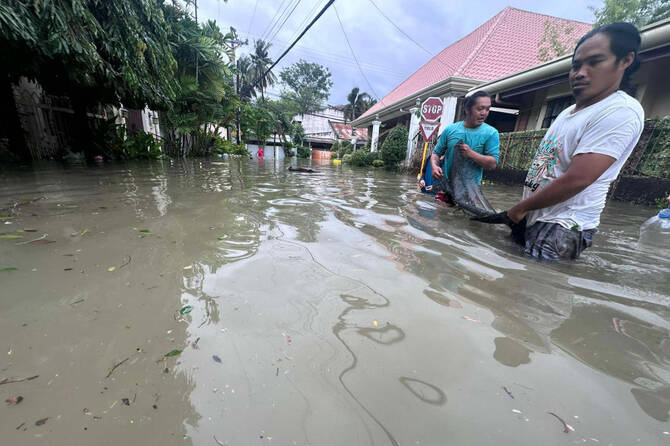
MANILA: One person was killed when Typhoon Kalmaegi hit the central Philippines on Tuesday, the national disaster agency said, as torrential rains, strong winds and storm surges forced tens of thousands to evacuate from their homes.
With sustained winds of 150 kph and gusts of up to 205 kph when it made landfall early on Tuesday, Kalmaegi, locally named Tino, is forecast to move across the Visayas islands region and out over the South China Sea by Wednesday.
Tens of thousands of residents were evacuated across the Visayas region, including parts of southern Luzon and northern Mindanao, and one person had died, the national disaster agency reported.
A video on DZRH radio’s Facebook page showed homes in Talisay City completely submerged, with only rooftops visible. Similar scenes in parts of Cebu City, where vehicles and streets were underwater, circulated on social media.
State weather agency PAGASA said the combination of Kalmaegi and a shear line had brought heavy rains and strong winds across the Visayas and nearby areas.
“Due to interaction with the terrain, Tino may slightly weaken while crossing Visayas. However, it is expected to remain at typhoon intensity throughout its passage over the country,” PAGASA said in a morning bulletin.
More than 160 flights to and from affected areas have been canceled, while those at sea were advised to head to the nearest safe harbor immediately and to stay in port.
PAGASA warned of a high risk of “life-threatening and damaging storm surges” that could reach over 3 meters high along coastal and low-lying communities in the central Philippines, including parts of Mindanao. Kalmaegi comes as the Philippines, which is hit by an average of 20 tropical storms each year, is recovering from a run of disasters including earthquakes and severe weather events in recent months. In September, Super Typhoon Ragasa swept across northern Luzon, forcing government work and classes to shut down as it brought fierce winds and torrential rain.


![]()

One dead as Typhoon Kalmaegi dumps heavy rains over central Philippines
Short Url
https://arab.news/gpp97
One dead as Typhoon Kalmaegi dumps heavy rains over central Philippines
- Kalmaegi, locally named Tino, is forecast to move across the Visayas islands region and out over the South China Sea by Wednesday
- State weather agency PAGASA said the combination of Kalmaegi and a shear line had brought heavy rains and strong winds


Latest updates


© 2026 SAUDI RESEARCH & PUBLISHING COMPANY, All Rights Reserved And subject to Terms of Use Agreement.