THE HAGUE: The prosecutor’s office at the International Criminal Court warned Monday that atrocities committed in the Sudanese city of El-Fasher could constitute war crimes and crimes against humanity.
After 18 months of siege, bombardment and starvation, the paramilitary Rapid Support Forces (RSF) seized control of the city on October 26, dislodging the army’s last stronghold in Sudan’s western Darfur region.
The ICC prosecutor’s office (OTP) voiced “profound alarm and deepest concern” over reports from El-Fasher about mass killings, rapes, and other crimes allegedly committed.
“These atrocities are part of a broader pattern of violence that has afflicted the entire Darfur region since April 2023,” said the OTP in a statement.
“Such acts, if substantiated, may constitute war crimes and crimes against humanity under the Rome Statute,” the founding text of the ICC, added the OTP.
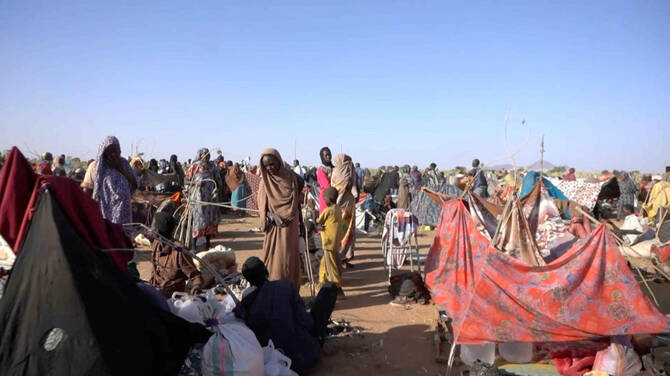
The UN has said more than 65,000 people have fled El-Fasher, including around 5,000 to the nearby town of Tawila, but tens of thousands remain trapped.
Before the final assault, roughly 260,000 people lived in the city.
Since the RSF takeover, reports have emerged of executions, sexual violence, looting, attacks on aid workers and abductions in and around El-Fasher, where communications remain largely cut off.
The RSF traces its origins to the Janjaweed, a predominantly Arab militia accused of genocide in Darfur two decades ago.
Reports since El-Fasher’s fall have raised fears of a return to similar atrocities.
Last month, the ICC convicted a feared Janjaweed chief for war crimes and crimes against humanity committed in Darfur more than two decades ago.
The ICC found Ali Muhammad Ali Abd-Al-Rahman, also known by the nom de guerre Ali Kushayb, guilty of multiple crimes, including rape, murder and torture carried out between August 2003 and at least April 2004.
The OTP referenced this verdict, saying it should serve as a warning “that there will be accountability for such atrocious crimes.”
The ICC retains jurisdiction over alleged crimes in the ongoing conflict in Darfur, it recalled, appealing for evidence to be upshipped to its secure link.
The chief prosecutor of the ICC, British lawyer Karim Khan, is currently on leave as he faces allegations of sexual misconduct, which he denies.
Deputy prosecutors have taken over the caseload while the investigation is ongoing, as well as a high-profile case against former Philippines president Rodrigo Duterte.
The ICC has also issued arrest warrants for Israeli Prime Minister Benjamin Netanyahu for alleged war crimes and crimes against humanity committed during the country’s campaign in Gaza.


![]()

ICC prosecutor: Sudan violence could be war crimes
Short Url
https://arab.news/v226b
ICC prosecutor: Sudan violence could be war crimes
- Atrocities committed in the Sudanese city of El-Fasher could constitute war crimes and crimes against humanity


Latest updates


© 2026 SAUDI RESEARCH & PUBLISHING COMPANY, All Rights Reserved And subject to Terms of Use Agreement.