


AlUla’s timeless heritage earns global acclaim

1 / 4
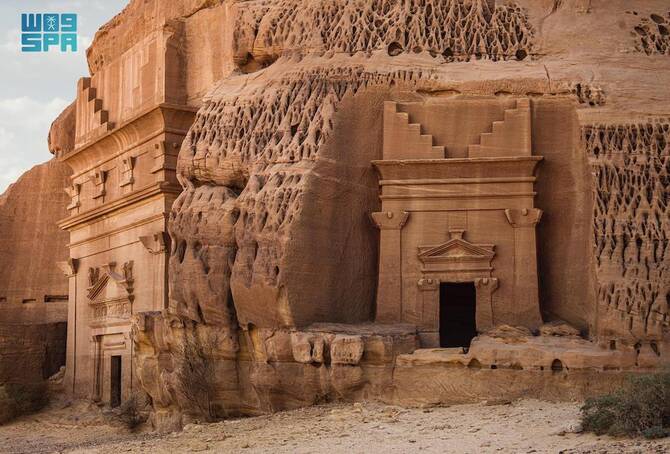
AlUla’s rich history spans more than 200,000 years of human presence and 7,000 years of continuous civilization. (SPA)
2 / 4
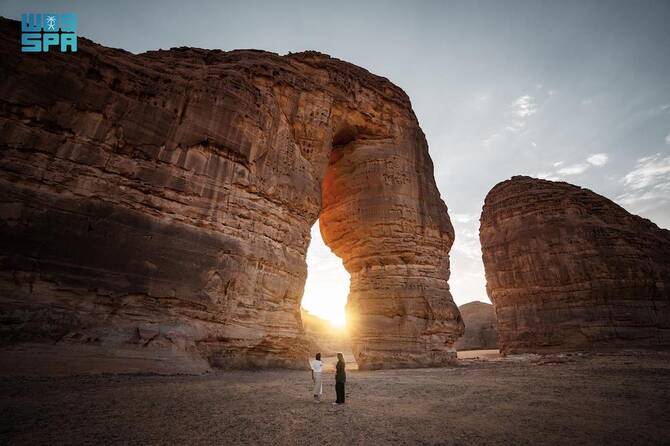
AlUla’s rich history spans more than 200,000 years of human presence and 7,000 years of continuous civilization. (SPA)
3 / 4
AlUla’s rich history spans more than 200,000 years of human presence and 7,000 years of continuous civilization. (SPA)
4 / 4
AlUla’s rich history spans more than 200,000 years of human presence and 7,000 years of continuous civilization. (SPA)
Short Url
Updated 02 November 2025
Follow

AlUla’s timeless heritage earns global acclaim

RIYADH: AlUla achieved a major milestone by winning three categories at the 2025 World Travel Awards to reinforce its position as one of the region’s top destinations.

The ancient city in northwest Saudi Arabia was named the Middle East’s Leading Cultural Tourism Project, the Middle East’s Leading Festival and Event Destination, and Saudi Arabia’s Leading Cultural Tourism Project.

The triple success continued AlUla’s impressive streak after it earned the same honors in 2024 and the Middle East’s Leading Cultural Tourism Project title in 2023.

AlUla’s success highlights its enduring appeal and commitment to sustainable, community-driven tourism rooted in authentic heritage, the Saudi Press Agency reported on Sunday.

A natural wonder with deep historic roots, AlUla captivates visitors with its desert landscapes and unique rock formations, forming a natural canvas of Arabian beauty.

Its prehistoric rock art depicts humans, animals, and abstract forms, revealing the social, cultural, and spiritual life of early inhabitants.

In the first millennium B.C. AlUla became the center of the Dadan and Lihyan Kingdoms — two of the Arabian Peninsula’s most advanced civilizations, known for their urban, commercial, and religious development.

In the first century A.D. Hegra became the southernmost city of the Nabataean Kingdom, renowned for its agricultural, architectural, and hydraulic engineering achievements.

The area was later annexed by the Roman Empire, becoming part of a wider trade and cultural exchange network.

Between the seventh and 12th centuries AlUla emerged as a key stop on the incense trade route, serving as a meeting point for traders and travelers from across the ancient world.

In the 20th century AlUla’s Hijaz Railway, built by the Ottoman Empire, linked major cities and facilitated Muslim pilgrimages to Makkah and Madinah.

Famous for its intricately carved tombs showcasing Nabataean artistry, Hegra was designated Saudi Arabia’s first UNESCO World Heritage Site in 2008.

In the 21st century — with UNESCO recognition and growing global interest in its cultural and historic legacy — AlUla has seen major conservation and sustainable tourism efforts, transforming it into a must-visit destination in Saudi Arabia.

AlUla’s history is retold through immersive experiences and a diverse calendar of events known as AlUla Moments, showcasing 200,000 years of human presence and 7,000 years of civilizations.

Established in 1993, the World Travel Awards honor excellence in travel, tourism, and hospitality, and are recognized globally as the industry’s hallmark of achievement.


Rebuilding lives: Saudi initiative gives fresh hope to amputees

Updated 5 sec ago
Follow

Rebuilding lives: Saudi initiative gives fresh hope to amputees

  • Baitureh Health Association has provided life-changing support to more than 1,000 people
  • Prosthetic limbs can cost up to $76,000

MAKKAH: The Baitureh Health Association for the Care of Amputees has quickly become one of Saudi Arabia’s most impactful humanitarian initiatives, transforming support for people with lost limbs.

Established in 2020, the association deals with people’s physical, psychological and social needs and fills a long-standing gap in the national health system.

CEO Badr bin Alyan told Arab News that the initiative was created in response to a growing need, driven by amputations linked to accidents, blood disorders, occupational injuries and other causes.

Its operations were “based on service integration rather than fragmentation, enabling beneficiaries to return to their lives with confidence, ability and independence,” he said.

This holistic process covers everything from initial evaluations to psychological and physical rehabilitation, family support, prosthetic fitting and ongoing maintenance.

Its psychological support programs include group sessions led by certified mentors who have undergone similar experiences, as well as field visits to support patients before and after amputation.

More than 1,000 people across the Kingdom have so far benefitted from the association’s work, about 10 percent of them children, whom Alyan said were “the most sensitive and the most in need of intensive psychological and family support.”

Its specialist programs for children — My First Step and Therapeutic Entertainment — help young people adapt to prosthetics, overcome trauma and build confidence in a safe and supportive setting.

The association has completed more than 300 prosthetic fittings, including silicone cosmetic limbs, mechanical, hydraulic, electronic and 3D-printed models. 

Alyan said the type of prosthetic selected depended on a number of factors, such as age, lifestyle, type of amputation, activity level and psychological readiness.

Children also have to undergo frequent adjustments to their new limbs to account for their growth.

Each prosthetic cost between SR20,000 ($5,300) and SR285,000, Alyan said.

The association funds its work through sponsorships, community contributions and strategic partnerships.

Despite its success, Alyan said there were still challenges to be faced, including the lack of a consolidated base for the provision of psychological support and therapy services and prosthetics development and maintenance.

There was also a shortage of local experts, he said.

In response, the association set up a rehabilitation center, which Alyan said would help to localize prosthetics manufacturing, reduce costs and accelerate fitting processes and create opportunities for local experts to develop their knowledge and experience.

But providing prosthetics was only part of the association’s work, he said.

“Rebuilding a human life is the deeper goal.”