PORT SUDAN: New satellite imagery suggests that mass killings are likely continuing in and around the Sudanese city of El-Fasher, Yale researchers said, days after it fell to the paramilitary Rapid Support Forces.
At war with the regular army since April 2023, the RSF seized El-Fasher on Sunday, pushing the army out its last stronghold in the western Darfur region after a grinding 18-month siege.
Since the city’s fall, reports have emerged of summary executions, sexual violence, attacks on aid workers, looting and abductions, while communications remain largely cut off.
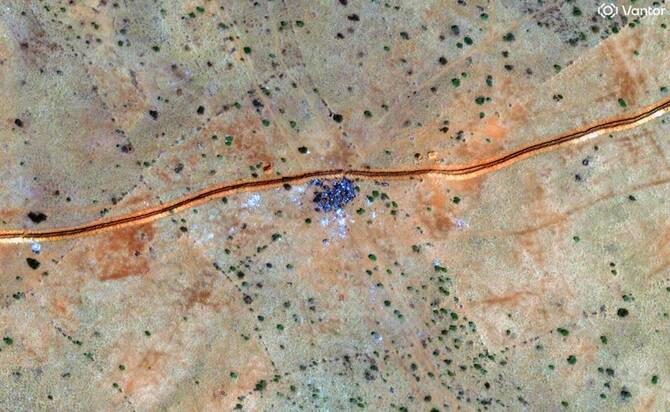
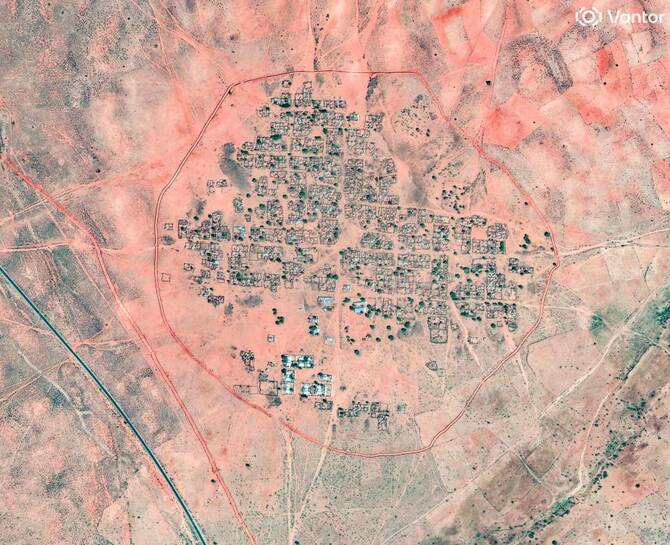
A report by Yale University’s Humanitarian Research Lab on Friday said fresh images gave them reason to believe much of the population may be “dead, captured, or in hiding.”
The lab identified at least 31 clusters of objects consistent with human bodies between Monday and Friday, across neighborhoods, university grounds and military sites.
“Indicators that mass killing is continuing are clearly visible,” the lab said.
Survivors from El-Fasher who reached the nearby town of Tawila have told AFP of mass killings, children shot before their parents, and civilians beaten and robbed as they fled.
Hayat, a mother of five who fled El-Fasher, said that “young men traveling with us were stopped” along the way by paramilitaries and “we don’t know what happened to them.”
The UN said more than 65,000 people have fled El-Fasher but tens of thousands remain trapped.
Around 260,000 people were in the city before the RSF’s final assault.
The RSF claimed to have arrested several fighters accused of abuses on Thursday, but UN humanitarian chief Tom Fletcher questioned the RSF’s commitment to investigate violations.
Both the RSF and the army have faced war crimes accusations over the course of the conflict.
El-Fasher’s capture gives the RSF full control over all five state capitals in Darfur, effectively splitting Sudan along an east-west axis, with the army controlling the north, east and center.


![]()
![]()
![]()

New satellite images suggest mass killings persist in Sudan’s El-Fasher

Short Url
https://arab.news/8nuk8
New satellite images suggest mass killings persist in Sudan’s El-Fasher
- New satellite imagery suggests that mass killings are likely continuing in and around the Sudanese city of El-Fasher


Latest updates


© 2026 SAUDI RESEARCH & PUBLISHING COMPANY, All Rights Reserved And subject to Terms of Use Agreement.