DODOMA, Tanzania: Tanzanian President Samia Suluhu Hassan won the country’s disputed election with more than 97 percent of the vote, according to official results announced early Saturday, in a rare landslide victory in the region.
The result is likely to amplify the concerns of critics, opposition groups and others who said the election in Tanzania was not a contest but a coronation after Hassan’s two main rivals were barred or prevented from running. She faced 16 candidates from smaller parties.
The Oct. 29 election was marred by violence as demonstrators took to the streets of major cities to protest the vote and stop the counting of votes. The military has been deployed to help police quell riots. Internet connectivity has been on and off in the East African nation, disrupting travel and other activities.
The protests have spread across Tanzania, and the government has postponed the reopening of universities, which had been set for Nov. 3.
There was a tense calm in the streets of Dar es Salaam, the commercial capital, on Saturday. Security forces manning roadblocks asked to see the identity cards of those who went out.
Tanzanian authorities have not said how many people have been killed or injured in the violence. A spokesman for the UN human rights office, Seif Magango, on Friday told a UN briefing in Geneva by video from Kenya that credible reports of 10 deaths were reported in Dar es Salaam, alongside Shinyanga and Morogoro towns.
United Nations Secretary-General Antonio Guterres said on Friday he was concerned by the situation in Tanzania and urged all parties to “prevent further escalation.”
The foreign ministers of the UK, Canada and Norway in a joint statement cited “credible reports of a large number of fatalities and significant injuries, as a result of the security response to protests.”
Tundu Lissu, leader of the Chadema opposition group, has been jailed for months, charged with treason after he called for electoral reforms that he said were a prerequisite for free and fair elections. Another opposition figure, Luhaga Mpina of the ACT-Wazalendo group, was barred from running.
At stake for the ruling Chama Cha Mapinduzi, or CCM, party was its decades-long grip on power amid the rise of charismatic opposition figures who hoped to lead the country toward political change.
Still, a landslide victory is unheard of in the region. Only President Paul Kagame, the authoritarian leader of Rwanda, regularly wins by a landslide.
Rights groups including Amnesty International cited a pattern of enforced disappearances, arbitrary arrests and extrajudicial killings in Tanzania ahead of the polls.
In June, a United Nations panel of human rights experts cited more than 200 cases of enforced disappearance since 2019, saying they were “alarmed by reports of a pattern of repression” ahead of elections.
Hassan oversaw “an unprecedented crackdown on political opponents,” the International Crisis Group said in its most recent analysis. “The government has curbed freedom of expression, ranging from a ban on X and restrictions on the Tanzanian digital platform JamiiForums to silencing critical voices through intimidation or arrest.”
The political maneuvering by Tanzanian authorities is remarkable even in a country where single-party rule has been the norm since the advent of multi-party politics in 1992.
Government critics point out that previous leaders tolerated opposition while maintaining a firm grip on power, whereas Hassan is accused of leading with an authoritarian style that defies youth-led democracy movements elsewhere in the region.
But Tanzania is different, an outlier in the region.
A version of the governing CCM party, which maintains ties with the Communist Party of China, has ruled Tanzania since its independence from Britain in 1961, a streak that Hassan extends with her victory.
CCM is fused with the state, effectively in charge of the security apparatus and structured in such a way that new leaders emerge every five or 10 years. Hassan herself was able to rise to the presidency as vice president without incident when her predecessor, John Pombe Magufuli, died suddenly not long after the start of his second term.
The orderly transition sustained Tanzania’s reputation as an oasis of political stability and relative peace, a major reason for CCM’s considerable support across the country, especially among rural voters.


Tanzania President Hassan wins disputed election with more than 97 percent of vote, official results show

https://arab.news/pnwpj
Tanzania President Hassan wins disputed election with more than 97 percent of vote, official results show

- The Oct. 29 election was marred by violence as demonstrators took to the streets of major cities to protest the vote and stop the counting of votes
- Two of Hassan’s main rivals were barred from participating in the election, leaving her running virtually unopposed


Canadian police investigate reports of gunfire at US consulate in Toronto
- Police said they were at the scene near University Avenue and Queen Street West
- “Evidence of a firearm discharge has been located,” police said in the post
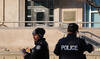
TORONTO: Canadian police are investigating reports that the United States consulate in downtown Toronto was hit by gunfire early on Tuesday morning.
No injuries have been reported.
Toronto police said Tuesday they responded to reports at around 5:30 a.m. that someone shot a gun at the US consulate.
In a post on social media, police said they were at the scene near University Avenue and Queen Street West.
“Evidence of a firearm discharge has been located,” police said in the post.
No suspect information has been released.
“The shooting that took place at the US consulate early this morning is an absolutely unacceptable act of violence and intimidation aimed at our American friends and neighbors,” Ontario Premier Doug Ford said in a statement.
“Everyone at all levels of government and across Canada needs to make clear that there is zero tolerance for this sort of intimidating and dangerous behavior.”
The reported shooting comes after two Toronto-area synagogues were struck by gunfire last weekend.
“The US consulate was shot at. This comes after shootings at synagogues,” Toronto Mayor Olivia Chow said. “This cannot stand. Toronto’s Jewish community has the right to practice their faith and culture and to live their day-to-day lives without fear, intimidation or violence. As we have seen too many times, antisemitic incidents spike when international incidents rise. It is never acceptable to target the Jewish community.”
Chow said there is heavy police presence on Tuesday at both the US and Israeli consulates in Toronto.
The war in Iran has prompted large demonstrations outside the US consulate, both in support and in protest.