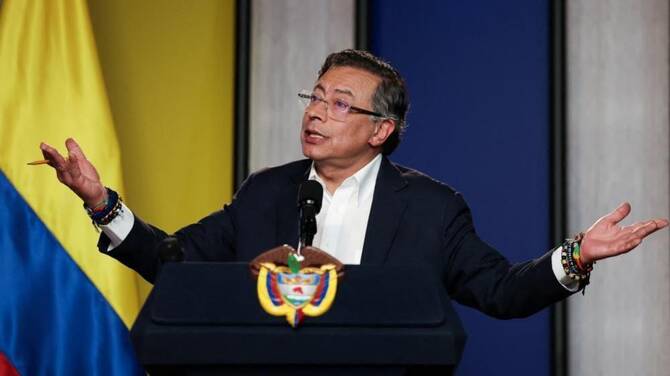
BOGOTA: Colombia’s left-wing President Gustavo Petro had trouble refueling his plane on a trip to the Middle East after being sanctioned by the United States, his government said Thursday.
Interior Minister Armando Benedetti said that the presidential plane stopped in Madrid to refuel on the way to Saudi Arabia but that officials at Barajas airport, Spain’s biggest, refused to fill it up.
After negotiations with Spain’s left-wing government, the plane landed at a military base to refuel.
President Donald Trump’s administration has accused Petro of enabling drug cartels and placed him on the US Treasury’s Office of Foreign Assets Control (OFAC) sanctions list.
He, his wife Veronica Alcocer, eldest son Nicolas, and Benedetti are banned from traveling to the United States and any US assets they have are frozen.
US companies or companies with US capital are also banned from doing business with them.
Writing on X, Petro thanked the “kingdom of Spain” for helping him reach Riyadh at the start of a three-country tour that will also take him to Qatar and Egypt.
Benedetti said that the aviation refueling company at Barajas was afraid of breaching US sanctions on Petro.
“The companies that sell fuel or provide cleaning services or the boarding stairs (at airports) are almost always American,” Benedetti said.
“They refused to provide the (refueling) service because of the OFAC (list),” he said, referring to harsh financial sanctions slapped by US President Donald Trump on the leftist Petro, one of his most vociferous critics.
The sanctions imposed on Petro on October 24 followed months of friction between Trump and Petro over US migrant deportations and strikes on suspected drug boats off the coast of South America.
Petro, a former left-wing guerrilla, has vehemently denied any involvement in drug trafficking and argued that the cocaine trade is being fueled chiefly by demand in the United States and Europe.


![]()

US sanctions cause plane refueling woes for Colombian leader
Short Url
https://arab.news/mdz8f
US sanctions cause plane refueling woes for Colombian leader
- Officials at Barajas airport, Spain’s biggest, refused to fill plane
- After negotiations with Spain’s left-wing government, the plane landed at a military base to refuel


Latest updates


Recommended


© 2026 SAUDI RESEARCH & PUBLISHING COMPANY, All Rights Reserved And subject to Terms of Use Agreement.