KYIV: The latest in a sustained Russian campaign of massive drone and missile attacks on Ukraine’s energy infrastructure brought power outages and restrictions in all the country’s regions Thursday, officials said, with the Ukrainian prime minister describing Moscow’s tactic as “systematic energy terror.”
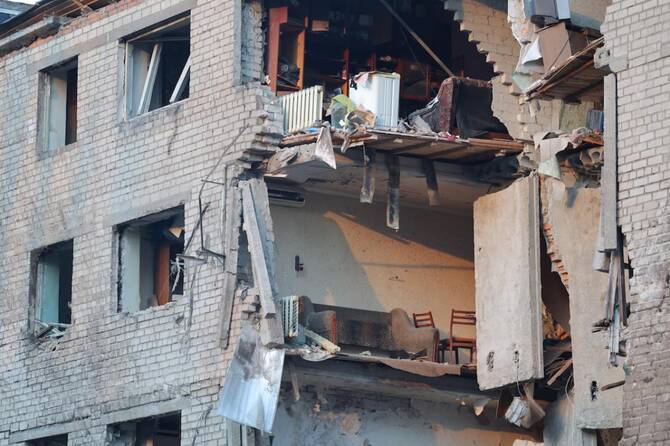
The strikes, which were the latest in Russia’s almost daily attacks on the Ukrainian power grid as bitter winter temperatures approach, killed at least six people, including a 7-year-old girl, according to authorities. Children between 2 and 16 years of age were among the 18 injured.
Russian launched more than 650 drones and more than 50 missiles of various types in the attack, Ukraine President Volodymyr Zelensky said.
Ukrainian cities use centralized public infrastructure to run water, sewage and heating systems, and blackouts stop them from working. Months of attacks have aimed to erode Ukrainian morale as well as disrupt weapons manufacturing and other war-related activity almost four years after Russia’s full-scale invasion of its neighbor.
“Russia continues its systematic energy terror — striking at the lives, dignity, and warmth of Ukrainians on the eve of winter. Its goal is to plunge Ukraine into darkness; ours is to keep the light on,” Ukrainian Prime Minister Yulia Svyrydenko said.
“To stop this terror, Ukraine needs more air defense systems, tougher sanctions, and maximum pressure on (Russia),” she added, referring to fruitless US-led diplomatic efforts to make Russia enter negotiations for a peace settlement.
Two men and a woman were killed and another person was injured in a strike on the eastern Ukraine city of Sloviansk, police said.
Russian forces hit the city, which is just 20 kilometers (12 miles) from the front line, with rockets, Vadym Lyakh, the head of the city’s military administration, said.
Strikes in the southern Zaporizhzhia region injured 17 people, including a 2-year-old girl, regional authorities said. Rescuers pulled a man from the rubble of a building, but he did not survive, according to Ivan Fedorov, head of the Zaporizhzhia regional administration. A second person was also killed in Zaporizhzhia.
A 7-year-old girl died in hospital from her injuries in Ukraine’s central-west Vinnytsia region, regional governor Nataliia Zobolotna said.
Two energy infrastructure facilities were damaged in the western Lviv region, near the border with Poland, local authorities said.
The Polish military said that it scrambled Polish and allied NATO aircraft as a preventive measure due to the Russian attack on Ukrainian territory. The Polish regional airports in Radom and Lublin were closed to ensure the military freedom of operation, the Polish Air Navigation Services Agency said.

Russia blasts Ukraine’s power grid again, causing outages across the country and killing 6
Short Url
https://arab.news/zyhy2
Russia blasts Ukraine’s power grid again, causing outages across the country and killing 6
- The strikes killed at least six people, including a 7-year-old girl
- Russian launched more than 650 drones and more than 50 missiles of various types in the attack
UN to approve sanction exemptions on North Korea aid projects: sources
SEOUL: The UN Security Council sanctions committee on North Korea is to give exemptions for humanitarian aid projects in the impoverished country, diplomatic sources in Seoul told AFP on Friday.
The nuclear-armed country is under multiple sets of sanctions over its weapons programs and has long struggled with its moribund state-managed economy and chronic food shortages.
The 17 humanitarian assistance projects are all being implemented by major international organizations such as UNICEF, or by NGOs from South Korea and the United States, the sources said.
Analysts say the move would allow those groups to provide humanitarian aid, such as nutritional supplements, medical equipment and water purification systems, to North Korea.
A foreign ministry official said Seoul has made “various efforts” to ensure that humanitarian aid reaches the North, regardless of politics.
“We hope that North Korea will respond positively to our government’s efforts for peaceful coexistence on the Korean Peninsula,” the official said.
The sources spoke hours after a senior South Korean official said “new progress” on North Korea could come within days.
The foreign ministry official’s comments came while discussing US President Donald Trump’s scheduled trip to China in April.
Trump made repeated overtures to Pyongyang’s leader Kim Jong Un during a barnstorming tour of Asia last year, saying he was “100 percent” open to a meeting.
He even bucked decades of US policy by conceding that North Korea was “sort of a nuclear power.”
North Korea did not respond to Trump’s offer, and has repeatedly said it will never give up its nuclear weapons.
Trump met North Korea’s Kim three times during his first term, once famously declaring that they were “in love,” in an effort to reach a denuclearization deal.
- Landmark congress -
However, a planned summit in Hanoi in 2019 fell through over differences about what Pyongyang would get in return for giving up its nuclear weapons, and no progress has been made between the two countries since then.
Seoul and Washington reaffirmed their commitment this week to North Korea’s “complete denuclearization” and cooperation on Seoul’s nuclear-powered submarine plan, a move that has previously drawn an angry response from the North.
Pyongyang has also drawn much closer to Moscow, with its deployment of troops to aid Russia’s war against Ukraine.
It has sent thousands of troops to fight for Moscow and analysts say Russia is giving North Korea military technology, food and energy supplies in return, allowing it to sidestep tough international sanctions.
North Korea is set to hold a landmark congress of its ruling party soon, its first in five years.
Kim ordered the “expansion” and modernization of the North’s missile production ahead of the gathering.
The nuclear-armed country is under multiple sets of sanctions over its weapons programs and has long struggled with its moribund state-managed economy and chronic food shortages.
The 17 humanitarian assistance projects are all being implemented by major international organizations such as UNICEF, or by NGOs from South Korea and the United States, the sources said.
Analysts say the move would allow those groups to provide humanitarian aid, such as nutritional supplements, medical equipment and water purification systems, to North Korea.
A foreign ministry official said Seoul has made “various efforts” to ensure that humanitarian aid reaches the North, regardless of politics.
“We hope that North Korea will respond positively to our government’s efforts for peaceful coexistence on the Korean Peninsula,” the official said.
The sources spoke hours after a senior South Korean official said “new progress” on North Korea could come within days.
The foreign ministry official’s comments came while discussing US President Donald Trump’s scheduled trip to China in April.
Trump made repeated overtures to Pyongyang’s leader Kim Jong Un during a barnstorming tour of Asia last year, saying he was “100 percent” open to a meeting.
He even bucked decades of US policy by conceding that North Korea was “sort of a nuclear power.”
North Korea did not respond to Trump’s offer, and has repeatedly said it will never give up its nuclear weapons.
Trump met North Korea’s Kim three times during his first term, once famously declaring that they were “in love,” in an effort to reach a denuclearization deal.
- Landmark congress -
However, a planned summit in Hanoi in 2019 fell through over differences about what Pyongyang would get in return for giving up its nuclear weapons, and no progress has been made between the two countries since then.
Seoul and Washington reaffirmed their commitment this week to North Korea’s “complete denuclearization” and cooperation on Seoul’s nuclear-powered submarine plan, a move that has previously drawn an angry response from the North.
Pyongyang has also drawn much closer to Moscow, with its deployment of troops to aid Russia’s war against Ukraine.
It has sent thousands of troops to fight for Moscow and analysts say Russia is giving North Korea military technology, food and energy supplies in return, allowing it to sidestep tough international sanctions.
North Korea is set to hold a landmark congress of its ruling party soon, its first in five years.
Kim ordered the “expansion” and modernization of the North’s missile production ahead of the gathering.
© 2026 SAUDI RESEARCH & PUBLISHING COMPANY, All Rights Reserved And subject to Terms of Use Agreement.


