

RIYADH: As Saudi Arabia continues to develop its healthcare sector, questions remain over how health practitioners can keep up with growing challenges and secure a healthy society.
During the eighth edition of the Global Health Conference in Riyadh on Wednesday, various discussions around the topic were presented.
Physicians, investors and other decision-makers gathered to bring the best solutions for the future of healthcare in Saudi Arabia.
Dr. Walid Ftehi, founder, chairman of the board and CEO of International Medical Center, spoke to Arab News about what he called “a holistic concept of medicine.”
He said: “When I came back from the States, I wanted to make sure I would raise the level of healthcare and introduce the holistic concept of medicine.

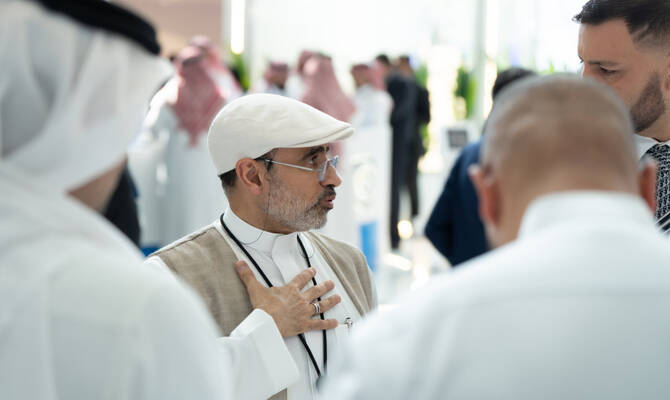
Dr. Ashraf Amir, Chief Medical Officer at IMC spoke to Arab News about the Kingdom's efforts in preventative healthcare. (AN photo by Huda Bashatah)
“That is why our mission from day number one (was) to pioneer a unique approach of healing the mind, body and soul by applying the best global healthcare standards and pursuing divine ethics.”
For Ftehi, it is critical to pay attention to the body as a whole (the mind, the body and the soul) and not only to physical aspects.
He spoke about how Saudi Arabia’s Vision 2030 is improving understanding of healthcare and focusing on core values such as prevention, health promotion and the encouragement of a healthy lifestyle.
“More than 90 percent of (diseases) are nothing but a result of our own choices in life,” he said.
“If we change the lifestyle of people: What they eat, what they do, what they drink, how (they) think, how they feel, then you get to take care of more than 80 to 90 percent of the diseases, the chronic diseases: obesity, diabetes and hypertension.”
Dr. Ashraf Amir, chief medical officer at IMC, echoed his sentiments, and highlighted the importance of prevention over treatment to overcome health challenges in the country.
“It’s very important to highlight the strategic directions that we are implementing through our Vision 2030 and the wonderful transformation of our healthcare system to adapt a new concept in our practice as a physician toward quality of life,” Amir told Arab News.
“So, we are now moving from intervention to prevention, from disease to health, from illness to wellness.
“Now, as a physician, I’m not only here to treat the disease, but also to prevent the disease and, moreover, to improve the quality of life of our patients.”
He also discussed the Ministry of Health’s goals to extend the life expectancy of the Kingdom’s population.
“A couple of years ago, (life expectancy) was 76, and our objective in the Ministry of Health to be achieved as a KPI by the year 2045 is 80 years of age.
“How far (have we gone) to be successful in this journey? We reached today, 79 years.”