

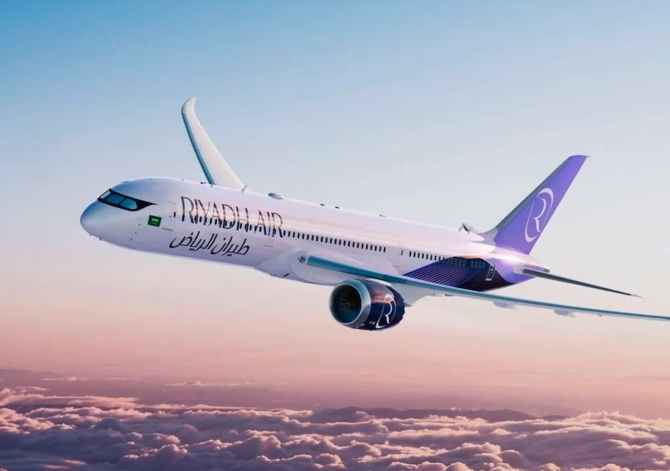

RIYADH: Saudi Arabia’s newest airline Riyadh Air intends to be a thought leader in environmental sustainability while growing its global reach, its CEO has said.
Speaking to Arab News on the sidelines of the ninth Future Investment Initiative conference in Riyadh, Tony Douglas said that while the industry’s net-zero goal is difficult, the airline will pursue both alternative fuels and near-term operational efficiencies.
This year’s FII conference is taking place in Riyadh from Oct. 27 to 30, and is being held under the theme “The Key to Prosperity: Unlocking New Frontiers of Growth.”
Riyadh Air, a new Saudi national airline owned by the Public Investment Fund, began operations on Oct. 26 with the successful completion of its first passenger flight from King Khalid International Airport to London Heathrow.
Douglas said: “The net‑zero target that’s out there, given the physics of powered flight, is extremely difficult,” adding: “But we’re absolutely committed to this going forward.”
Day to day, Riyadh Air will cut waste where it starts, with the CEO pointing to catering as an area to target. Legacy airlines uplift too much food, much of it thrown away. That’s waste and weight, which means more fuel burn and emissions, said Douglas.
To combat this, guests will be able to preorder meals in the concierge app. This trims waste and gives people exactly what they want.
The brand rests on three pillars: obsessive guest experience, a digital‑native mindset, and leadership on environmental sustainability.
“We’re building a national carrier that connects the Kingdom to the world — and delights every guest along the way,” Douglas said. For him, sustainability sits alongside service and tech, not behind them. A digital‑first approach drives personalization and efficiency — from meal preorders to smoother trip planning.
Operations began with a symbolic start. “We’ll never forget October 26,” Douglas said, recalling the first commercial service. Daily flights to London Heathrow are live, with Dubai next as the network ramps.
Growth will be steady and visible. Completed Boeing aircraft are in certification, with more coming off and entering final assembly each month. The plan is roughly one new jet every month through next year, then two per month. That supports a goal of more than 100 international destinations within five years, setting up Riyadh as a serious global hub.
“Global connectivity is an enabler,” Douglas said. In his view, aviation runs across the Kingdom’s diversification pillars under Vision 2030. The impact is macro and human. The airline expects to support well over 200,000 jobs directly and indirectly as routes open markets, attract investors, and bring tourists.
Service remains the test. “It’s not only what we do — it’s how we do it. We want people to be delighted by our service because the brand is real.”
That ethos extends beyond the cabin. Riyadh Air is launching Sfeer, a lifestyle program rather than a traditional loyalty scheme. Members can pool and pass points with family and friends — even by tapping phones. The aim is simple: more use, less breakage.
Sustainability threads through these choices. Lighter loads, smarter provisioning, and better planning save fuel and cut emissions today, while the fuels partnership targets tomorrow.
“Solutions will come in all shapes and sizes,” said Douglas. “We intend to be out front.”
From a standing start to a fast‑scaling national carrier, the message is clear: grow with purpose. Add destinations each month. Ramp the fleet on schedule. Make sustainability part of the experience, not a bolt‑on.
“We’re up and running — and we’re only getting started,” he said.


