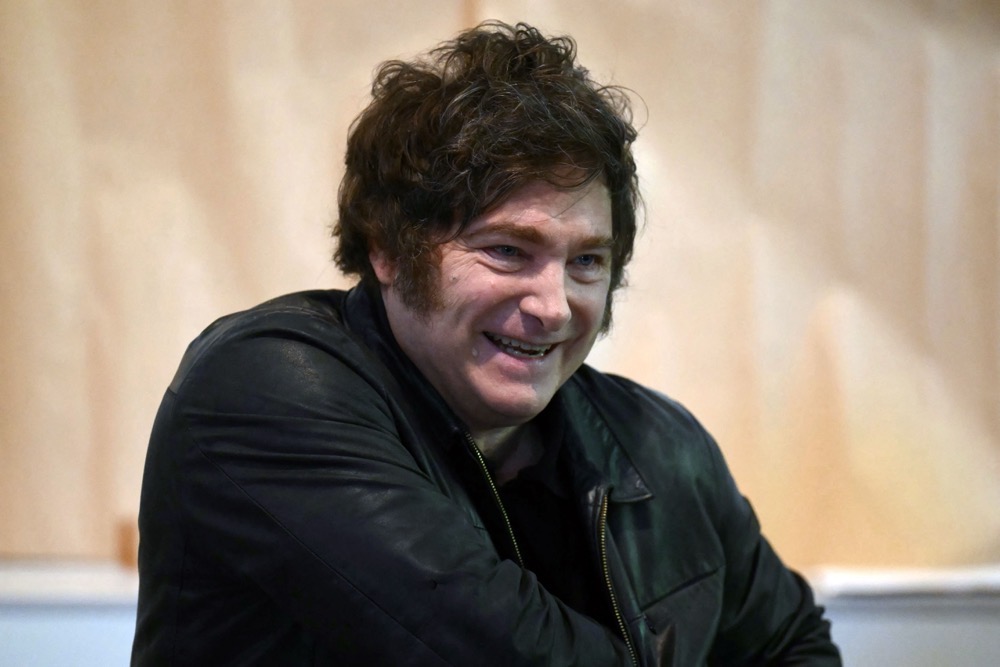
BUENOS AIRES, Argentina: Argentina’s libertarian President Javier Milei won decisive victories in key districts in midterm elections Sunday, clinching a crucial vote of confidence that strengthens his ability to carry out his radical free-market experiment with billions of dollars in backing from the Trump administration.
Milei’s governing La Libertad Avanza party won over 40 percent of votes in national elections to renew almost half of the lower house of Congress, according to tallies in local media using numbers from electoral authorities with more than 97 percent of votes counted.
La Libertad Avanza also swept six of the eight provinces in the vote to renew a third of the Senate. The figures exceeded analysts’ projections for Sunday’s vote.
In comparison, the results showed the left-leaning populist opposition movement, known as Peronism, winning over 31 percent of the vote — what analysts described as the alliance’s poorest performance in years.
Milei said his party went from holding just 37 seats in the lower house of Congress to 101 after Sunday’s vote. In the Senate, he said La Libertad Avanza picked up 14 more seats to end up with 20 senators. The strong showing ensures Milei will have enough support in Congress to uphold presidential vetoes, prevent an impeachment effort and see through his ambitious plans for tax and labor reforms in the coming months.
At his party headquarters in downtown Buenos Aires, Milei burst onstage and sang a few lines of the death-metal tune that has become his anthem in a raspy baritone: “I am the king of a lost world!”
Beaming as his supporters cheered, he seized on the results as evidence of that Argentina had turned the page on decades of Peronism that brought the country infamy for repeatedly defaulting on its sovereign debt.
“The Argentine people left decadence behind and opted for progress,” Milei said, thanking “all those who supported the ideas of freedom to make Argentina great again.”
Perhaps never has an Argentine legislative election generated so much interest in Washington and Wall Street, particularly after US President Donald Trump indicated that he could rescind $20 billion in financial assistance to his close ally in cash-strapped Argentina if Milei lost Sunday’s vote.
But the buzz around the election abroad wasn’t felt in Argentina. Even though voting is compulsory, electoral authorities reported a turnout rate of just under 68 percent Sunday, among the lowest recorded since the nation’s 1983 return to democracy.
Milei, a key ideological ally of Trump who has slashed state spending and liberalized Argentina’s economy after decades of budget deficits and protectionism, had a lot riding on Sunday’s elections.
Milei’s government has been scrambling to avert a currency crisis ever since a major defeat by the Peronist opposition in a provincial election last month panicked markets and prompted a selloff in the peso that led to the US Treasury’s extraordinary intervention.
A series of scandals — including bribery allegations against Milei’s powerful sister, Karina Milei — hurt the president’s image as an anti-corruption crusader and hit a nerve among voters reeling from his harsh austerity measures.
Although the budget cuts have significantly driven down inflation, from an annual high of 289 percent in April 2024 to just 32 percent last month, many Argentines are still struggling to make ends meet.
Price rises have outpaced salaries and pensions since Milei cut cost-of-living increases. Households pay more for electricity and public transport since Milei cut subsidies. The unemployment rate is now higher than when the libertarian president took office.
Milei triumphs in Argentine midterm elections closely watched by Washington