

Graduates of Saudi Museums Commission’s program to power Kingdom’s museum sector

1 / 5
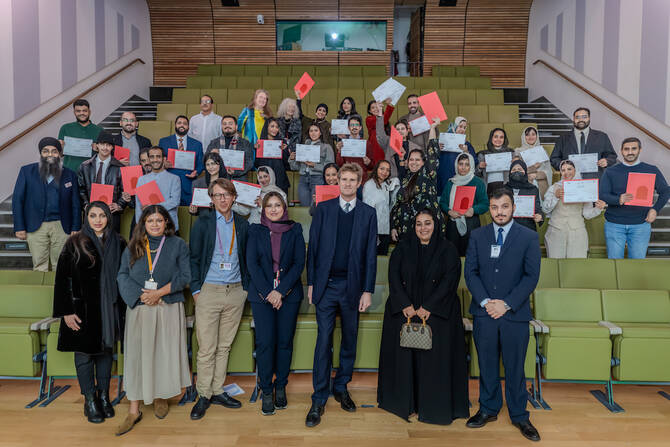
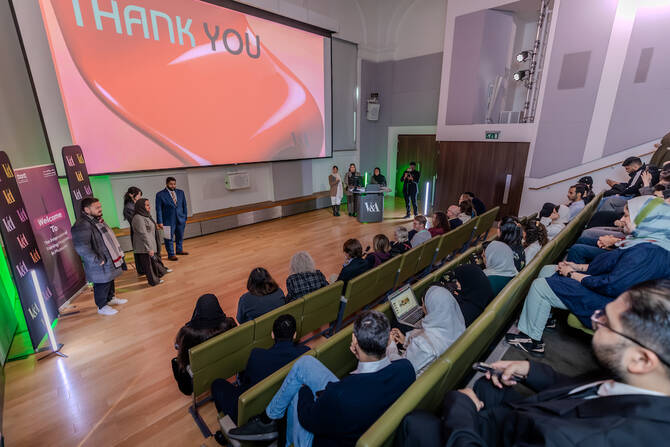
The Saudi Museums Commission marked the graduation of a new cohort from its international training program at the Victoria and Albert Museum in London on Friday. (AN Photo/Bahar Hussain)
2 / 5
The Saudi Museums Commission marked the graduation of a new cohort from its international training program at the Victoria and Albert Museum in London on Friday. (AN Photo/Bahar Hussain)
3 / 5
The Saudi Museums Commission marked the graduation of a new cohort from its international training program at the Victoria and Albert Museum in London on Friday. (AN Photo/Bahar Hussain)
4 / 5
The Saudi Museums Commission marked the graduation of a new cohort from its international training program at the Victoria and Albert Museum in London on Friday. (AN Photo/Bahar Hussain)
5 / 5
The Saudi Museums Commission marked the graduation of a new cohort from its international training program at the Victoria and Albert Museum in London on Friday. (AN Photo/Bahar Hussain)
Short Url
Updated 26 October 2025
Follow

Graduates of Saudi Museums Commission’s program to power Kingdom’s museum sector

  • International program has run in Egypt, Italy, UK

LONDON: The Saudi Museums Commission marked the graduation of a new cohort from its international training program at the Victoria and Albert Museum in London on Friday, part of its drive to staff the Kingdom’s museums with homegrown professionals trained to global standards.

The commission’s mandate is to develop and operate flagship museums that celebrate Saudi heritage and expand cultural participation nationwide.

“This is about Saudi human capability,” said Taghreed Al-Saraj, the commission’s general manager for education and talent development.

“We are developing museums in Saudi Arabia, and we need to operate them, and who better to do that than Saudis themselves? We recognize this is a new sector, but we are capable of tackling it. Now we need to train, reskill, and give people the knowledge they need to operate these museums.”

Al-Saraj said the international program had run in Egypt, Italy, and the UK, culminating at the V&A in London.

“All of the Saudi participants — more than 150 across the different cities — have gained expertise and international best practices in the museum field, which they are now bringing back to Saudi Arabia,” she said. “This program will feed into all of our museums, public and private, that will open by 2030.”

Participants received practitioner-led training at the V&A, with direct access to curators, conservators, and learning teams, using live projects and case studies rather than classroom theory — an approach designed to translate quickly into day-to-day practice in Saudi institutions.

“This is a very special day,” said Ian Ellard, head of adult learning and training at the V&A.

“It’s the last day of a very tough four weeks. They’ve worked incredibly hard and learned an incredible amount. These Saudi professionals are building a cultural center for their families and future generations, and this is certainly not the end of the relationship between the Museums Commission and the V&A.”

The graduation aligns with Vision 2030’s Human Capability Development Program, which aims to equip citizens with skills to compete and contribute across sectors, including culture and heritage. The commission’s strategy is to turn that national commitment into museum-ready talent, deploying it into new institutions opening across the country.

Ellard highlighted the strong momentum behind the partnership, saying: “We’ve seen an incredible level of engagement. The ambition the commission and the Kingdom have for the future of the culture sector is infectious — you can feel it in the room.”

Al-Saraj framed the outcome in practical terms: trained Saudis moving into roles that strengthen documentation and provenance, build conservation workflows, and deliver programs connecting collections with local audiences.

The V&A — a family of museums with a national collection of over 2.8 million objects spanning 5,000 years — provided the scale and operational insight that shaped the cohort’s final weeks before their return to Saudi Arabia.

As the ceremony ended, the message from both sides was clear: export the methods, localize the delivery, and build the museum workforce the Kingdom needs.


Riyadh Volunteers scheme sets world record, advances Vision 2030 goals

Updated 7 sec ago
Follow

Riyadh Volunteers scheme sets world record, advances Vision 2030 goals

RIYADH: Riyadh Municipality set a Guinness World Record by registering 14,642 volunteers on an accredited volunteering platform within a single week in Riyadh on Dec. 8.

The achievement reflects the growing culture of volunteering in Riyadh and society’s role in supporting environmental and developmental initiatives, the Saudi Press Agency reported on Tuesday.

Last week, the municipality announced the launch of the Riyadh Volunteers initiative on Dec. 8, during which volunteers carried out environmental and field work across the city’s neighborhoods to improve the urban landscape and enhance quality of life, in line with Vision 2030.

Abdulwahab bin Fardan, the municipality’s assistant deputy mayor of community engagement, received the official record certificate from Guinness World Records representatives during a ceremony in Riyadh.

The accomplishment builds on the municipality’s support, led by Mayor Prince Faisal bin Ayyaf, to promote community participation, strengthen volunteerism and expand its impact across the city.

Prince Faisal also took part in the Riyadh Volunteers initiative at Al-Nakheel Park, joining volunteers in planting seedlings to support afforestation and enhance the urban environment, in line with the municipality’s mission to boost community contributions to development and environmental efforts.

Key activities include planting, cleanliness campaigns, monitoring, food preservation and clothing recycling, all aimed at improving quality of life, the SPA reported.

The initiative attracts diverse participation from government entities, the private sector and nonprofit organizations, strengthening community engagement in urban development.

The scheme aims to expand volunteer participation and raise awareness of the importance of community involvement in improving the city.

So far, more than 30,000 people have taken part in volunteer activities across various tracks, including planting, cleaning, monitoring, food preservation and clothing recycling, contributing to a better urban environment, supporting sustainability and enhancing quality of life.

International Volunteer Day, observed annually on Dec. 5, highlights the vital role of volunteers in development initiatives, raises public awareness of their community impact, and encourages engagement locally and internationally.

Volunteering fosters participation, responsibility and social cohesion, and in the Kingdom, it receives strong support as part of Vision 2030’s focus on developing the nonprofit sector and empowering volunteers, the SPA reported.

In recent years, Saudi Arabia has witnessed remarkable growth in both the number of volunteers and the impact of their initiatives, aided by advanced digital platforms that enhance the organization and efficiency of volunteer efforts.

International Volunteer Day celebrates these contributions across fields such as health, environment and culture, reflecting values of solidarity and humanity.