

Where We Are Going Today: Black Knight Coffee Roasters

1 / 3
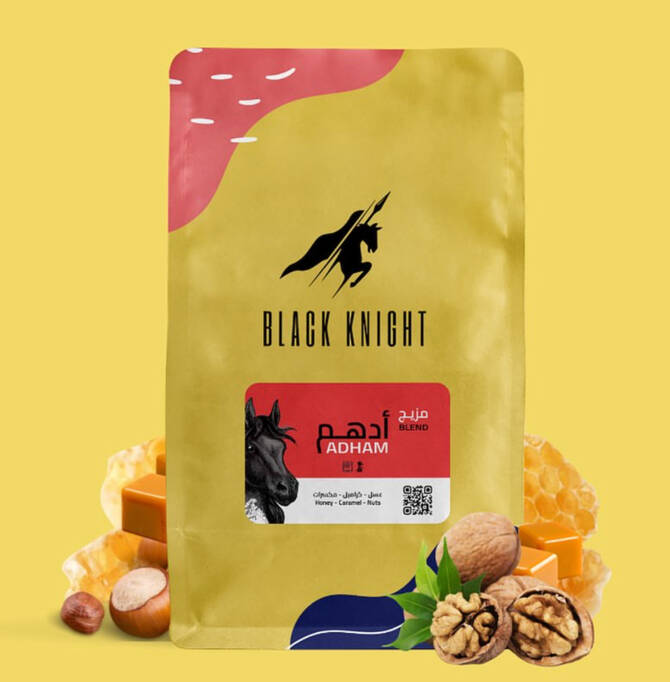
Adham blend: Rich, full-bodied, and naturally sweet, with clear notes of honey, caramel, and nuts. (X: @bkcoffeessa)
2 / 3
Morning ritual: brewing Adham from Black Knight. (AN photo by Waad Hussain)
3 / 3
Adham on ice: Full flavor, no bitterness, just pure balance. (AN photo by Waad Hussain)
Short Url
Updated 26 October 2025
Follow

Where We Are Going Today: Black Knight Coffee Roasters

Black Knight has managed to strike a rare balance in Saudi Arabia’s growing coffee scene: a brand that feels both accessible and refined. Established in 2018, it has become one of the most recognizable local names in specialty coffee, known for blends that are bold without being bitter, and distinct without losing their smoothness.

Among their offerings, the Adham blend stands out as one of the best I’ve tried. It’s a coffee that doesn’t rely on complexity to impress; instead, it delivers depth through precision. The flavor is rich, full-bodied, and naturally sweet, with clear notes of honey, caramel, and nuts. What I like most is that it manages to stay clean and balanced, there’s no sharp acidity or unpleasant aftertaste, just a steady, rounded finish that lingers in a pleasant way. Whether brewed hot or over ice, Adham holds its character perfectly.

The price point is fair, especially considering the quality and consistency of the roast. It’s the kind of everyday specialty coffee that feels premium without pushing you to overspend. On the other hand, their Ronaldo blend offers a beautiful flavor profile as well but sits on the higher end of the price range — delicious, but harder to justify for regular use. 

Black Knight products are widely available, I usually order their beans through Ninja App or find them at local specialty retailers like Modern Supply, and they’re also available online for direct purchase.

What Black Knight has done well is create a brand that feels distinctly Saudi but can compete with international roasters. The attention to detail, quality control, and flavor design make it clear that this is more than just another local brand, it’s a confident player shaping how specialty coffee is perceived in the Kingdom.

For more information, check their Instagram: @bkcoffeessa


Where We Are Going Today: Nakhat Marga

Photo/Supplied
Updated 21 February 2026
Follow

Where We Are Going Today: Nakhat Marga

  • For the main course, the menu offers a variety of meat and chicken dishes, but the must-try is madhgout laham, a flavorful one-pot meal of spiced meat slow-cooked with rice and served hot

Nakhat Marga, with locations in Al-Naeem and Al-Waha in Jeddah, is a restaurant that focuses on traditional Saudi meat and broth dishes, making it a fitting choice to celebrate Saudi Founding Day. 

The menu is structured around classic dishes, offering a wide selection of meats, chicken, and accompanying sides that reflect the culinary heritage of the Kingdom.

We began with jareesh, a creamy, savory porridge, and marqa, a slow-cooked stew of tender meat, onions, garlic, and different spices, simmered to create a rich broth. 

For the main course, the menu offers a variety of meat and chicken dishes, but the must-try is madhgout laham, a flavorful one-pot meal of spiced meat slow-cooked with rice and served hot.

If you are looking for other rice options, red meat madhbi is cooked in a traditional style, with muqlaqil and maknoom offering familiar tastes that many in Jeddah would recognize from home-cooked meals. 

Among the chicken dishes, kabli stands out for its balanced flavor, but the must try is the maqluba which is served in a generous portion, layering rice and chicken in the classic inverted style. The taste is so good that you may end up eating more than you expected.

Side dishes such as liver and moussaka were consistent with their descriptions and went well with the mains, not too heavy or filling. I also tried the yogurt cucumber salad, which offered a simple, cooling contrast to the heavier meat dishes.

Desserts such as basbousa are served with a dipping sauce, while marsa, made from semolina, sugar, butter, and flavored with cardamom, is similar in texture to basbousa but may vary slightly in ingredients and taste different.

Aseedah is a must-try when visiting, delivering a comforting taste of Saudi cuisine with its soft, traditional porridge served with butter, honey, or date syrup.

The restaurant’s atmosphere leans more toward functional but traditional dining rather than an elaborate experience, which keeps the focus on the food itself.