

Sellers cancel deals with Chinese oil refiner Yulong after UK sanctions, sources say

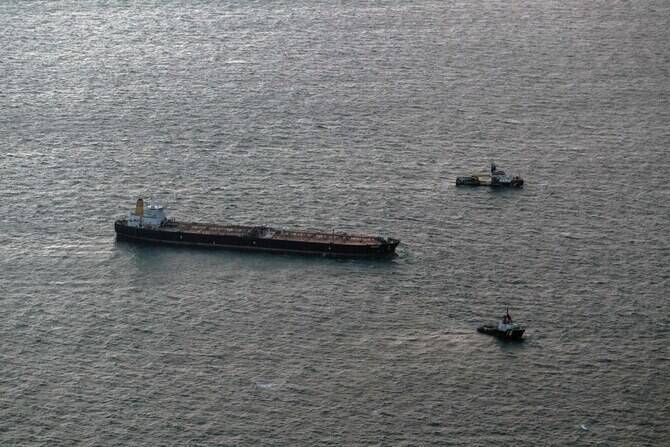
Several suppliers have cancelled sales of Middle Eastern and Canadian oil to China's Yulong Petrochemical after the UK imposed sanctions on the refiner, which is likely to push it to buy more Russian crude, multiple sources familiar with the deals said. (AP/File)
Short Url
Updated 23 October 2025
Follow

Sellers cancel deals with Chinese oil refiner Yulong after UK sanctions, sources say

  • Most of the cancelations apply to spot cargoes that were due to load after November 13, when the sanctions take effect
  • The decision to cancel the contracts partly stems from concerns about the ability to make payments

SINGAPORE: Several suppliers have canceled sales of Middle Eastern and Canadian oil to China’s Yulong Petrochemical after the UK imposed sanctions on the refiner, which is likely to push it to buy more Russian crude, multiple sources familiar with the deals said.
The refiner, China’s newest with a capacity of 400,000 barrels per day and one of the country’s largest single Russian oil customers, is among the entities Britain designated last week to curb Moscow’s oil revenues used to fund the Ukraine war.
Suppliers that are unwinding supply deals include European majors TotalEnergies, BP, trading house Trafigura, Chinese state trader PetroChina International and others, the sources said.
Most of the cancelations apply to spot cargoes that were due to load after November 13, when the sanctions take effect.
PetroChina International and TotalEnergies each exited transactions supplying Access Western Blend, a heavy crude exported from Canada, said two other sources, who have knowledge of those transactions.
BP declined to comment. Total, PetroChina and Yulong did not respond to requests for comment.
Trafigura had been supplying Yulong with 2 million barrels a month of Omani and Abu Dhabi Upper Zakum crude under an annual contract, said sources with knowledge of the company’s transactions with Yulong.

PIVOT TO RUSSIAN OIL
The decision to cancel the contracts partly stems from concerns about the ability to make payments as large western banks will avoid working with sanctioned entities, the sources said.
With dwindling access to non-sanctioned crude supplies, Yulong will most likely buy more Russian oil, which already accounts for about half of its intake.
“We are already hearing Yulong is moving toward running predominantly sanctioned barrels, which, similar to the sanctions impact on Nayara, may necessitate run cuts,” said Sun Jianan, an analyst with consultancy Energy Aspects.
India’s Nayara Energy, partially owned by Russian major Rosneft, has reduced its refinery runs after European Union sanctions were imposed in July.
While larger companies step away from Yulong, smaller companies without UK connections could continue dealings, said an executive whose company continues supplying Yulong and declined to be named due to the sensitivity of the matter.
Yulong buys 150,000 to 250,000 barrels per day of Russian crude, according to estimates by traders and tanker tracker Vortexa.
Most of Yulong’s Russian imports are ESPO Blend from the country’s Pacific coast that Chinese refineries favor because of the short transit period for the shipments. Recently, Yulong has also imported Urals crude from Russia’s European ports, said three traders familiar with Yulong’s procurement patterns.
It secures most of its Russian supply from dealers linked to major Russian producers, said two of those sources.
Built on a man-made island near the port of Yantai in the northeastern province of Shandong, Yulong Petrochemical is a joint venture between private aluminum firm Nanshan Group and government-backed Shandong Energy Group.


Poland slow to counter Russia’s ‘existential threat’: general

Updated 4 sec ago
Follow

Poland slow to counter Russia’s ‘existential threat’: general

  • The general highlighted a low “pace of technical modernization,” compared to increases in the army’s size
  • Kukula said the Polish army should reach 500,000 soldiers by 2039

WARSAW: Russia poses an “existential threat” to Poland and its military is lagging, the country’s armed forces chief warned senior officials on Wednesday.
Poland, the largest country on NATO’s eastern flank and a neighbor of Russia, Belarus, and Ukraine, is the western alliance’s largest spender in relative terms.
This year, the country is allocating 4.8 percent of its GDP to defense, just shy of the alliance’s five percent target to be met by 2035.
However, that record defense spending was not enough to “make up for nearly three decades of chronic underfunding of the armed forces,” General Wieslaw Kukula, chief of the general staff, argued at the meeting, which included top officers, the defense minister and Poland’s president.
The general highlighted a low “pace of technical modernization,” compared to increases in the army’s size.
Kukula said the Polish army should reach 500,000 soldiers by 2039, compared with around 210,000 at present.
As a result of a lack of updates, some new Polish units “are not achieving combat readiness,” due to insufficient equipment, rather than a personnel shortage, the general argued.
Meanwhile, he added, “the Russian Federation remains an existential threat to Poland.”
Russia “is constantly reorganizing its forces, drawing on the lessons from its aggression in Ukraine, and building up the capacity for a conventional conflict with NATO countries,” he stressed.
Poland is to receive 43.7 billion euros ($51,5 billion) in loans under the European Union’s Security Action For Europe (SAFE) scheme, designed to strengthen Europe’s defensive capabilities.
Warsaw plans to use these funds to boost domestic arms production.
The Polish government claims that Poland will be able to access SAFE finance even if President Karol Nawrocki — backed by Poland’s conservative-nationalist opposition — vetos a law setting out domestic arrangements for its implementation.
Law and Justice (PiS) — the main opposition party — argues that SAFE could become a new tool for Brussels to place undue pressure on Poland, thanks to a planned mechanism for monitoring the funds, which they claim risks undermining Polish sovereignty.