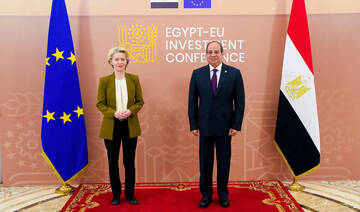
BRUSSELS: European Union leaders are seeking a more active role in Gaza and the occupied West Bank after being sidelined from the US-brokered ceasefire between Israel and Hamas.
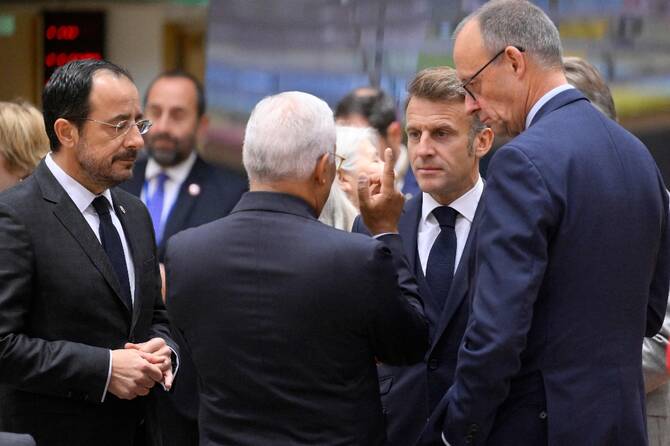
At a summit Thursday in Brussels largely focused on Ukraine and Russia, EU heads of state are also expected to discuss the shaky ceasefire in Gaza and potential EU support for stability in the war-torn coastal enclave. The EU has been the biggest provider of aid to the Palestinians and is Israel’s top trading partner.
“It is important that Europe not only watches but plays an active role,” said Luc Frieden, the prime minister of Luxembourg, as he headed in to the meeting. “Gaza is not over; peace is not yet permanent,” he said.
Outrage over the war in Gaza has riven the 27-nation bloc and pushed relations between Israel and the EU to a historic low.
European Commission President Ursula von der Leyen announced in September plans to seek sanctions and a partial trade suspension against Israel, aimed to pressure it to reach a peace deal in Gaza.
Momentum driving the measures seemed to falter with the ceasefire deal mediated by US President Donald Trump, but European supporters say they should still be on the table as violence continues to flare up in Gaza and the occupied West Bank.
In the run-up to the ceasefire, Israeli Prime Minister Benjamin Netanyahu said earlier this month that “Europe has essentially become irrelevant and displayed enormous weakness.”
The deal came about with no visible input from the EU, and European leaders have since scrambled to join the diplomacy effort currently reshaping Gaza.
The EU’s top diplomat, Kaja Kallas, has said the EU should play a role in Gaza and not just pay to support stability and eventually reconstruction.
The EU has provided key support for the Palestinian Authority, which administers parts of the occupied West Bank, pledged to help flood Gaza with humanitarian aid, and said it could bring a West Bank police support program to Gaza to buttress a stabilization force called for in the current 20-point ceasefire plan.
It has also sought membership in the plan’s “Board of Peace” transitional oversight body, Dubravka Šuica, European Commissioner for the Mediterranean, said this week.
The European Border Assistance Mission in Rafah, on the Gaza-Egypt border, began in 2005. In January, it deployed 20 security border police experts from Italy, Spain and France.
During the February-March ceasefire, the mission helped 4,176 individuals leave the Gaza Strip, including 1,683 medical patients. Those efforts were paused when fighting resumed.

EU leaders seek role in Gaza at summit focused on Ukraine and Russia
Short Url
https://arab.news/66jwk
EU leaders seek role in Gaza at summit focused on Ukraine and Russia
- Outrage over the war in Gaza has riven the 27-nation bloc and pushed relations between Israel and the EU to a historic low
- European Commission President Ursula von der Leyen announced in September plans to seek sanctions and a partial trade suspension against Israel, aimed to pressure it to reach a peace deal in Gaza
In show of support, Canada, France open consulates in Greenland
COPENHAGEN, Denmark: Canada and France, which both adamantly oppose Donald Trump’s wish to control Greenland, will open consulates in the Danish autonomous territory’s capital on Friday, in a strong show of support for the local government.
Since returning to the White House last year, Trump has repeatedly insisted that Washington needs to control the strategic, mineral-rich Arctic island for security reasons.
The US president last month backed off his threats to seize Greenland after saying he had struck a “framework” deal with NATO chief Mark Rutte to ensure greater American influence.
A US-Denmark-Greenland working group has been established to discuss ways to meet Washington’s security concerns in the Arctic, but the details of the talks have not been made public.
While Denmark and Greenland have said they share Trump’s security concerns, they have insisted that sovereignty and territorial integrity are a “red line” in the discussions.
“In a sense, it’s a victory for Greenlanders to see two allies opening diplomatic representations in Nuuk,” said Jeppe Strandsbjerg, a political scientist at the University of Greenland.
“There is great appreciation for the support against what Trump has said.”
French President Emmanuel Macron announced Paris’s plans to open a consulate during a visit to Nuuk in June, where he expressed Europe’s “solidarity” with Greenland and criticized Trump’s ambitions.
The newly-appointed French consul, Jean-Noel Poirier, has previously served as ambassador to Vietnam.
Canada meanwhile announced in late 2024 that it would open a consulate in Greenland to boost cooperation.
The opening of the consulates is “a way of telling Donald Trump that his aggression against Greenland and Denmark is not a question for Greenland and Denmark alone, it’s also a question for European allies and also for Canada as an ally, as a friend of Greenland and the European allies also,” Ulrik Pram Gad, Arctic expert at the Danish Institute of International Studies, told AFP.
“It’s a small step, part of a strategy where we are making this problem European,” said Christine Nissen, security and defense analyst at the Europa think tank.
“The consequences are obviously not just Danish. It’s European and global.”
Recognition
According to Strandsbjerg, the two consulates — which will be attached to the French and Canadian embassies in Copenhagen — will give Greenland an opportunity to “practice” at being independent, as the island has long dreamt of cutting its ties to Denmark one day.
The decision to open diplomatic missions is also a recognition of Greenland’s growing autonomy, laid out in its 2009 Self-Government Act, Nissen said.
“In terms of their own quest for sovereignty, the Greenlandic people will think to have more direct contact with other European countries,” she said.
That would make it possible to reduce Denmark’s role “by diversifying Greenland’s dependence on the outside world, so that it is not solely dependent on Denmark and can have more ties for its economy, trade, investments, politics and so on,” echoed Pram Gad.
Greenland has had diplomatic ties with the European Union since 1992, with Washington since 2014 and with Iceland since 2017.
Iceland opened its consulate in Nuuk in 2013, while the United States, which had a consulate in the Greenlandic capital from 1940 to 1953, reopened its mission in 2020.
The European Commission opened its office in 2024.
Since returning to the White House last year, Trump has repeatedly insisted that Washington needs to control the strategic, mineral-rich Arctic island for security reasons.
The US president last month backed off his threats to seize Greenland after saying he had struck a “framework” deal with NATO chief Mark Rutte to ensure greater American influence.
A US-Denmark-Greenland working group has been established to discuss ways to meet Washington’s security concerns in the Arctic, but the details of the talks have not been made public.
While Denmark and Greenland have said they share Trump’s security concerns, they have insisted that sovereignty and territorial integrity are a “red line” in the discussions.
“In a sense, it’s a victory for Greenlanders to see two allies opening diplomatic representations in Nuuk,” said Jeppe Strandsbjerg, a political scientist at the University of Greenland.
“There is great appreciation for the support against what Trump has said.”
French President Emmanuel Macron announced Paris’s plans to open a consulate during a visit to Nuuk in June, where he expressed Europe’s “solidarity” with Greenland and criticized Trump’s ambitions.
The newly-appointed French consul, Jean-Noel Poirier, has previously served as ambassador to Vietnam.
Canada meanwhile announced in late 2024 that it would open a consulate in Greenland to boost cooperation.
The opening of the consulates is “a way of telling Donald Trump that his aggression against Greenland and Denmark is not a question for Greenland and Denmark alone, it’s also a question for European allies and also for Canada as an ally, as a friend of Greenland and the European allies also,” Ulrik Pram Gad, Arctic expert at the Danish Institute of International Studies, told AFP.
“It’s a small step, part of a strategy where we are making this problem European,” said Christine Nissen, security and defense analyst at the Europa think tank.
“The consequences are obviously not just Danish. It’s European and global.”
Recognition
According to Strandsbjerg, the two consulates — which will be attached to the French and Canadian embassies in Copenhagen — will give Greenland an opportunity to “practice” at being independent, as the island has long dreamt of cutting its ties to Denmark one day.
The decision to open diplomatic missions is also a recognition of Greenland’s growing autonomy, laid out in its 2009 Self-Government Act, Nissen said.
“In terms of their own quest for sovereignty, the Greenlandic people will think to have more direct contact with other European countries,” she said.
That would make it possible to reduce Denmark’s role “by diversifying Greenland’s dependence on the outside world, so that it is not solely dependent on Denmark and can have more ties for its economy, trade, investments, politics and so on,” echoed Pram Gad.
Greenland has had diplomatic ties with the European Union since 1992, with Washington since 2014 and with Iceland since 2017.
Iceland opened its consulate in Nuuk in 2013, while the United States, which had a consulate in the Greenlandic capital from 1940 to 1953, reopened its mission in 2020.
The European Commission opened its office in 2024.
© 2026 SAUDI RESEARCH & PUBLISHING COMPANY, All Rights Reserved And subject to Terms of Use Agreement.