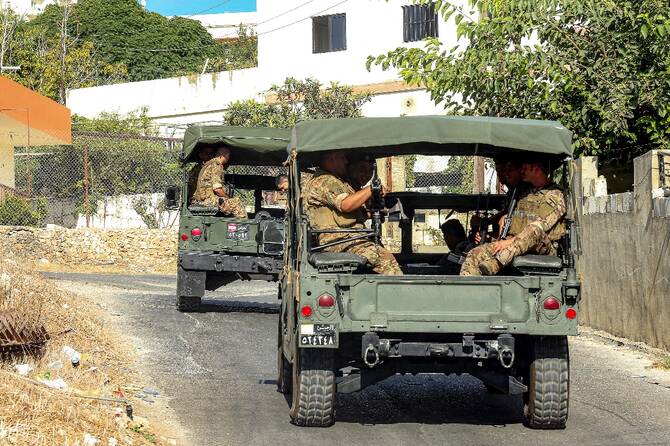
ANKARA: Turkish peacekeeping forces will continue to help boost the Lebanese army’s capability under a renewed deployment mandate in Lebanon, Turkiye’s Defense Ministry said on Thursday.
Turkiye’s parliament passed a bill on Tuesday to renew the military’s deployment mandates in Syria and Iraq by three more years, and its deployment mandate under the UN Interim Force in Lebanon (UNIFIL) by two years.
“Efforts will continue to improve security conditions in the region, ensure stability and assist in the capacity building of the Lebanese armed forces, with the aim of establishing and maintaining peace in Lebanon,” the ministry said in a statement.
NATO member Turkiye, which took part in mediation that led to the Israel-Hamas ceasefire deal in Gaza, condemned Israeli offensives in the Palestinian enclave and regional countries including Lebanon, saying that “genocidal” and “expansionist” Israeli policies remained the biggest threat to regional peace.
Separately, the Defense Ministry said in its weekly briefing that the renewed Iraq and Syria mandates aimed to preserve Turkiye’s national security against attempts to harm the territorial integrity of its two neighbors.
Turkiye has been frustrated by what it calls the stalling of the US-backed, Kurdish-led Syrian Democratic Forces (SDF) in terms of implementing a landmark integration agreement that it signed with Syria’s government in March.
Ankara views the SDF as a terrorist organization linked to the outlawed Kurdistan Workers Party (PKK) militant group, which has been in a disarmament process that Turkiye says must apply to the SDF as well. It has warned of military action against the SDF and said Damascus should address its concerns.
In the mandate passed on Tuesday, parliament said the move was necessary because “terrorist organizations continued their presence in the region” and the SDF was “rejecting taking steps toward integrating into Syria’s central administration over its separatist and discriminatory agenda.”


![]()

Turkiye says it will help boost Lebanese army’s capacity under mandate
Short Url
https://arab.news/2ndfd
Turkiye says it will help boost Lebanese army’s capacity under mandate
- Turkiye’s parliament passed a bill on Tuesday to renew the military’s deployment mandates in Syria and Iraq by three more years, and its deployment mandate under the UN Interim Force in Lebanon (UNIFIL) by two years


Latest updates


Recommended


© 2026 SAUDI RESEARCH & PUBLISHING COMPANY, All Rights Reserved And subject to Terms of Use Agreement.