Athar Festival spotlights Kingdom’s push for sustainable tourism

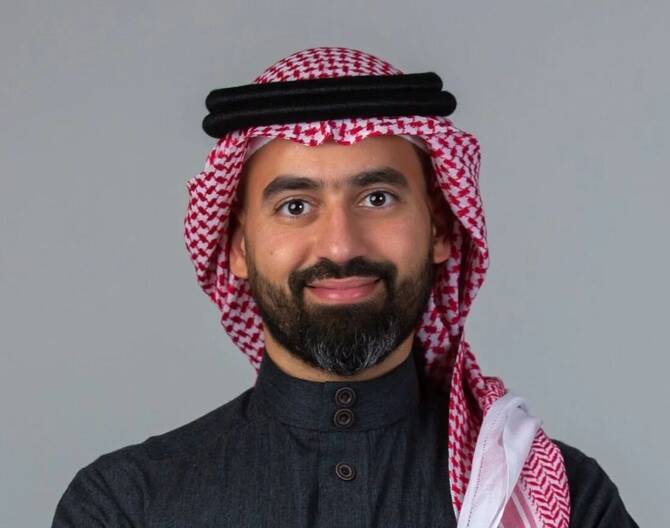
Diriyah Co. Destination Executive Director Abdulrahman Al-Jefri. (Athar Festival)
Short Url
Updated 22 October 2025
Follow

Athar Festival spotlights Kingdom’s push for sustainable tourism

  • Abdulrahman Al-Jefri: The world is shifting into a new definition for sustainability, where today we have very specific technologies called sustainable tourism
  • Al-Jefri: Sustainable tourism is not just preserving the world for the younger generation, the next generation, it’s actually recreating the asset that has been loose, lost or consumed

RIYADH: Sustainable tourism has become a key measure of Saudi Arabia’s transformation, as the Kingdom seeks to balance economic growth with cultural preservation and environmental sustainability.

Speaking to Arab News, a media partner at Athar Festival, Abdulrahman Al-Jefri, destination and live assets executive director at Diriyah Co., said global definitions of sustainability are changing.

“The world is shifting into a new definition for sustainability, where today we have very specific technologies called sustainable tourism,” he said.

“Sustainable tourism is not just preserving the world for the younger generation, the next generation, it’s actually recreating the asset that has been loose, lost or consumed.”

Al-Jefri said tourism has one of the highest environmental impacts due to its carbon footprint and waste across the value chain.

He added that Diriyah’s approach emphasizes walkability, traditional design and landscape protection to reduce that impact.

“We are mandated to preserve the greenery that we have had for 2,000 years in Wadi Hanifa,” he said. “Today, we’re preserving all trees and actually planting more than 1 million trees in our destination. And the architecture methodology, which is mud brick, is a breathable material and low-rise. It’s also a promoter for these kind of sustainable tools.”

Al-Jefri said the Kingdom’s growing tourism sector is also creating new opportunities for young Saudis, and expanding destinations beyond religious tourism.

He added that the tourism sector is now a key pillar of the national plan to diversify income sources.

During a panel titled “Beyond Moments: Transforming Tourism Experiences into Legacies in the Middle East,” Melanie De Souza, destination marketing executive director at the Royal Commission for AlUla, said travel expectations are shifting globally.

She added that people are looking for meaning and “deep cultural immersion and connection.

“I think, increasingly, the customer of today is making decisions based on their own values,” she added. “What is really resonating with customers is this very serious responsibility we feel, to protect and preserve the heritage we have inherited, to really restore our landscapes and breathe wild with the ultimate hope.”

Wadha Al-Nafjan, senior visitor services manager at the King Salman Park Foundation, said visitor experiences should move beyond services to foster emotional connection.

“(It can be done) by designing emotional connection to a place through active participation,” she said.

She added that destinations must continuously evolve to keep visitors engaged and that lasting value in tourism comes from how projects improve people’s lives.

“Moments create attention but I think legacies are built when you design with the intention of improving people’s lives,” Al-Nafjan said.


Saudi Food and Drug Authority pioneering digital health safety

Updated 15 December 2025
Follow

Saudi Food and Drug Authority pioneering digital health safety

  • Digital foundation enabled the development of centralized dashboards that provide real-time analysis of adverse events
  • Major improvement has been the use of Robotic Process Automation (RPA) to ensure medication safety works smoothly

TOKYO: Saudi Arabia is establishing itself as a regional leader in digital health regulation by integrating advanced technologies into the Saudi Food and Drug Authority’s (SFDA) pharmacovigilance and cosmetic safety oversight.

In line with Vision 2030’s digital goals, these projects are creating new standards for using data to protect public health, according to the SFDA.

A report by the Oxford Business Group says the transformation began with modernising the National Pharmacovigilance Centre’s adverse reaction reporting system. Moving from paper-based submissions to the fully digital “Saudi Vigilance” platform marked a significant step forward.

The introduction of smart reporting forms with structured data fields and behavioural nudges grounded in psychological principles significantly improved reporting quality and completion rates.

This digital foundation enabled the development of centralised dashboards that provide real-time analysis of adverse events, enabling early identification of safety signals and under-reporting trends.

A major improvement has been the use of Robotic Process Automation (RPA) to ensure medication safety works smoothly. By letting computers handle repetitive tasks like sorting reports and checking data, the SFDA has become more efficient.

The new RPA system for identifying safety signals has also sped things up. These technology solutions have made work easier and happier employees by eliminating boring manual tasks.

The SFDA’s digital changes also help prevent risks by using new online learning tools. The aRMMs e-learning system, with training videos about high-risk medicines, has changed how health care workers learn. Adding digital safety steps directly into hospital computer systems has also made a big difference. This new approach puts safety alerts and learning materials directly into doctors’ daily work, ensuring important information reaches them when they need it.

Digital innovation has also helped prevent medication errors. Moving from the old Phonetic and Orthographic Computer Analysis system to the new Saudi Name Registration (SNR) platform has made it easier to spot potentially confusing drug names. With better computer programs that check both Arabic and English names, plus real-time alerts and automatic updates, the SNR system is a big step forward in ensuring the safety of medicines before they reach the market.

Looking ahead, the SFDA plans to use these digital changes to make cosmetic products safer as well.

Planned projects using artificial intelligence include computer systems that spot rule-breaking, automated ingredient checks, and tools that read customer feedback to identify early warning signs.

This digital strategy puts Saudi Arabia ahead in new ways of making rules. By using artificial intelligence, automation, and data analysis in its work, the SFDA is improving how it tracks medicine safety and preparing for further progress in keeping products safe for consumers.

All these efforts support Vision 2030’s goal of building a knowledge-based economy and keeping Saudi citizens as safe as possible.