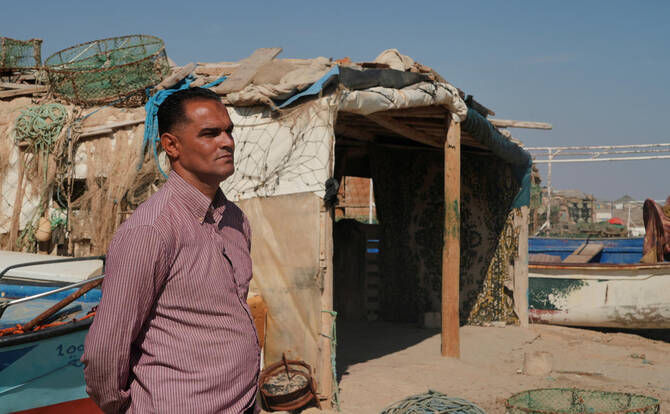
GABES, Tunisia: Workers in the southern Tunisian city of Gabes launched a general strike on Tuesday following weeks of protest over a chemical factory residents blame for a spike in serious health issues.
Thousands have recently rallied in the city of some 400,000 inhabitants to demand the closure of a state-run phosphate processing plant which they say is behind a rise in gas poisonings after it ramped up production.
The plant, inaugurated in 1972, processes phosphate to make fertilizers, and some of the gases and waste it discharges into the open air and Mediterranean are radioactive and can cause cancer, researchers have found.
“Everything is closed in Gabes,” said Saoussen Nouisser, a local representative of Tunisia’s main labor union, UGTT, which called the general strike.
“We’re all angry at the catastrophic environmental situation in our marginalized city,” she told AFP.
Over 200 people have been hospitalized in recent weeks for respiratory distress and gas poisoning, according to authorities and NGOs.
Videos circulated online of children seemingly having breathing issues last week pushed thousands to rally in the coastal city.
Police have used tear gas to disperse the crowd at some demonstrations, with the city seeing clashes between residents and security forces sometimes at night.
Dozens were arrested over the weekend.
National Guard spokesman Houcem Eddine Jebabli told local media that protesters have used “over 800 Molotov cocktails” targeting security forces, adding there were cases of “robbery and looting.”
In 2017, the Tunisian government promised to gradually shut down the factory, but earlier this year authorities said they would instead ramp up production at the plant.
President Kais Saied had long vowed to revive the sector hindered by unrest and underinvestment, calling phosphate a “pillar of the national economy.”
Authorities have said “urgent measures” were underway to address pollution in Gabes as the government called on Chinese companies to help manage the plant’s waste.
Equipment Minister Salah Zouari said they would help “control gas emissions” and “prevent the discharge of phosphogypsum into the sea.”
The solid waste contains radioactive elements, which also impact soil quality and groundwater.


Tunisian city on general strike over factory pollution
https://arab.news/48xd9
Tunisian city on general strike over factory pollution

- The plant, inaugurated in 1972, processes phosphate to make fertilizers
- “Everything is closed in Gabes,” said Saoussen Nouisser, a local representative of Tunisia’s main labor union


Israel police to deploy around Al-Aqsa for Ramadan, Palestinians report curbs
- The Al-Aqsa compound is a central symbol of Palestinian identity and also a frequent flashpoint
JERUSALEM: Israeli police said Monday that they would deploy in force around the Al-Aqsa Mosque during the Muslim holy month of Ramadan, which begins this week, as Palestinian officials accused Israel of imposing restrictions at the compound.
Over the course of the month of fasting and prayer, hundreds of thousands of Palestinians traditionally attend prayers at Al-Aqsa — Islam’s third-holiest site, located in east Jerusalem, which Israel captured in 1967 and later annexed.
Arad Braverman, a senior Jerusalem police officer, said forces would be deployed “day and night” across the compound, known to Jews as the Temple Mount, and in the surrounding area.
He said thousands of police would also be on duty for Friday prayers, which draw the largest crowds of Muslim worshippers.
Braverman said police had recommended issuing 10,000 permits for Palestinians from the occupied West Bank, who require special permission to enter Jerusalem.
He did not say whether age limits would apply, adding that the final number of people would be decided by the government.
The Palestinian Jerusalem Governorate said in a separate statement it had been informed that permits would again be restricted to men over 55 and women over 50, mirroring last year’s criteria.
It said Israeli authorities had blocked the Islamic Waqf — the Jordanian?run body administering the site — from carrying out routine preparations, including installing shade structures and setting up temporary medical clinics.
A Waqf source confirmed the restrictions and said 33 of its employees had been barred from entering the compound in the week before Ramadan.
The Al-Aqsa compound is a central symbol of Palestinian identity and also a frequent flashpoint.
Under long?standing arrangements, Jews may visit the compound — which they revere as the site of their second temple, destroyed by the Romans in 70 AD — but they are not permitted to pray there.
Israel says it is committed to maintaining this status quo, though Palestinians fear it is being eroded.
Braverman reiterated Monday that no changes were planned.
In recent years, a growing number of Jewish ultranationalists have challenged the prayer ban, including far?right politician Itamar Ben-Gvir, who prayed at the site while serving as national security minister in 2024 and 2025.