

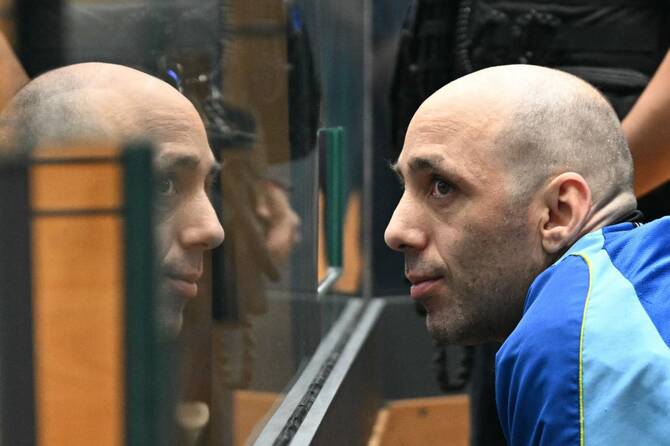

ALBI, France: A Frenchman whose wife disappeared during the Covid-19 pandemic and whose body was never found was sentenced to 30 years in prison Friday for murdering her, in a case that has gripped France.
Cedric Jubillar, a 38-year-old painter and plasterer, had said he had done “absolutely nothing” to his wife, Delphine, whose body has never been found since she went missing in rural southern France in December 2020.
The sentence matched the prosecutors’ request for the man, who has been in detention since 2021. Jubillar’s lawyers said he would appeal.
As the verdict was announced, Delphine’s family and loved ones embraced. Some started crying and one of her uncles collapsed.
“We’re all in shock after four years of legal proceedings,” said lawyer Philippe Pressecq.
“The jurors rose to the occasion over these four weeks,” he added. “It’s because they followed the case closely and understood it well that they reached a decision that cannot be disputed.”
A jury in the southern town of Albi, after six hours’ deliberation, found Jubillar guilty of murdering his wife after she asked for a divorce while having an affair with another man.
Investigating magistrates concluded that a pair of Delphine’s broken glasses, along with testimony from the couple’s son and screams heard by neighbors, indicate that an argument led to her death.
Jubillar, who watched impassively as the court president announced the verdict while tightly gripping the defendant’s box, denied the claims.
His lawyer Alexandre Martin said he was a “broken man” and while they were “disappointed” in the verdict, the defense was preparing the appeal, with a new trial expected to take place in 2026.
Last week, Jubillar’s mother and two ex-girlfriends gave damaging testimony.
Nadine Jubillar, 54, said her son had threatened to kill his wife and hide her body where “no one will ever find her” just weeks before she disappeared, words that at the time she dismissed as said in anger.
Jennifer, an ex-girlfriend, said that when she had visited Cedric Jubillar in prison he had confessed to strangling Delphine in the couple’s home.
Severine, another of Jubillar’s former partners, said he had told her he buried his wife’s body in a burned-down farm. He passed that off as a joke.
- ‘Daddy guilty of mommy’s murder’ -
A sniffer dog handler told the trial last month his investigation showed Delphine, a nurse, had left the house then returned before her disappearance, but had not stepped out again afterwards.
A body has no odour an hour after a person’s death, the handler added, implying someone might have moved her remains after that time.
For Laurent Boguet, lawyer for the Jubillar couple’s two young children, the “severe sentence is due to both the actions he was accused of and his attitude throughout the investigation and during the trial.”
Malika Chmani, who also represents the children, aged six and eleven, explained that she would tell them in “simple words” that “there are judges and jurors who believed they had enough evidence to say that daddy was guilty of mommy’s murder.”
In 2023, 96 women were killed by their partners or ex-partners in France, according to official figures. That is equivalent to a woman murdered every 3.8 days.


