


Can AI really serve the public good?

1 / 3
2 / 3
3 / 3
Short Url
Updated 22 October 2025
Follow

Can AI really serve the public good?

  • Ethical human use of AI is vital, says CISCO’s Guy Diedrich
  • Welcomes tight regulations but warns of stifling innovation

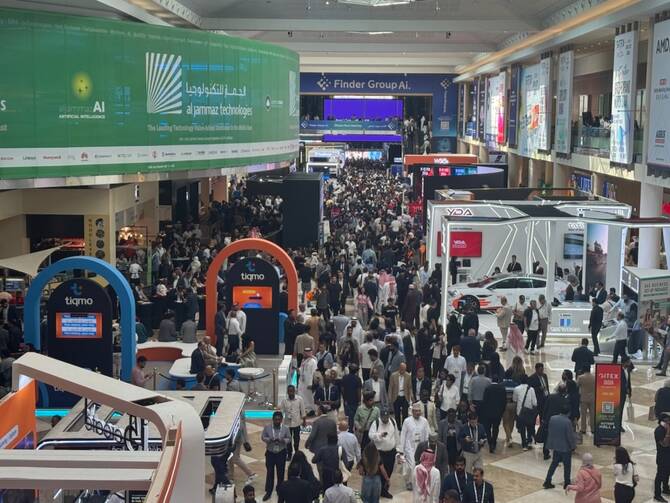
DUBAI: As artificial intelligence reshapes economies and societies at unprecedented speed, global technology leaders meeting at the GITEX Global conference have been debating the rapid acceleration of AI disruption.

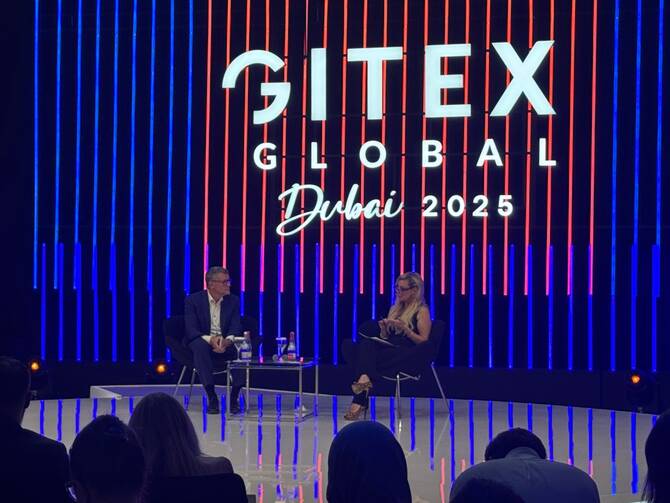
One of the more poignant conversations on Wednesday this week tackled whether innovation can truly serve the public good, in a session titled “Digital Futures: Global Impact at the Speed of Innovation.”

Guy Diedrich, senior vice president and global innovation officer at Cisco’s Digital Impact Office, argued that the future of AI and emerging technologies depends as much on trust, ethics, and human capital as on algorithms and investment.

He was speaking to Australian journalist and CNBC Anchor Amanda Drury during a live session at the conference.

“Creative Destruction is when you come up with a new innovation, when AI is released, when quantum comes and all of a sudden everything before it gets churned out,” Diedrich said.

“It goes away because you have to make room for that new innovation, for that new economic growth, for that new opportunity.”

He warned that progress will stall if societies fail to invest in people, arguing that there was a symbiotic relationship between social good and capital gains.

“You’re never going to get the full value of that innovation unless you have developed your population, unless they have that intellectual capital in place,” he said. “The two have to go side by side.”

Central to that balance is trust as the true “engine” that drives the digital economy, he said.

Without it, he argued there could be no movement as people would begin opting out — choosing not to share data which would be detrimental to the evolution of AI.

Several high-profile cases, such as a Samsung data leak via ChatGPT in 2023 have created doubt over whether AI can be trusted with sensitive information.

Many have called on governments to place heavier regulations on tech companies, which Diedrich welcomed but cautioned that it could result in hindering innovation.


Philippines in talks to add flights, develop joint tourism promotion with Saudi Arabia

Updated 14 November 2025
Follow

Philippines in talks to add flights, develop joint tourism promotion with Saudi Arabia

  • Philippines developing halal travel as part of its tourism strategy
  • Saudi market is one of Philippines’ most dynamic and high-value markets

MANILA: Philippine officials are in talks with Saudi tourism players to add more flights between their countries and develop a joint travel promotion campaign, the department of tourism said as Manila seeks to strengthen tourism ties with the Kingdom. 

Tourism Undersecretary Verna C. Buensuceso led the Philippine delegation at the 26th UN Tourism General Assembly earlier this month in Riyadh. On the sidelines of the event, she met with Saudia Airlines’ sales general manager, Abdulrahman Alabdulwahab, and Riyadh Air Vice President for Network Planning and Partnerships Wolfgang Reuss.  

They held “separate discussions … on the expansion of air connectivity and the development of joint tourism promotion initiatives,” the tourism department said in a statement. 

With tourism being a key sector for the Philippines, its government has been trying to attract more Middle Eastern visitors by creating Muslim-friendly destinations and ensuring that they have access to halal products and services. 

Saudi travelers are among those contributing to a recent surge in international tourism arrivals from countries in the Middle East and the GCC.

“Saudi Arabia has emerged as one of the world’s fastest-growing outbound tourism markets, driven by a young and affluent population with high disposable income for travel. It represents one of our most dynamic and high-value markets in the Middle East,” Tourism Secretary Christina Frasco said in a statement. 

“As a destination, the Philippines continues to gain ground among Saudi travelers, recognized for its warm hospitality, competitive value, English-speaking service culture, and growing halal-friendly tourism infrastructure.”

Tourism receipts from the Kingdom were more than $37 million last year, a 46 percent rise from 2023, ministry data showed. While Manila continues to be a top destination for Saudi travelers, Cebu, Boracay, and Pampanga are also among their top choices. 

The predominantly Catholic country — where Muslims constitute about 10 percent of the almost 120 million population — last year also launched a beach dedicated to Muslim women travelers in Boracay, the country’s top resort island and one of the world’s most popular.

Last month, the Philippines launched a “Muslim-Friendly Travelogue,” an official guide for tourists planning trips to the country, covering its Islamic history and heritage, recommendations for destinations, and halal culinary products available in all parts of the archipelago.

In 2024, the Philippines was recognized as a rising Muslim-friendly non-Organization of Islamic Cooperation Destination by the Mastercard-CrescentRating Global Muslim Travel Index, an annual report benchmarking destinations in the Muslim travel market. 

Known for its white-sand beaches, diving spots and rich culture, the Philippines received a similar recognition in 2023.