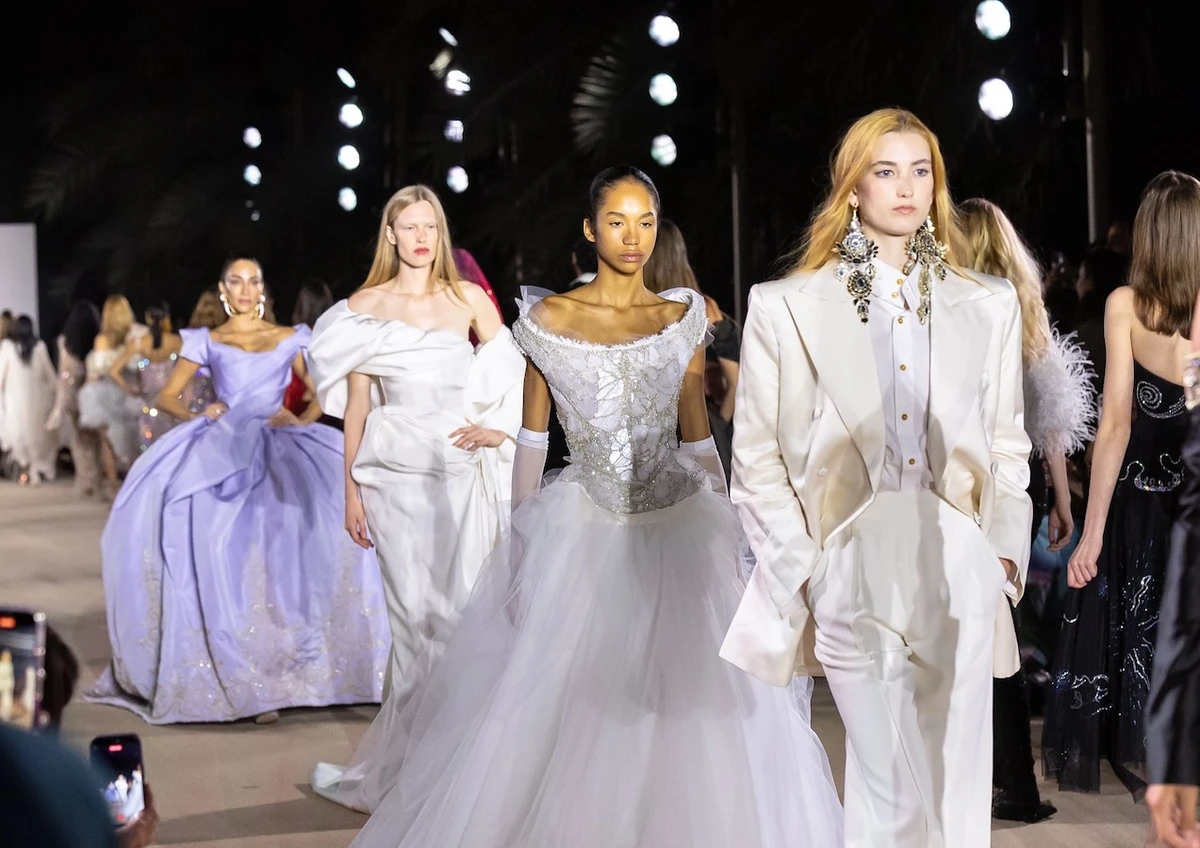
Vivienne Westwood show opens third Riyadh Fashion Week

1 / 4
The collection included embroidered couture gowns created in collaboration with Art of Heritage, a Saudi organization dedicated to preserving traditional craftsmanship, alongside selected looks from the house’s Spring/Summer 2026 and archival collections. (Instagram)
2 / 4
An ensemble by Atelier Hekayat. (Supplied)
3 / 4
Tima Abid. (Supplied)
4 / 4
Adnan Akbar. (Supplied)
Short Url
Updated 17 October 2025
Follow

Vivienne Westwood show opens third Riyadh Fashion Week

RIYADH: The third edition of Riyadh Fashion Week opened on Thursday with a full day of events and runway shows at venues across the capital.
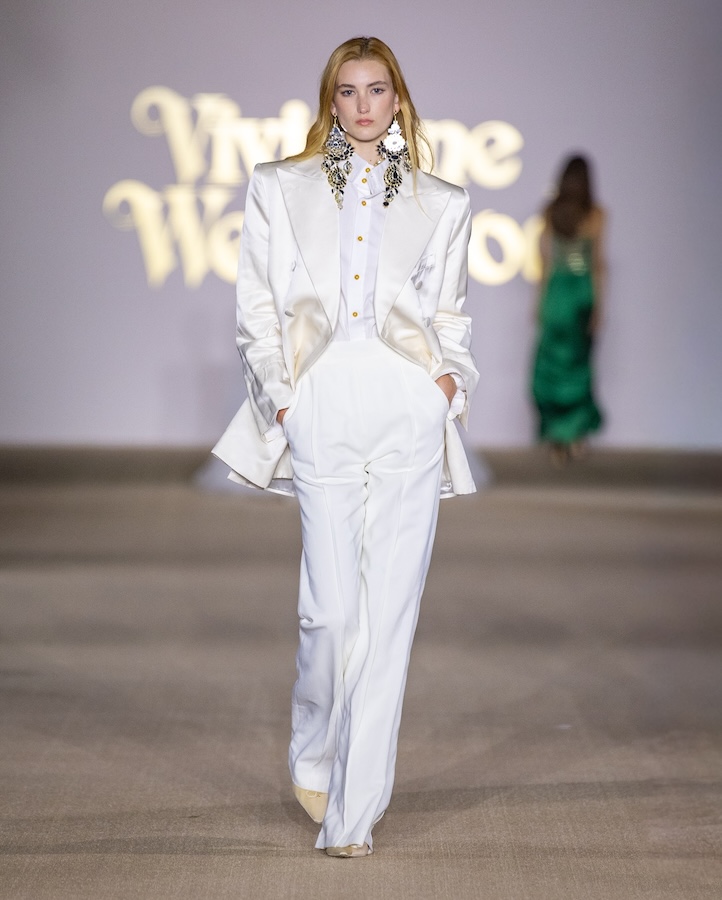


An ensemble from Vivienne Westwood’s show in Riyadh. (Instagram)

The day began with an intimate Vivienne Westwood panel discussion at Fashion Commission Riyadh, focused on the brand’s legacy of design, environmental advocacy and craftsmanship.
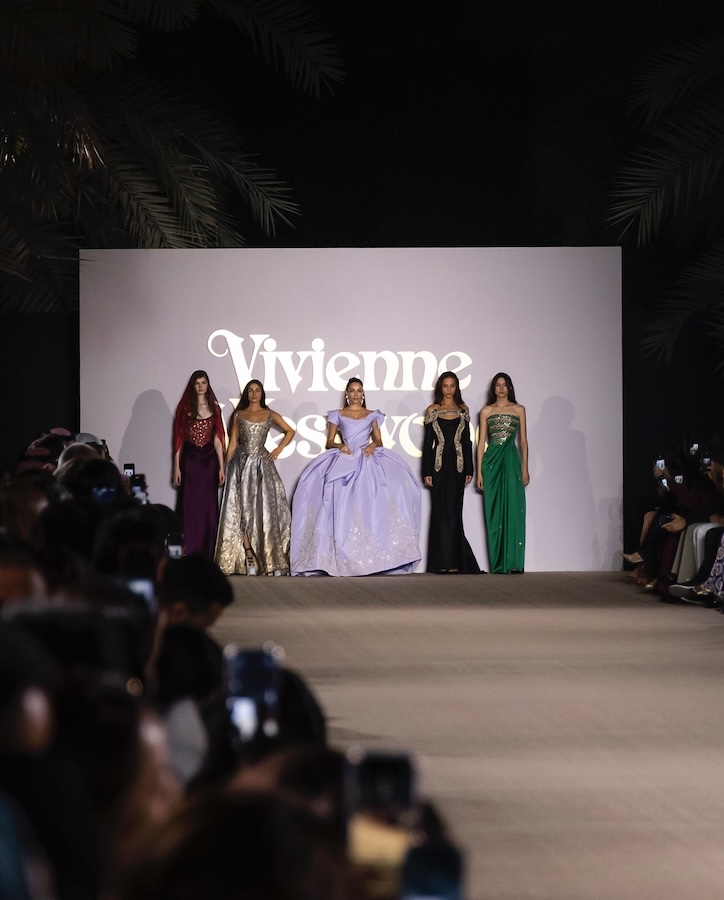


Designs from Vivienne Westwood's show. (Instagram)

Later, an evening runway show at The Palm Grove blended British design with Saudi craftsmanship. The collection included embroidered couture gowns created in collaboration with Art of Heritage, a Saudi organization dedicated to preserving traditional craftsmanship, alongside selected looks from the house’s Spring/Summer 2026 and archival collections.
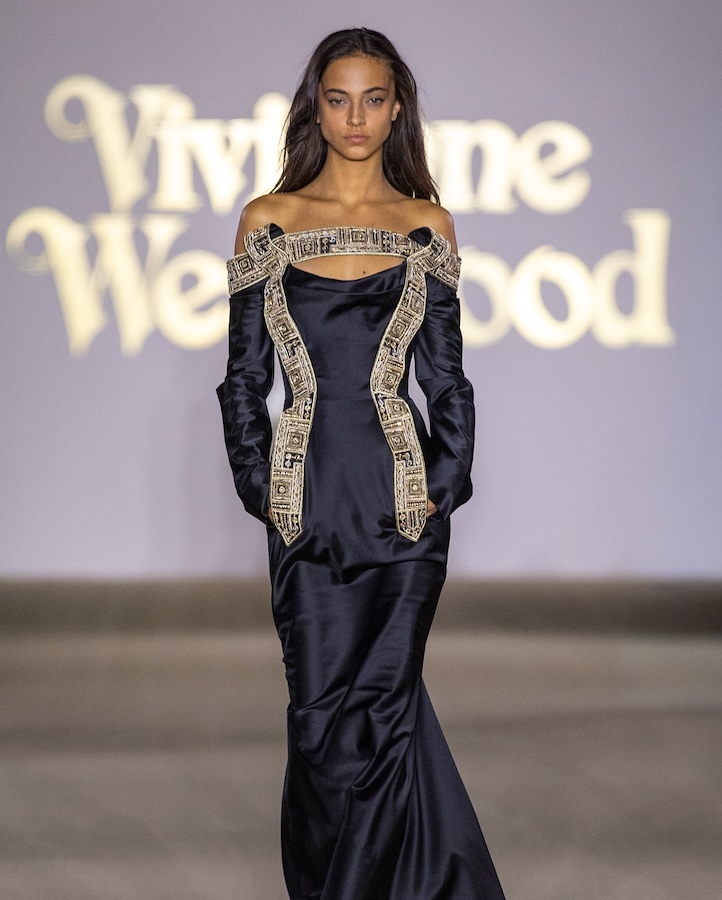


An ensemble from Vivienne Westwood’s show in Riyadh. (Instagram)

The collection included voluminous ball gowns crafted from silk and satin in shades of lilac, emerald and silver, embroidered with gold threadwork inspired by traditional Saudi craftsmanship.

Metallic brocades and tulle fabrics were used throughout the collection, alongside fitted corsets and draped bodices inspired by historical tailoring.
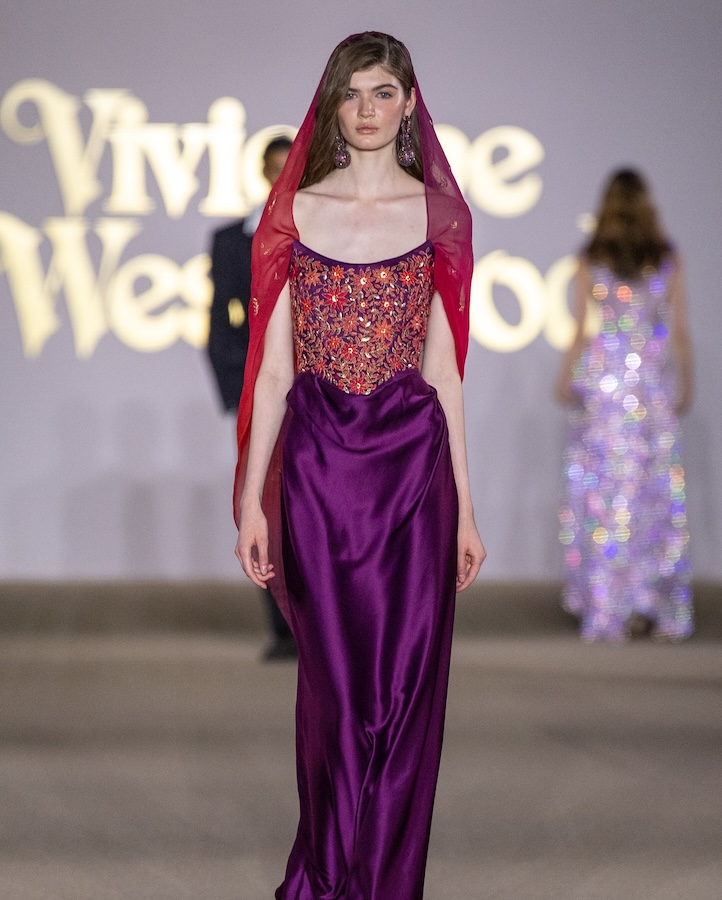


An ensemble from Vivienne Westwood’s show in Riyadh. (Instagram)

Contrasting these evening looks, sharply cut suits appeared in pinstripe, plaid and solid tones, rendered in wool and cotton blends.

Looks included crisp white double-breasted jackets, high-collared shirts and oversized lapels.
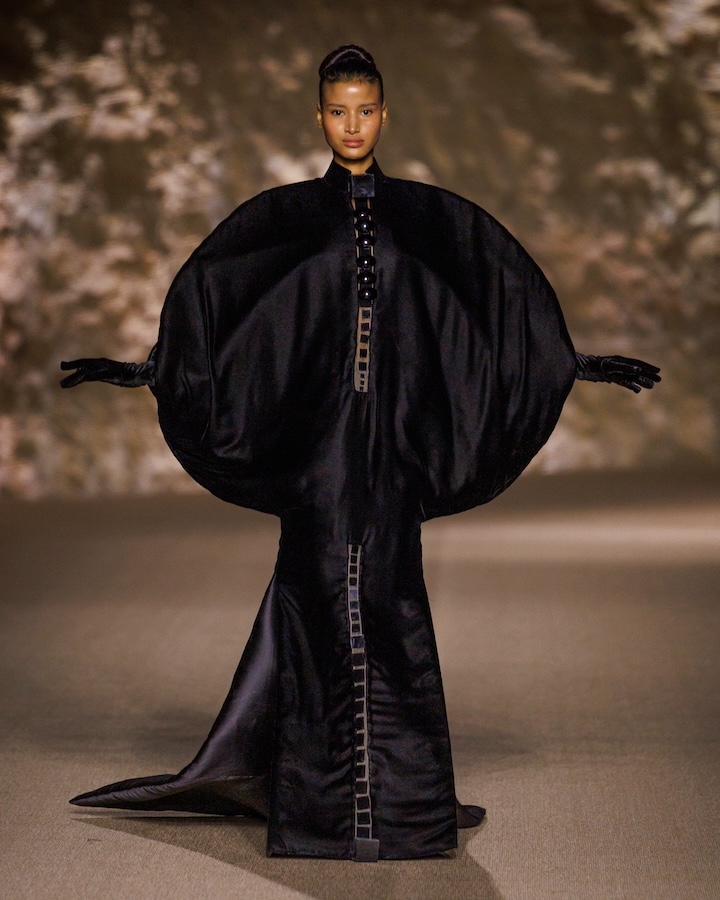


A gown by Tima Abid. (Supplied)

Accessories included sculptural chandelier earrings, metallic handbags and pointed heels. Some looks incorporated belts and veils, while embroidered detailing and exaggerated shoulders reinforced the house’s craftsmanship.
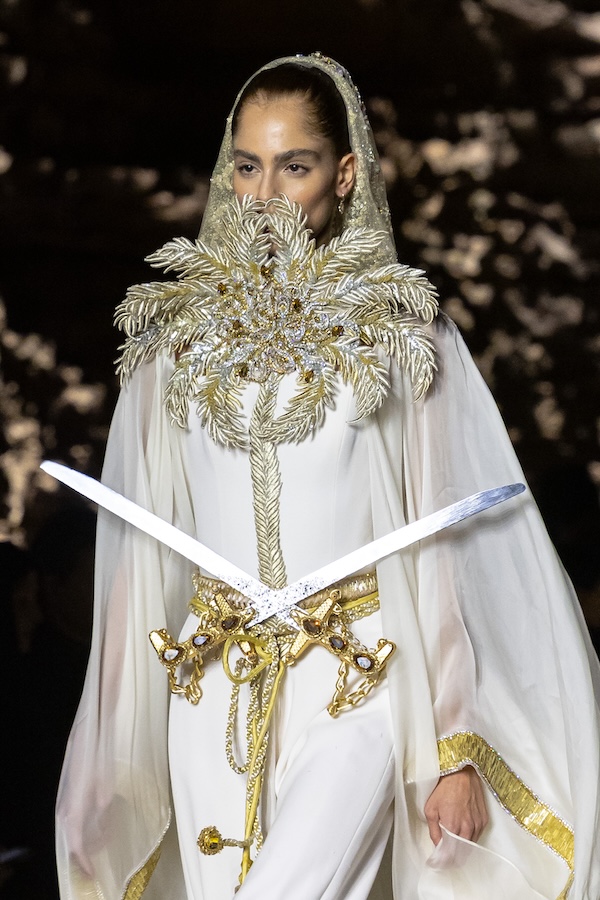


A gown by Adnan Akbar. (Supplied)

Other runway shows took place at Bedrock featuring presentations by Saudi designers Tima Abid, Adnan Akbar and Atelier Hekayat. Each highlighted Saudi couture through detailed embellishments, refined tailoring and contemporary silhouettes.
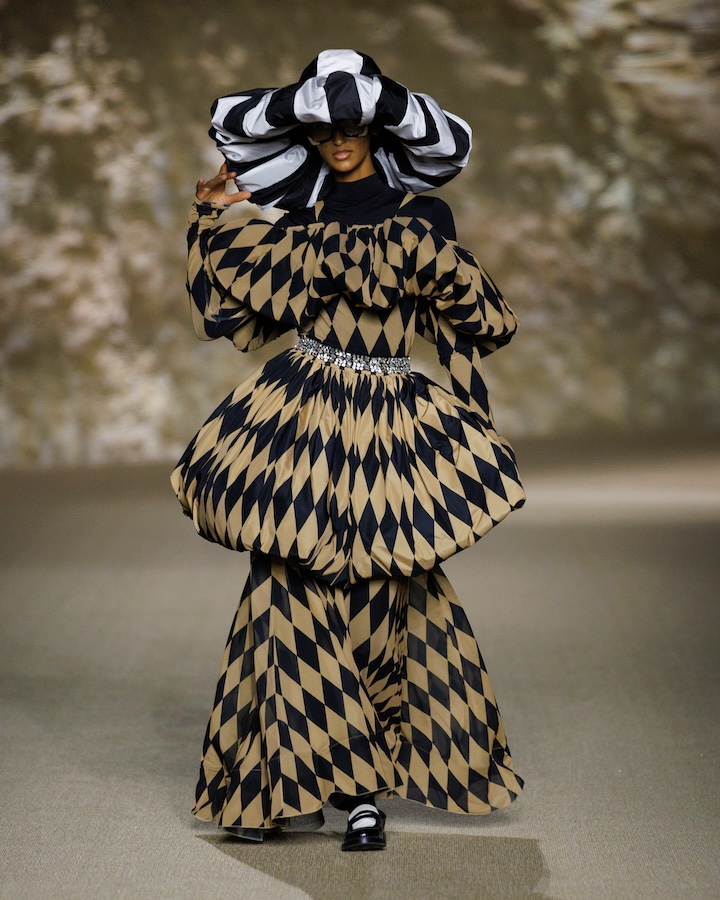

A design by Atelier Hekayat. (Supplied)


Berlinale responds to backlash over Gaza-related comments

Updated 16 February 2026
Follow

Berlinale responds to backlash over Gaza-related comments

The Berlin International Film Festival has issued a statement after what organisers described as a growing “media storm” linked to comments about the war in Gaza and the broader role of politics in cinema.

Festival director Tricia Tuttle released a lengthy note late Saturday following criticism directed at several high-profile guests. The controversy began during the opening day press conference when jury president Wim Wenders was asked about the conflict in Gaza. He responded: “We have to stay out of politics because if we make movies that are dedicatedly political, we enter the field of politics,” a remark that sparked swift backlash online.

Indian author Arundhati Roy later withdrew from the festival, reportedly angered by the remarks.

Other prominent figures, including Michelle Yeoh and Neil Patrick Harris, also faced online criticism after responding cautiously to questions about politics. Harris stated that he was interested in “doing things that were ‘apolitical,’” a comment that further fuelled debate.

In her statement, Tuttle defended the festival and its participants, stressing the importance of artistic freedom. “People have called for free speech at the Berlinale. Free speech is happening at the Berlinale. But increasingly, filmmakers are expected to answer any question put to them. They are criticised if they do not answer. They are criticised if they answer and we do not like what they say. They are criticised if they cannot compress complex thoughts into a brief sound bite when a microphone is placed in front of them when they thought they were speaking about something else,” she said.

She added: “It is hard to see the Berlinale and so many hundreds of filmmakers and people who work on this festival distilled into something we do not always recognise in the online and media discourse… It is a large, complex festival.”

“Artists are free to exercise their right of free speech in whatever way they choose… nor should they be expected to speak on every political issue raised to them unless they want to,” Tuttle said.