KHAN YOUNIS: The father of 18-year-old Hassan who says his son was shot in the head over two months ago in Gaza while out seeking food hopes that the reopening of the Rafah border point will save him.
“The Rafah crossing is our lifeline, for patients and for the Gaza Strip,” Ibrahim Qlob told Reuters in Nasser Hospital in Khan Younis where Hassan lies motionless in bed, his eyes covered with bandages.
“I’m waiting. One day passing for me feels like a year.”
The injury caused a brain haemorrhage, necessitating the removal of part of his skull. A later infection caused him to lose sight in his right eye, his father said.
Now that a fragile ceasefire is taking hold between Israel and Hamas after two years of war, Hassan is just one of 15,600 Gazan patients waiting evacuation, including 3,800 children, according to the World Health Organization.
Many like him suffer from injuries sustained during the conflict. Others have chronic conditions like cancer and heart disease which the decimated health system cannot cope with.
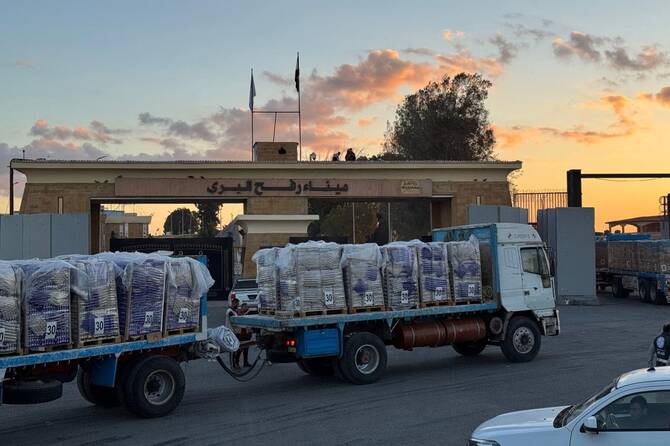
Israeli officials have said the Rafah crossing previously used for patients to exit via Egypt would reopen for transfers.
Two sources told Reuters people could start crossing on Thursday. COGAT, the arm of the Israeli military that oversees aid flows into Gaza, said on Wednesday the date for reopening for people will be announced later.
NOWHERE TO GO
During the conflict more than 7,000 patients have been evacuated from Gaza, with Egypt taking over half of them.
The rate of transfers slowed, however, when Rafah shut in May 2024 and Israel seized control. Since a previous ceasefire collapsed in March, fewer than four patients have exited daily, meaning it would take over 10 years to finish the list, WHO data shows.
“What we need is more countries to accept patients from Gaza, and we need the restoration of all the medical evacuation routes,” the WHO’s Tarik Jasarevic told reporters this week.
Mohammed Abu Nasser, 32, who survived a strike on his home in Zeitoun, Gaza City with severe injuries to both legs, said he has been on the waiting list over a year.
“My condition is getting worse every day,” he said from Al-Ahli Hospital in Gaza City.
DYING CHILDREN
Hundreds have already died waiting, medical groups and Palestinian health authorities say. The WHO, which took over management of the process last year, said 740 people including 137 children on the list have died since July 2024.
One of them was a girl called Jana Ayad who died from severe acute malnutrition in September, the WHO told Reuters, saying no country accepted her.
Médecins Sans Frontières project coordinator Hani Isleem said that 19 of its patients on the transfer list had died during the war, including 12 children.
“Seeing those patients’ files, being in direct touch with these children, and then you know that you lost them because of all these challenges and difficulties, that is really painful,” he said.
Israeli rejections have sometimes prevented transfers, Isleem added. COGAT did not respond to a request for comment. It has previously said that approvals are subject to security checks.
“The mortality rate is tragically rising, as would be expected given the decimation of health systems and infrastructure on the ground,” said Kate Takes, a solicitor with Children Not Numbers, a UK-based charity working in Gaza and overseeing cases of children needing evacuation.
For Hassan, there are worrying signs. His malnutrition is worsening and he now weighs just 40 kilograms (88 lbs), or nearly half his former body weight, his father said.
“If things stay like this, it will be too late for him.”


![]()

Gaza father hopes reopening of medical corridor can save his injured son
Short Url
https://arab.news/9zsed
Gaza father hopes reopening of medical corridor can save his injured son
- The Rafah crossing remains closed with indications that it could be opened next week
- The father of 18-year-old Hassan who says his son was shot in the head over two months ago in Gaza while out seeking food hopes that the reopening of the Rafah border point will save him


Latest updates


© 2026 SAUDI RESEARCH & PUBLISHING COMPANY, All Rights Reserved And subject to Terms of Use Agreement.