Pakistan’s financial inclusion jumps to 67% as macroeconomic stability returns — SBP chief

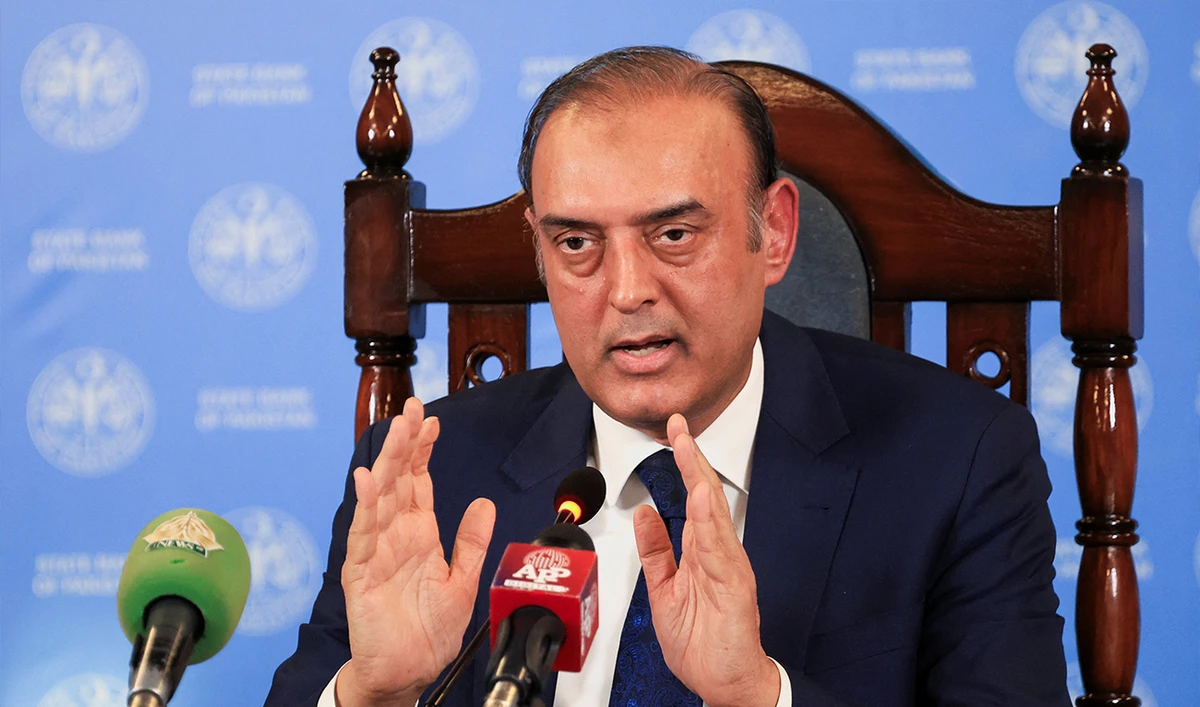
Jameel Ahmad, Governor of the State Bank of Pakistan (SBP), addresses a press conference in Karachi, Pakistan, on January 27, 2025. (REUTERS/File)
Short Url
Updated 09 October 2025
Follow

Pakistan’s financial inclusion jumps to 67% as macroeconomic stability returns — SBP chief

  • Governor Jameel Ahmed says gender gap in financial access has narrowed to 30% in Pakistan
  • He urges microfinance institutions to strengthen risk management, adopt digital credit tools

KARACHI: Pakistan’s financial inclusion rate has risen to 67% in 2025 from 47% in 2018, the top central bank official said on Thursday, crediting digital innovation and policy reforms for expanding access to financial services.

The rise comes as the government and the State Bank of Pakistan (SBP) have stepped up efforts to strengthen microfinance and digital banking amid a period of relative macroeconomic stability. Officials have also urged the public to use formal banking channels and digital platforms to help build resilience in the financial system.

“Governor Jameel Ahmad highlighted that the financial inclusion rose from 47% in 2018 to 67% in June 2025 while the gender gap in financial access narrowed from 47% to 30% over the same period,” the central bank said in a statement issued after his speech to the ninth Annual Microfinance Conference in Karachi.

“Governor Ahmad assured that the State Bank remains fully committed to working alongside the microfinance industry to strengthen resilience, safeguard customers and expand outreach,” it added.

The top SBP official told the conference that Pakistan’s economic recovery was gathering pace after tough policy measures helped stabilize inflation and foreign exchange reserves. He said inflation had declined sharply and was expected to stay within the government’s 5-7% target range over the medium term.

Ahmed also noted that foreign exchange reserves were now five times higher than in February 2023, reflecting “strategic interbank purchases” that helped the government meet debt repayments without excessive borrowing.

He outlined new principle-based regulations for microfinance banks, allowing greater flexibility and higher lending limits of up to Rs5 million ($17,500) for agriculture, microenterprise and housing loans, and Rs500,000 ($1,750) for general loans.

Ahmad urged microfinance institutions to adopt stronger risk management, enhance liquidity buffers, and use digital tools for credit scoring to prevent fraud and maintain sustainability.

“Together, we can ensure that microfinance continues to play its vital role in fostering inclusive, resilient, and sustainable growth,” he said.
UN torture expert decries Pakistan ex-PM Khan’s detention

Updated 12 December 2025
Follow

UN torture expert decries Pakistan ex-PM Khan’s detention

  • Khan’s party alleges government is holding him in solitary confinement, barring prison visits
  • Pakistan’s government rejects allegations former premier is being denied basic rights in prison

GENEVA: Pakistan’s former prime minister Imran Khan is being held in conditions that could amount to torture and other inhuman or degrading treatment, the United Nations’ special rapporteur on torture warned Friday.

Alice Jill Edwards urged Pakistan to take immediate and effective action to address reports of the 73-year-old’s inhumane and undignified detention conditions.

“I call on Pakistani authorities to ensure that Khan’s conditions of detention fully comply with international norms and standards,” Edwards said in a statement.

“Since his transfer to Adiala Jail in Rawalpindi on September 26, 2023, Imran Khan has reportedly been held for excessive periods in solitary confinement, confined for 23 hours a day in his cell, and with highly restricted access to the outside world,” she said.

“His cell is reportedly under constant camera surveillance.”

Khan an all-rounder who captained Pakistan to victory in the 1992 Cricket World Cup, upended Pakistani politics by becoming the prime minister in 2018.

Edwards said prolonged or indefinite solitary confinement is prohibited under international human rights law and constitutes a form of psychological torture when it lasts longer than 15 days.

“Khan’s solitary confinement should be lifted without delay. Not only is it an unlawful measure, extended isolation can bring about very harmful consequences for his physical and mental health,” she said.

UN special rapporteurs are independent experts mandated by the Human Rights Council. They do not, therefore, speak for the United Nations itself.

Initially a strong backer of the country’s powerful military leadership, Khan was ousted in a no-confidence vote in 2022, and has since been jailed on a slew of corruption charges that he denies.

He has accused the military of orchestrating his downfall and pursuing his Tehreek-e-Insaf (PTI) party and its allies.

Khan’s supporters say he is being denied prison visits from lawyers and family after a fiery social media post this month accusing army leader Field Marshal Asim Munir of persecuting him.

According to information Edwards has received, visits from Khan’s lawyers and relatives are frequently interrupted or ended prematurely, while he is held in a small cell lacking natural light and adequate ventilation.

“Anyone deprived of liberty must be treated with humanity and dignity,” the UN expert said.

“Detention conditions must reflect the individual’s age and health situation, including appropriate sleeping arrangements, climatic protection, adequate space, lighting, heating, and ventilation.”

Edwards has raised Khan’s situation with the Pakistani government.