

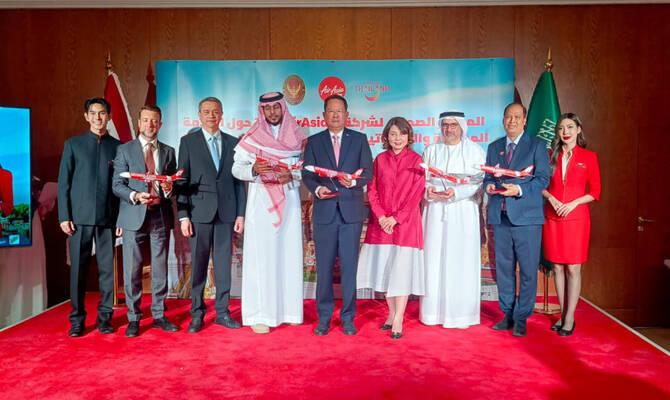

RIYADH: Thai AirAsia X, which operates under a low-cost business model, has announced its first-ever direct flights between Riyadh and Bangkok.
The new route will commence on Dec. 2, with four weekly flights every Tuesday, Thursday, Saturday, and Sunday, reinforcing AirAsia’s strategy of expanding its network into the Middle East.
Thailand’s Ambassador to Saudi Arabia Darm Boontham congratulated Thai AirAsia X on the move, which will connect the capitals of Thailand and Saudi Arabia.
Speaking at Thailand’s Embassy on Tuesday, he said: “This route marks a new era of connectivity between the two kingdoms, building bridges for trade, investment, cultural exchange, and personal connections.
“It will strengthen our relationship, fostering friendship and mutual understanding, and open new opportunities for both nations.
“Thai AirAsia X’s expansion to this region is a prime example of how to grasp the immense growth potential the Middle East offers to Thai businesses.”
He thanked Saudi Arabia’s Ministry of Foreign Affairs, the General Authority of Civil Aviation, and King Khalid International Airport for their support.
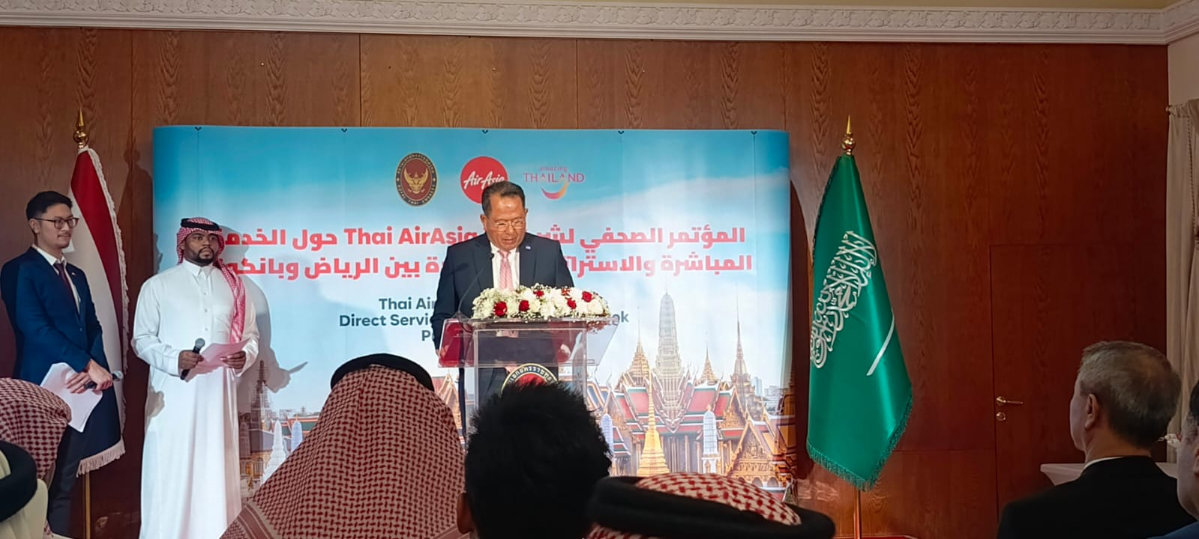
Thailand ambassador Darm Boontham speaking at press conference at the embassy in Riyadh. (AN photo/Rashid Hassan)
Ahman Mad-Adam, director of the Tourism Authority of Thailand in Dubai, said: “The launch of Thai AirAsia X’s Riyadh-Bangkok service is a milestone that will strengthen tourism and people-to-people ties between Thailand and Saudi Arabia.
“This direct connectivity makes travel more seamless and opens opportunities for Saudi visitors to explore Thailand’s diverse offerings — from world-class hospitality, shopping, and medical tourism to halal-friendly services and natural attractions.
“With this new route, we are confident Saudi Arabia will be one of Thailand’s fastest-growing source markets, driving sustainable tourism growth in the years ahead.”
Pattra Boosarawongse, CEO of Thai AirAsia X, said: “The launch of flights between Riyadh and Bangkok is a significant milestone in connecting the people of Thailand and Saudi Arabia and strengthening ties between the two countries.
“For travelers from Riyadh, this new route gives them access to the best of Bangkok — from its rich culture and cuisine to its shopping and world-class hospitality — as well as connectivity to AirAsia’s extensive network across ASEAN, and Asia.
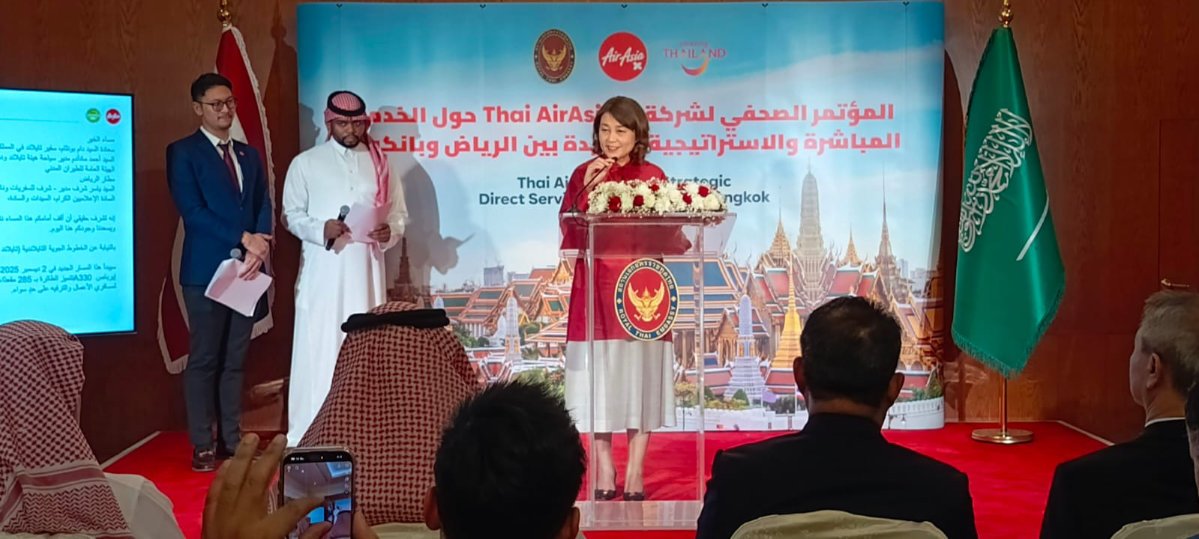
Pattra Boosarawongse, CEO of Thai AirAsia X speaking at press conference at Thailand embassy in Riyadh. (AN photo/Rashid Hassan)
“We view Riyadh as a strategic destination that aligns with AirAsia Group’s fleet expansion and network development. This launch will not only serve Thai travelers but also guests from across ASEAN — including Malaysia, Indonesia, and the Philippines — as well as from Japan, who can now conveniently connect to Riyadh through our extensive network.”
She added that the new service will not only serve as a bridge between Riyadh and Bangkok, but also connect the two countries and their cultures.
For Saudi travelers, Bangkok is a gateway to Thailand’s renowned destinations such as Phuket, Chiang Mai, and Krabi, which are especially popular for leisure and family travel.
In addition, Thailand has long been recognized as a leading destination for medical tourism, with world-class healthcare facilities, while also catering to Muslim travelers with halal-friendly services and diverse lifestyle options.
The new direct route will shorten the journey time between Riyadh and Bangkok to just seven-and-a-half hours, making travel easier and more accessible for both leisure and business purposes.
Saudi nationals will also benefit from Thailand’s e-visa and visa-on-arrival facilities, which simplify entry procedures and enhance convenience for inbound visitors.
Thai AirAsia X operates under a low-cost business model. Guests have the option to purchase additional services according to their preferences, including seat selection, baggage allowance, and hot meals.
The flights will be operated by Thai AirAsia X’s widebody Airbus A330 aircraft, configured with 285 seats, including 30 premium flatbeds and 255 standard economy seats.


