

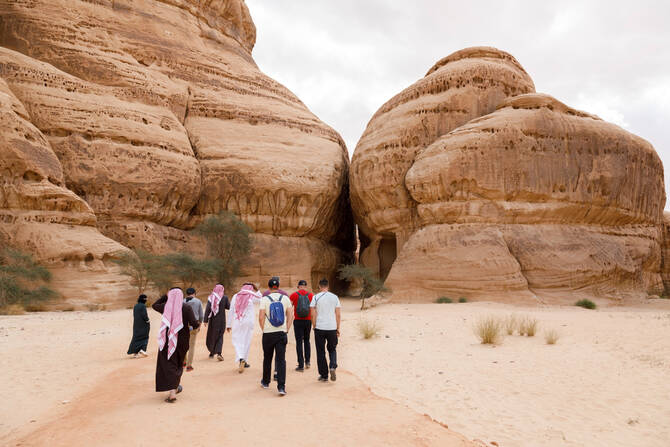
GCC tourism surges to $247bn as intra-regional travel accelerates 

According to preliminary data from the GCC Statistical Centre, intra-GCC travel experienced a sharp rebound, rising 52 percent over the same period, with 19.3 million visitors traveling between member states.  Shutterstock
Short Url
Updated 28 September 2025
Follow

GCC tourism surges to $247bn as intra-regional travel accelerates 

JEDDAH: Tourism across the Gulf Cooperation Council contributed $247.1 billion to the region’s economy in 2024, marking a nearly 32 percent increase compared with 2019, the latest official data showed.  

According to preliminary data from the GCC Statistical Center, intra-GCC travel experienced a sharp rebound, rising 52 percent over the same period, with 19.3 million visitors traveling between member states.  

Intra-regional tourism now accounts for 26.7 percent of total GCC tourism, highlighting growing cultural integration and regional mobility. 

The findings appear in a report titled “GCC Tourism: Intra-Gulf Integration,” released to coincide with World Tourism Day on Sept. 27. The report underscores tourism’s expanding role as a driver of economic growth, employment, and cultural exchange, while supporting environmental sustainability initiatives across the Gulf. 

Saudi Arabia continued to set the pace for regional tourism expansion. In 2024, the country welcomed a record 30 million international visitors, up 8 percent from 2023, generating SR284 billion ($75.7 billion) in tourism spending, an 11 percent increase year on year. Total domestic and international tourists reached approximately 116 million, rising 6 percent over the previous year. 

Saudi Arabia’s rapid growth extends into 2025. According to the UN World Tourism Organization’s World Tourism Barometer, the Kingdom posted the highest global increase in international tourist revenue during the first quarter of 2025, with arrivals up 102 percent compared with the same period in 2019. 

Madinah, the Kingdom’s spiritual and cultural heart, has been named among the world’s top 100 tourist destinations by Euromonitor International, ranking first in Saudi Arabia, fifth in the Gulf, and sixth in the Arab world — a recognition of continued investment in visitor experiences and tourism development.

Key attractions include the Museum of the Architecture of the Prophet’s Mosque, the Safiyya Museum, and a growing portfolio of entertainment and cultural projects. 

GCC-Stat projects that tourism’s contribution to the GCC’s GDP could reach $371.2 billion, or 13.3 percent of GDP, by 2034. Employment in the sector is also expected to expand, generating an estimated 1.3 million new jobs, with women representing an increasing share of the workforce. 

The report highlights the sector’s broader economic and social impact, including fostering regional integration, supporting indirect industries such as transportation and infrastructure, and advancing environmental stewardship through protected areas covering nearly 19 percent of the region’s landmass. 


Saudi Aramco, ExxonMobil, Samref ink deal to study Yanbu refinery upgrade

Updated 08 December 2025
Follow

Saudi Aramco, ExxonMobil, Samref ink deal to study Yanbu refinery upgrade

RIYADH: Energy giants Saudi Aramco, ExxonMobil, and Samref have signed a venture framework agreement to upgrade the Yanbu refinery and expand it into an integrated petrochemical complex.

As a part of the deal, the companies will explore capital investments to upgrade and diversify production, including high-quality distillates that result in lower emissions and high-performance chemicals, according to a joint press statement.

The agreement will also see the parties explore opportunities to improve the refinery’s energy efficiency and reduce environmental impacts from operations through an integrated emissions-reduction strategy.

Samref is an equally owned joint venture between Aramco and Mobil Yanbu Refining Co. Inc., a wholly owned subsidiary of Exxon Mobil Corp.

The refinery currently has the capacity to process more than 400,000 barrels of crude oil per day, producing a diverse range of energy products, including propane, automotive diesel oil, marine heavy fuel oil, and sulfur.

“This next phase of Samref marks a step in our long-term strategic collaboration with ExxonMobil. Designed to increase the conversion of crude oil and petroleum liquids into high-value chemicals, this project reinforces our commitment to advancing Downstream value creation and our liquids-to-chemicals strategy,” said Aramco Downstream President, Mohammed Y. Al Qahtani.

He added that the deal will help position Samref as a key driver of the Kingdom’s petrochemical sector’s growth.

The press statement further said that companies will commence a preliminary front-end engineering and design phase for the proposed project, which would aim to maximize operational advantages, enhance Samref’s competitiveness, and help to meet growing demand for high-quality petrochemical products in Saudi Arabia.

The firms added that these plans are subject to market conditions, regulatory approvals, and final investment decisions by Aramco and ExxonMobil.

“We value our partnership with Aramco and our long history in Saudi Arabia. We look forward to evaluating this project, which aligns with our strategy to focus on investments that allow us to grow high-value products that meet society’s evolving energy needs and contribute to a lower-emission future,” said Jack Williams, senior vice president of Exxon Mobil Corp.