

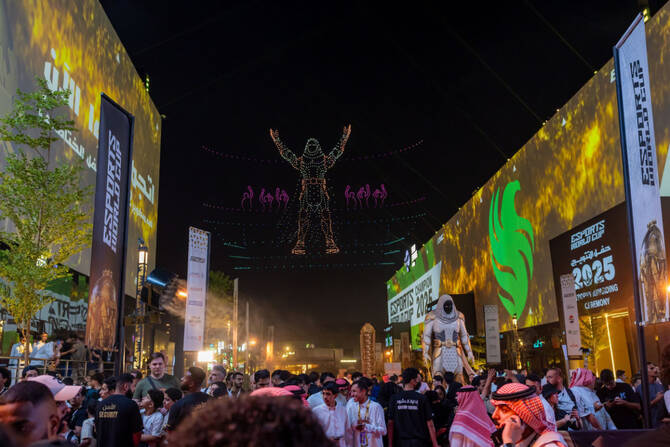
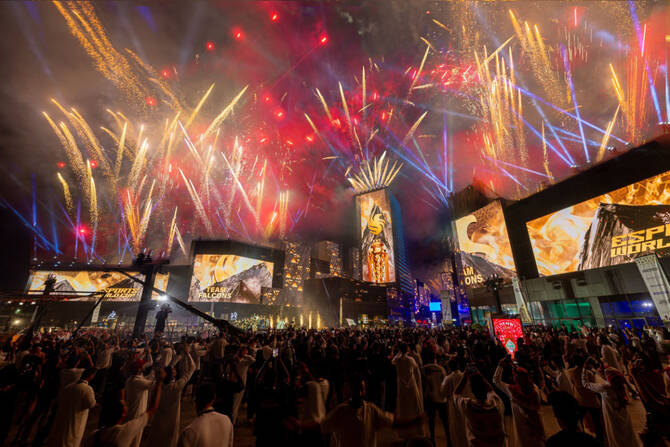

RIYADH: For years, gaming in Saudi Arabia lived in the informal spaces of cafes, bedrooms and late-night Local Area Networks. Today, it resides on national stages.
With the Esports World Cup now anchored in Riyadh and a government strategy targeting tens of thousands of jobs, this is no longer just play — it is a career, forever changing what it means to be a gamer.
Few people have a better vantage point on this transformation than Faisal bin Homran, chief product officer at the Esports World Cup Foundation.
In an interview with Arab News, he traced a social shift that mirrors the sector’s rapid professionalization. He believes that for the average Saudi Arabia gamer, the idea of working in esports is no longer a niche ambition.

Faisal bin Homran, chief product officer at the Esports World Cup Foundation. (Supplied)
“The perception of gaming has transformed dramatically over the last two decades. What was once seen purely as entertainment is now recognized globally as a viable profession,” he said.
“Early professional players often faced skepticism from parents, schools and the wider community who questioned whether gaming could provide stability or career longevity. But the industry has proven itself.”
That proof, he argues, is economic as much as cultural, with the industry sprouting jobs across the board, beyond just players.
“Today, gaming is a multimillion-dollar global industry that generates more revenue than music and Hollywood combined, with audiences that rival the biggest sporting events,” bin Homran said.
“Professional players train with the same dedication as traditional athletes, and careers now extend far beyond competition into coaching, event production, game design, content creation and broadcasting.”

Gaming today is a multimillion-dollar global industry that generates more revenue than music and Hollywood combined, according to the EWCF. (Supplied)
Riyadh’s 2025 edition of the EWC drew headlines for its record-setting scale and payouts. But bin Homran is quick to stress that salaries and stability cannot be measured by prize money alone.
He says year-round stability increasingly comes from a combination of team contracts, sponsorships, content creation and programs that reinforce the ecosystem’s foundations.
“Prize pools are the headlines that capture attention, but the story of stability in esports is much broader,” he said.
“The $70 million plus offered at EWC 2025 shows the scale of opportunity at the very top level, but it is not the only way players and staff secure consistent income.”
He highlighted the EWCF Club Partner Program, which channels growth funding directly to organizations and their payrolls as a strong example of financial sustainability in the industry.
The EWCF has provided structured funding to help clubs grow their brands and expand their fanbase. In 2025, the initiative has grown to $20 million, offering up to $1 million in support to each of the 40 participating clubs from around the globe.

The prize pool for the tournament has risen to to $20 million in 2025, offering up to $1 million in support to each of the 40 participating clubs from around the globe. (Supplied)
The intended outcome is real jobs that last beyond a tournament weekend.
“Through this model, esports can now be pursued as a full-time profession,” said bin Homran. “Players are supported by clubs that are more financially resilient, and staff are employed in long-term roles that go beyond the seasonal highs and lows of competition.”
Saudi Arabia’s National Gaming and Esports Strategy is explicit about its labor ambitions, with an eye on building a domestic workforce for a rapidly internationalizing industry.
Launched in 2022 under the Saudi Vision 2030 reform agenda, it aims to position the Kingdom as a global gaming hub by 2030 through a “whole-of-ecosystem” plan spanning talent, studios, events, and infrastructure.
The strategy targets 39,000 jobs by 2030, something that bin Homran believes feels much more achievable when one factors in the array of jobs available in esports.

Launched in 2022 under the Saudi Vision 2030 reform agenda, the EWC is targeting 39,000 jobs by 2030. (Supplied)
“This is how the 39,000-job target becomes real,” he said. “By ensuring that esports careers extend beyond playing and into the broader ecosystem that supports the industry. EWCF’s role is to make Saudi Arabia the hub where both players and professionals can grow and thrive.”
For some teenagers and their parents, the question may have already matured to be more practical: what does a pathway look like today? The map now exists, says bin Homran, from school leagues to academy contracts and university programs.
“For a young person in Saudi Arabia today, the journey into esports is far clearer than it used to be,” he said.
“The first step is grassroots competition — joining school leagues, community tournaments, or online ladders supported by the Saudi Esports Federation. From there, players can progress into amateur and academy-level teams, where they gain structured training and exposure to scouts.”
And just as football academies feed pro squads, he sees clubs investing earlier in talent development.

The last spot in the #EWC2025 totem belongs to The MongolZ! (Supplied)
“Increasingly, we see teams investing in youth development, much like traditional sports academies,” said bin Homran. “For those serious about pursuing esports, international competitions hosted here give them direct access to the world stage without leaving home.”
Crucially, he says the pathways are not just for star players.
“If a teenager is passionate about gaming but not necessarily as a competitor, there are now opportunities to explore careers in game design, broadcasting, coaching, event management and content creation,” he said.
“Universities and training centers are also beginning to introduce esports-related programs to prepare the next generation.
The message is simple: whatever your talent — whether on the stage competing or behind the camera producing — you can find a future in esports today.
“The infrastructure is being built, the ecosystem is growing, and the opportunities are real.”

Career opportunities in game design, broadcasting, coaching, event management and content creation also await young Saudis who are not necessarily competitors but passionate of esports. (Supplied)
The career ladder is being built by an increasing number of festivals and major competitions around the Kingdom, which are raking in viewership numbers in line with traditional professional sports.
Mobile Legends: Bang Bang, a game increasingly popular in the region, saw a 63 percent increase in live viewership compared to last year, while Honor of Kings surged by 182 percent at the most recent EWC.
Meanwhile, EWC broadcasts reached 750 million viewers worldwide, while arenas in Riyadh were sold out and packed with hundreds of thousands of fans.

In addition to the sell-out crowds in Riyadh's arenas in Riyadh, EWC broadcasts this year reached 750 million viewers worldwide. (Supplied)
Numbers of that magnitude capture attention but also raise expectations, said bin Homran. The challenge now for the industry is converting festival momentum into everyday employment and enterprise creation.
This includes luring producers to stay in Riyadh after the confetti settles, attracting coaches who sign long-term contracts, and onboarding analysts who build careers within clubs, and creators who parlay impressions into salaries.


