TEHRAN: Iran and Russia signed a $25 billion deal to build nuclear power plants in the Islamic republic, Iranian state media reported Friday, just hours ahead of the likely return of sweeping UN sanctions on Iran.
“A deal for the construction of four nuclear power plants with a value of $25 billion in Sirik, Hormozgan was signed between the Iran Hormoz company and Rosatom,” state television said.
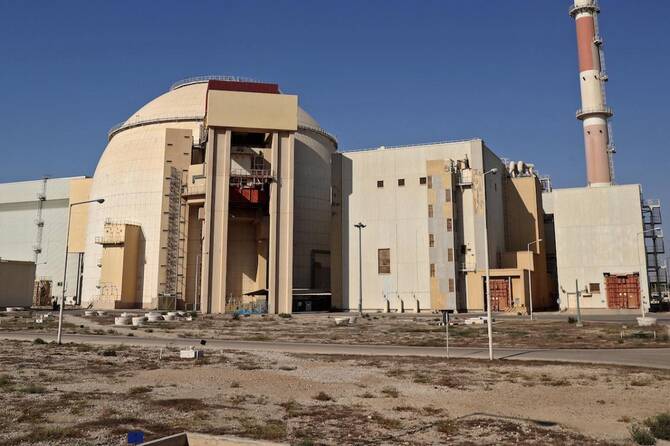
Iran has just one operational nuclear power plant in Bushehr in the south, with a capacity of 1,000 megawatts — just a fraction of the country’s energy needs.
According to state news agency IRNA, each plant will have a capacity of 1,255 megawatts, though no details were provided on the timeline.
The move comes as so-called snapback sanctions triggered by the European parties to a landmark 2015 nuclear deal with Iran are set to return by the end of Saturday.
Britain, France and Germany triggered the sanctions last month, accusing of Iran of failing to adhere to its commitments under the agreement.
At a Security Council session on Friday, China and Russia put forward a draft resolution to allow another half year for talks, but it is unlikely to garner enough support to pass.
Western countries have long accused Iran of seeking an atomic bomb — a charge Tehran vehemently denies, defending its right to a civilian nuclear program.
The United States in 2018 unilaterally pulled out of the nuclear accord with Iran, prompting Tehran to begin walking back its commitments.
Talks between Washington and Tehran to strike a new deal were underway, before being derailed by unprecedented Israeli strikes on Iran in June that began a 12-day war briefly joined by the United States.
Iran had previously signed with Russia a nuclear energy deal in 1993 allowing for the construction of the Bushehr plant, after Germany had abandoned it in the wake of the Islamic revolution of 1979.


![]()

Tehran, Moscow sign $25bn deal to build nuclear plants in Iran: state media
Short Url
https://arab.news/pvp24
Tehran, Moscow sign $25bn deal to build nuclear plants in Iran: state media
- Iran and Russia signed a $25 billion deal to build nuclear power plants in the Islamic republic, Iranian state media reported Friday, just hours ahead of the likely return of sweeping UN sanctions


Latest updates


© 2026 SAUDI RESEARCH & PUBLISHING COMPANY, All Rights Reserved And subject to Terms of Use Agreement.