ANTANANARIVO: The streets were largely deserted in Madagascar’s capital Friday as residents took stock of the damage from a day of violent protests over frequent power cuts and water shortages.
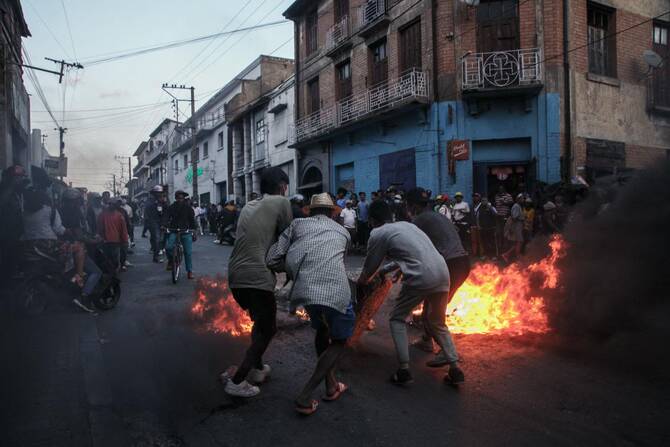
The protest in Antananarivo, led by hundreds of mostly young demonstrators, was met with a heavy police response, with rubber bullets and tear gas used to disperse the crowd.
The rampage continued after nightfall, prompting police to impose a dusk-to-dawn curfew after banks and stores were looted and set on fire. Homes of three pro-government parliamentarians were also torched.
A station of the city’s new cable car system — one of the government’s flagship infrastructure projects — was also set on fire.
Five protesters were killed in the violence, a hospital source said. AFP has not been able to verify the toll from official sources.
Stunned residents — some in tears — assessed the damage Friday morning, an AFP journalist at the scene saw.
A police presence was limited to the city’s main central square unlike Thursday when security forces patrolled the city to block demonstrators from gathering.
Traffic resumed in the city center in the morning, though volumes remained below normal levels.
While the situation appeared calm downtown, reports of looting continued in a commercial district on the outskirts of Antananarivo.
Protesters have voiced anger over persistent water and power cuts, which often leave homes and businesses without electricity for over 12 hours each day across the country.
The Indian Ocean island is one of the poorest countries in the world despite being the leading producer of vanilla, one of the most expensive spices after saffron.
Some people accuse the government of President Andry Rajoelina of failing to improve living conditions.
Rajoelina, 51, was re-elected late last year for a third term in a vote boycotted by the opposition and with less than half of registered voters participating.
He first came to power in 2009, leading a popular movement and benefiting from a coup that ousted former president Marc Ravalomanana.
After not contesting the 2013 election due to international pressure, he was voted back into office in 2018.


![]()

Madagascar capital deserted after violent protests
Short Url
https://arab.news/yq2xe
Madagascar capital deserted after violent protests
- The streets were largely deserted in Madagascar’s capital Friday as residents took stock of the damage from a day of violent protests over frequent power cuts and water shortages


Latest updates


© 2026 SAUDI RESEARCH & PUBLISHING COMPANY, All Rights Reserved And subject to Terms of Use Agreement.