ADEN, Yemen: Yemen’s Houthis said Friday that at least nine people were killed by Israeli strikes on the country’s capital of Sanaa the previous day, the latest in an increase in exchanges between Israel and the Iranian-backed militants over the war in Gaza.
The strikes on Thursday afternoon came a day after a drone launched by the Houthis wounded 22 people in the southern Israeli city of Eilat, a rare breach of Israel’s air defenses.
According to the health ministry in the Houthi-controlled northern half of Yemen, which includes Sanaa, four children, two women and three older people were among the dead. Houthi officials also said 59 children, 35 women and 80 older people were among the wounded.
Medics were still searching for victims believed to be trapped under rubble, the militants said, indicating the casualty tolls could rise.
The Israeli military said Thursday it carried out strikes in Yemen, with dozens of aircraft targeting Houthi military command headquarters, military camps and security and intelligence facilities.
A Houthi spokesperson, Omar El-Bekhety, said Thursday the Israeli strikes targeted residential neighborhoods and electricity facilities and claimed the Houthis’ defense systems had thwarted a “large part of the attack.”
“These crimes will not deter our people or break their will but will increase their steadfastness and resilience in confronting the Zionist crimes and continuing to support and back the honorable, oppressed, free people of Gaza,” he added.
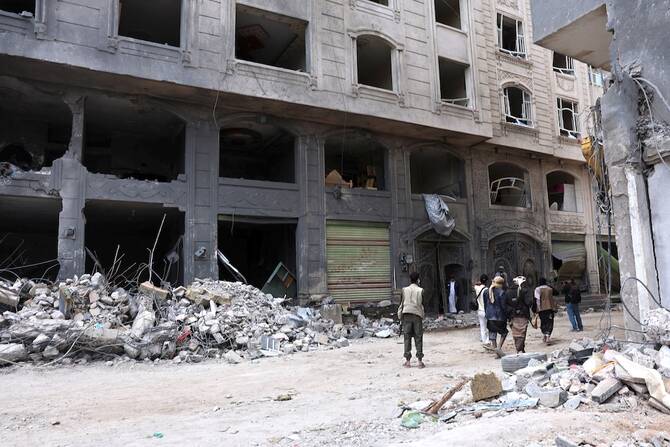
According to Sanaa residents, one of the strikes hit a building in a densely populated area in Sanaa, believed to have housed a Houthi leader. The Associated Press could not independently verify the claim.
Ahmed Al-Mahweity said Friday that the strikes set off intense explosions that damaged several houses in the neighborhood. Selim Rageh, another resident, said several cars were also damaged.
“Everyone in the area came out covered in dust as if they came out from graves,” said Salem Al-Qasab, a shop owner. “Thick dust rose from the ground due to the intensity of the explosions. It was a terrifying scene, with the skies turning to clouds of black smoke and dust.”
Akram Al-Adeiny said Thursday the explosion was so intense it brought down the ceiling of his house, though no one was injured. His colleague in a cellphone shop lost his wife and child in one of the attacks, he said.
The Sanaa residents spoke to the AP over the phone.
Israel has launched previous airstrikes in response to the Houthis firing missiles and drones at Israel. The Houthis have launched missiles and drones toward Israel and targeted ships in the Red Sea for over 22 months, saying they are attacking in solidarity with Palestinians during the war in Gaza.


![]()

Israeli strikes on Yemen’s Houthi-held capital kill at least nine people, injure scores
Short Url
https://arab.news/gypm2
Israeli strikes on Yemen’s Houthi-held capital kill at least nine people, injure scores
- Medics were still searching for victims believed to be trapped under rubble, indicating the casualty tolls could rise
- Israel has launched previous airstrikes in response to the Houthis firing missiles and drones at Israel


Latest updates




© 2026 SAUDI RESEARCH & PUBLISHING COMPANY, All Rights Reserved And subject to Terms of Use Agreement.