

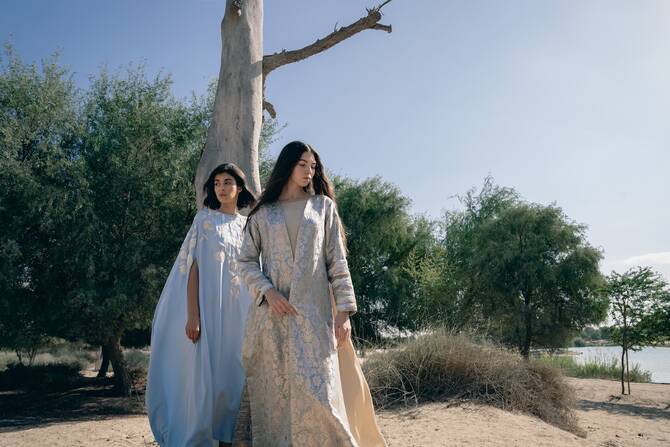

DUBAI: Since launching her womenswear label in 2017, Emirati designer Shatha Essa has steadily carved out a name for herself in the world of luxury fashion with a brand that honors tradition while embracing modern elegance.
“My journey began with a deep-rooted passion for storytelling through fabric. Growing up in the UAE, style and tradition were seamlessly interwoven in daily life, family gatherings, national celebrations… even school uniforms carried meaning,” Essa tells Arab News.
A “defining moment” in her fashion journey, she says, was when she met the late Italian journalist Franca Sozzani, who was editor of Vogue Italia for 28 years.
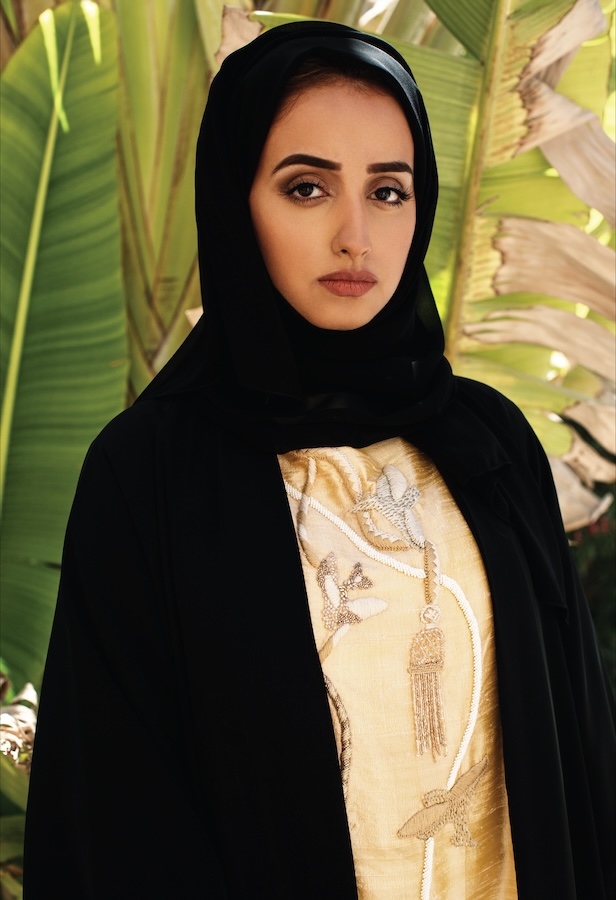
Shatha Essa launched her brand in 2017. (Supplied)
“Seeing how people react to fashion creations confirmed that design could be a powerful language,” she says. “That moment solidified my dream of becoming a designer.”
Earlier influences came from those closest to home. “Initially, it was my mother and local artisans who practiced traditional Emirati embroidery and tailoring who served as my inspiration,” she says. And before launching her label, Essa gained insight into the industry from working at Dubai Mall — “where I saw and met different fashion houses and got to see everything happening behind the scenes,” she explains. “These experiences taught me how to balance creative vision with reality.”
Essa says she took three major lessons away from her formative years in fashion. “If you come from a design background, make sure you study business and have a bit of knowledge on finance and accounting before starting your business,” is the first. “That will help you with your strategies and long-term goals as well.

Selections from the latest collection by Shatha Essa Kids. (Supplied)
Adaptability is the second. “Working with suppliers, manufacturing teams, and clients from different backgrounds demands flexibility,” she says.
And the final thing? “Brand discipline and understanding that consistency in story, values, and quality is just as important as the designs themselves.”
Essa launched her womenswear line with, as she puts it, “a calling to articulate contemporary Emirati femininity in a way that celebrated heritage while embracing modernity.” Her vision from the start was to offer “thoughtfully crafted pieces that empower women through elegant tailoring, subtle storytelling, and cultural resonance.”
Her inspiration comes from all over — including urban architecture, and traditional crafts such as sadu weaving and pearl embroidery. She also says she finds beauty in “the patterns of light in the souk at sunset or the silhouette of a gahwa cup handle,” and enjoys “translating cultural motifs into modern shapes and textures.”
For the current season, Essa says her team is “exploring Emirati breeze blocks in a different way.” She explains: “We are not only looking at the shape of a breeze block, but also the air circulation, love and energy it creates.”
But at the core of every piece she designs is her heritage. “My Emirati roots are central to everything I create,” she says, adding that she draws on “traditional aesthetics, modest cuts, flowing lines, desert-driven palette” and reframes them “for the contemporary wardrobe.”
Essa’s international profile continues to grow. In July 2024, Shatha Essa Kids became the first childrenswear label from the UAE to be launched at luxury London department store Harrods.
“Being stocked at Harrods is a thrilling milestone. It’s recognition on a global stage. It means our artisan heritage and design philosophy is being celebrated internationally,” she says. “It’s validation not just for me but for the artisans and the Emirati narrative we’re sharing.”
The partnership, she adds, has “elevated the brand’s visibility, attracted international clientele, and inspired confidence in entering new markets.”
Aside from Harrods and the UAE, Essa also sees Saudi Arabia as a key part of her brand’s journey.
“Saudi Arabia is incredibly important,” she says. “It’s a vibrant market with a growing appetite for high-quality, culturally resonant fashion.” Saudi clients, she notes, have “a strong preference for stylish, bold, and out-of-the-box silhouettes; rich textures; and deep, saturated tones,” while in the UAE, “lighter palettes and classic statement cuts” are in favor.
“Both markets value craftsmanship, but their aesthetic sensibilities diverge in tone and expression,” Essa adds.
The Kingdom is a major focus for her expansion plans, which include pop-ups and retail collaborations.
“We’re exploring partnerships with local boutiques and lifestyle brands, and envision a curated retail presence that brings our women’s and kids collections to new audiences in Saudi,” she says.
At the same time, the brand continues to grow internationally, having recently signed with the major online fashion retailer Net-a-Porter.
Asked what her advice to aspiring designers would be, Essa offers the following: “Start with your roots and own your story, and let that guide your vision. Learn all parts of the business from pattern-cutting to supply-chain management. Be patient and persistent. Building a brand takes time, resilience, and adaptability.”


