



RIYADH: For Saudi filmmaker Shahad Ameen, presenting her work on the international stage is more than a personal achievement — it is an act of cultural expression.
Ameen’s latest film, “Hijra,” an exploration of female identity across generations, was shown at the recent 82nd Venice International Film Festival, putting the Kingdom firmly on the map of world cinema.
“There’s something special about being seen in a space like Venice,” the filmmaker told Arab News.
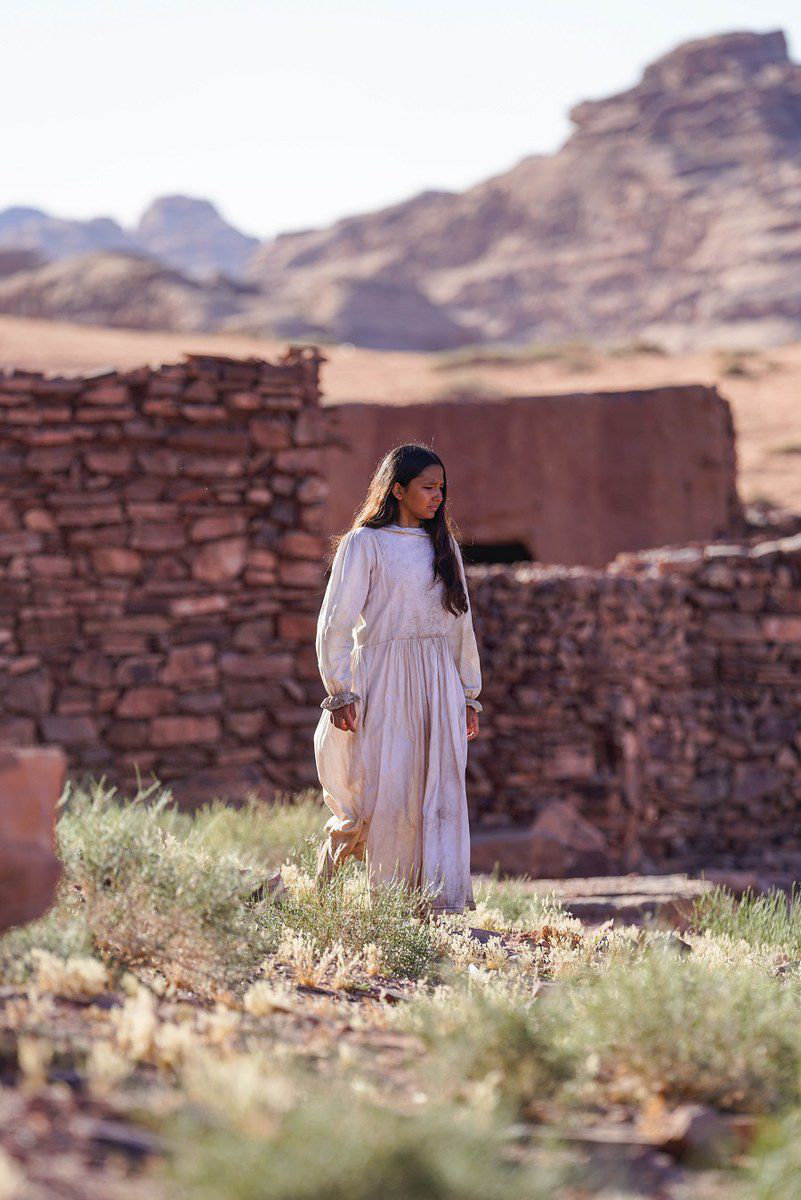
A young actress during a scene from "Hijra." (Supplied)
Ameen’s pride, however, extends beyond personal acclaim and is as much about demonstrating that Saudi stories carry significant “emotional weight, spiritual depth, and cinematic ambition.”
“Hijra” is supported by the Saudi Film Commission, as part of its efforts to make local films global.
The film marks a stylistic shift from her critically acclaimed debut “Scales,” a mythic allegory. The director described her latest production as a road film exploring how women across different generations perceive their identity.
“It’s a story of women navigating who they are, and understanding what freedom means to them,” Ameen said. “Where ‘Scales’ was mythic, ‘Hijra’ is more intimate. It’s about the pilgrimage we make toward ourselves, and the cost of that journey.”
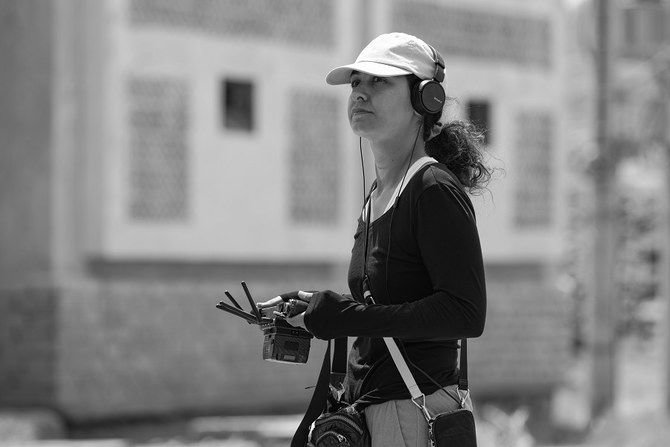
Saudi director Shahad Ameen during the filming of "Hijra." (Supplied)
A central theme in Ameen’s work is challenging widely held views of Saudi Arabia. She rejects the notion that Saudi stories are binary, either about oppression or exoticism.
“I want to move past that,” she said. “Our lives are layered, our women are complex, and our culture is evolving in ways that deserve nuance.”
Ameen’s goal is not to explain Saudi culture, but to express it through “characters who feel real, flawed, and emotionally alive.”
Through “Hijra,” she hopes to share the “rhythm of our lives” — the quiet rituals, unspoken emotional codes between women, and the landscapes steeped in memory.
“There’s a softness in our culture that’s often missed,” she said. “I hope people feel the beauty in our resilience, and the complexity of our choices.”
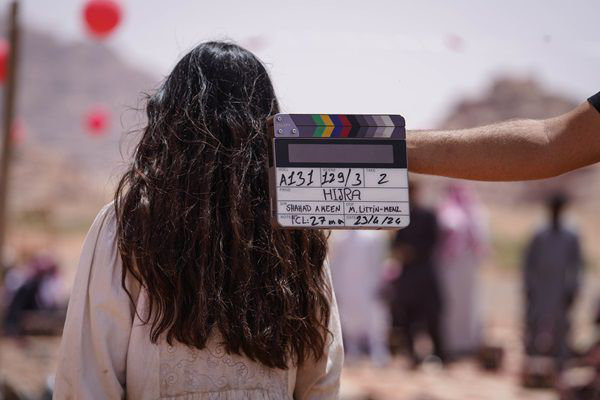
The final moments before filming a scene from "Hijra." (Supplied)
Ameen is candid about the significant challenges in the film’s production — filming took place in eight cities, with tight timelines and only limited resources — and credits the rapidly evolving Saudi film infrastructure for making “Hijra” possible.
“The Saudi film space is growing, and our partnership with the Saudi Film Commission was absolutely essential,” Ameen said, acknowledging their help with permits, location scouting, and funding. “Most of our budget came through their support.”
She also highlighted crucial on-the-ground support from Film AlUla and Neom, calling it a “collaborative effort” with institutions that “truly believe in the future of Saudi cinema.”
For Ameen, authenticity is essential, and she rejects any idea of consciously balancing local and global themes. “I don’t think about balance, I think about truth,” she said. “I write from a Saudi lens, but I write about longing, loss, rebellion, love. These are not regional — they’re human. The specificity is the strength.”
As one of the leading voices in a new wave of Saudi cinema, Ameen is aware of her role in paving the way for others. “Success creates space,” she said. She hopes that these achievements will encourage greater investment in mentorship and infrastructure, giving the abundant local talent “room to breathe.”
Ameen sees her career as a chance to “rewrite the narrative” for herself and future generations. “I grew up without cinematic mirrors,” she said. “Now I get to hold one up.”
Looking ahead, Ameen said that she is committed to telling stories rooted in the Saudi experience, and describes the Kingdom as “the most exciting place in the world to make films.”
“We finally get to speak for ourselves,” she said. “That’s significant.”


