

Turkiye facing worst drought in over 50 years

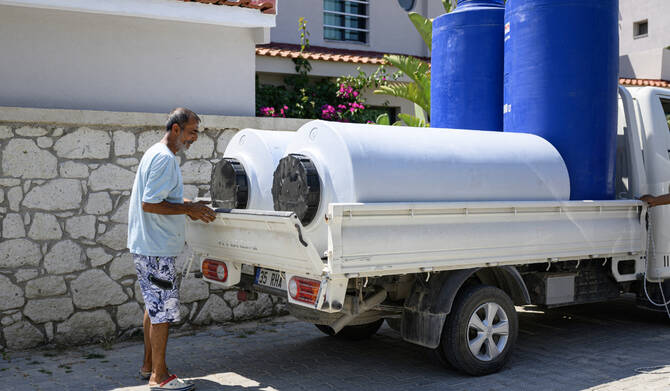
An employee loads water tanks onto a truck to deliver them to hotels in the Turkey west province of Izmir, on July 31, 2025. (AFP)
Short Url
Updated 23 September 2025
Follow

Turkiye facing worst drought in over 50 years

  • Water shortages paired with abnormally high temperatures made for a hellish summer in Turkiye

ISTANBUL: Turkiye is experiencing its worst drought in over half a century, with rainfall dropping by 27 percent compared to the last three decades and even more in some regions, according to data published this week.
Between Oct. 1, 2024 and Aug. 31 this year, precipitation in Turkiye averaged at 401.1 mm compared to 548.5 mm between 1991 and 2020, the Turkish State Meteorological Service said in its monthly report.
“Over 11 months, rainfall in Turkiye has dropped to its lowest level in the past 52 years,” the MGM said, noting a reduction of more than 60 percent in southeastern Anatolia, a typically arid region that borders Syria.
Less than 250 mm fell over 11 months, compared to the average rainfall of over 1,000 mm over the past 30 years.
Turkiye’s Mediterranean regions have not been spared, with Marmara and the coast along the Aegean Sea recording the lowest precipitation in 18 years.
Water shortages paired with abnormally high temperatures made for a hellish summer in Turkiye.
The month of July was the hottest in 55 years; average temperatures exceeded those between 1991-2020 by 1.9C, and even broke records with 50.5C in Silopi in the southeast at the end of the month.
Adana, the southern region known for its citrus fruit production, also saw its hottest day in 95 years when it hit 47.5C in early August.
In the west, Cesme’s reservoir lake dropped to 3 percent of its usual water levels — so much so that an old road, normally submerged, reappeared and made it to Turkish TV screens.
The situation triggered multiple forest fires in the west and around Hatay in the south, prompting mosques across the country to pray for rain at the beginning of August.
An NGO study published in early July estimated that 88 percent of Turkiye risks desertification.


UN chief slams ‘unlawful attacks’, says Mideast could spiral out of control

Updated 17 sec ago
Follow

UN chief slams ‘unlawful attacks’, says Mideast could spiral out of control

  • Antonio Guterres calls for serious diplomatic negotiations
  • UN’s humanitarian chief Tom Fletcher describes deadly alliance of 'technology and killing with impunity'
UNITED NATIONS: UN Secretary-General Antonio Guterres condemned Friday “unlawful attacks” across the Middle East and warned that the situation could spiral out of control as the conflict spreads to multiple countries.
US and Israeli forces launched a massive air campaign against Iran on February 28. Iran has retaliated with strikes against Israel and Gulf countries.
Washington said it aimed to curb nuclear and missile threats from Tehran but it has also decapitated the country’s government, and President Donald Trump is now demanding “unconditional surrender.”
“All the unlawful attacks in the Middle East and beyond are causing tremendous suffering and harm to civilians throughout the region — and pose a grave risk to the global economy, particularly to the most vulnerable people,” Guterres said.
“The situation could spiral beyond anyone’s control. It is time to stop the fighting and get to serious diplomatic negotiations.”
The UN’s humanitarian chief Tom Fletcher said Friday that “we’re seeing staggering amounts of money, reportedly a billion dollars a day, funding this war spent on destruction, while politicians continue to boast about cutting aid budgets for those in greatest need.”
“We’re seeing an increasingly deadly alliance of technology and killing with impunity,” he added.
Fletcher said “we’re seeing a sustained attack against the systems and laws meant to restrain us from our worst instincts and from reckless warfare.”
He also reflected mounting concern about the war’s other impacts, warning that “it tears through markets, supply chains, food prices, and when that happens, it’s the most vulnerable people who are hit first and hardest.”