

Oman’s Islamic finance sector to top $40bn amid regulatory reforms, sukuk growth: Fitch 

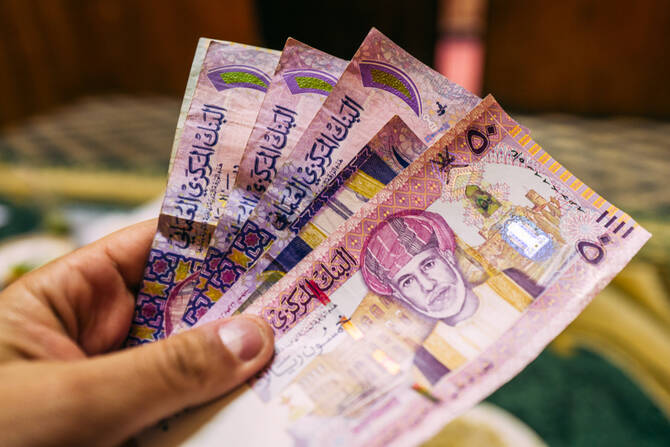
Islamic banking assets stood at approximately $23.6 billion at the end of July. Shutterstock
Short Url
Updated 23 September 2025
Follow

Oman’s Islamic finance sector to top $40bn amid regulatory reforms, sukuk growth: Fitch 

RIYADH: Oman’s Islamic finance industry is expected to exceed $40 billion between the second half of 2025 and 2026, supported by ongoing regulatory reforms and strong demand for Shariah-compliant financial services, according to Fitch Ratings.   

Despite being the smallest Islamic finance market in the Gulf Cooperation Council, Oman continues to post double-digit growth in Islamic banking and sukuk issuance.  

Fitch estimated the industry’s size at $36 billion as of end-August 2025, with Islamic banking assets comprising nearly two-thirds of the total.   

Islamic finance in the broader region continues to expand at scale. In the UAE the industry surpassed $285 billion in assets by the end of the first quarter of 2025, supported by strong demand and a deepening sukuk market, another Fitch report stated.   

In Saudi Arabia, S&P Global forecasts sustainable sukuk issuance will reach between $10 billion and $12 billion in 2025, reflecting continued sovereign and corporate demand.   

Meanwhile, the Association of South East Asian Nations’s Islamic finance assets neared $950 billion by mid-2025, with projections topping $1 trillion by 2026.  

Regarding Oman, Fitch stated that “growth will be supported by regulatory reforms, Islamic banks’ product and service enhancements, expanding branch and digital banking networks, rising public awareness, and the rise of sukuk as a key funding tool.”  

Islamic banking assets stood at approximately $23.6 billion at the end of July, representing a year-on-year increase of 16.8 percent.   

This growth significantly outpaced the 5.7 percent rise recorded by conventional banks over the same period.   

Islamic banks and windows now account for about 20 percent of the total banking system assets, up from 18.1 percent at the end of the first half of 2024.  

The Islamic windows of six conventional banks held 63 percent of total Islamic banking assets in the first half of 2025, up from 40 percent in the third quarter of 2022, leveraging their parent banks' infrastructure and client base.   

The remaining assets are concentrated in two full-fledged Islamic banks. The Central Bank of Oman has introduced key structural reforms, including a regulatory framework for digital banks launched in June, and a new banking law issued in the first half of the year with dedicated provisions for Islamic banking.  

The sukuk market continues to play a pivotal role in funding, accounting for about 30 percent of total Islamic finance assets.   

It also represented 31 percent of total debt capital market issuance in the first eight months of 2025, excluding treasury bills.   

Despite a slowdown in issuance due to the government’s fiscal consolidation efforts, Oman issued its first Islamic commercial paper earlier this year.  

Fitch Ratings noted $7.25 billion in outstanding Omani sukuk as of mid-2025, all rated ‘BB+’ with a positive outlook and no defaults.  

Liquidity management in the Islamic banking sector has improved following the CBO’s rollout of new instruments that allow it to provide liquidity against Shariah-compliant securities.  

Additionally, the regulator issued a draft framework for Shariah-compliant finance and leasing operations.   

However, the sector continues to face structural limitations, including underdeveloped Islamic hedging products and limited foreign investor participation in riyal-denominated sukuk due to the lack of connections with international securities depositories.  

Beyond banking, the takaful segment reported an 18 percent market share of gross direct premiums as of end-2024, with premiums rising 19.3 percent year on year to $238.4 million.  

Meanwhile, assets under management in Islamic funds remain small, estimated at about $400 million as of August, and are expected to stay limited in the medium term.  

Fitch noted that while Oman’s Islamic finance industry remains the smallest in the Gulf Cooperation Council due to the country’s relatively late adoption and smaller economy, ongoing reforms under the government’s ‘Vision 2040’ strategy present growth opportunities.   

“Business conditions remain favourable for Omani banks – Islamic and conventional – due to still-high, albeit moderating, oil prices,” the report stated, adding that the proposed five percent income tax from 2028 is likely to have only a limited impact on banks, though Islamic banks may be slightly. 


Dar Global rings London Stock Exchange opening bell as project pipeline reaches $19bn

Updated 18 November 2025
Follow

Dar Global rings London Stock Exchange opening bell as project pipeline reaches $19bn

  • ‘We want to be big, to be better, to have more reach, where we can serve our customer base,’ David R. Weinreb, non-executive chairman of Dar Global, tells Arab News
  • Company unveiled its new slogan, ‘Live All In,’ after announcing world’s first tokenized hotel development in Maldives in partnership with the Trump Organization

LONDON: Dar Global celebrated on Tuesday its official transfer to the Equity Shares (Commercial Companies) category, announced in September, and rang the market-opening bell at the London Stock Exchange.

Since its establishment in 2017, the Saudi-born real estate company has emerged as a key player in the luxury real estate market, developing projects in nearly 14 cities across the Gulf Cooperation Council, the UK, Spain, Greece, and Bosnia.

It was the first Saudi homegrown company to be listed on the LSE in February 2023 and the first from the broader Middle East to transition to the higher ESCC standard.

“The choice of coming here reflects our belief in London’s deep and sophisticated capital markets, our confidence in the UK’s resilience and the value we saw in tapping into a global investor base,” David R. Weinreb, the non-executive chairman of Dar Global, told Arab News.

Dar Global representatives rang the market-opening bell at the London Stock Exchange on Tuesday. (Supplied)

Dar Global has expanded internationally from Dar Al Arkan, the largest real estate developer by market share in Saudi Arabia, with 31 years of legacy delivering properties in the Kingdom.

Weinreb said that the company is ready to offer ultra-luxury units to non-Saudi buyers, who will be able to own properties in designated zones for the first time in Saudi cities when a new law takes effect in January. The ownership law is part of the broader Vision 2030, which aims to diversify the economy and attract foreign capital to the Saudi real estate market.

Since its listing on the LSE, Dar Global has announced several projects, including Trump Tower, a luxury seafront residence located in the Red Sea city of Jeddah, as well as developments in Riyadh and Muscat, the capital of Oman. In November, it reported a gross development value of $19 billion.

“Our vision is to solidify our position as the world’s leading ultra luxury real estate developer, recognized for our iconic projects and our unwavering commitment to excellence. And, of course, value creation for our shareholders,” Weinreb said.

Dar Global has formed partnerships with over 10 prestigious luxury brands, including the Trump Organization, Aston Martin, Lamborghini, Dolce & Gabbana, Marriott, Pagani, and W Hotels, to develop luxury units under these brands and deliver the greatest value to investors.

On Monday, the company and the Trump Organization announced the debut of the Trump International Hotel Maldives. The project is the first for the Trump Organization’s brand and for Dar Global in the Maldives, and it will also be the world’s first tokenized hotel development, allowing investors to buy digital shares.

“We are pioneering and leading the way here,” Weinreb said, “and we feel it’s a tremendous, long-term outlet to a new investor.”

Dar Global is the first Saudi homegrown company to be listed on the LSE in February 2023. (AN Photo / Mustafa Abu Sneineh)

In Dubai, the company developed 85 exclusive apartments branded by Pagani, the Italian manufacturer known for high-performance sports cars. Weinreb said that selecting a brand to partner with is “a very specific exercise.

“It relates to each property that we ultimately secure, a piece of land, and then internally looking to understand what the market needs are and what a brand partner will specifically bring to the table that will be valuable to our consumer,” he said.

On Tuesday, the company unveiled its new slogan, “Live All In.” Ziad El-Chaar, the CEO of Dar Global, said that the slogan reflects the company’s “dedication to excellence and our unique approach to creating unparalleled lifestyle experiences and investment pathways across the globe.”

Dar Global is looking to enter the US market and establish a presence in the Dubai International Financial Centre. The company is partnering with Rothschild & Co and AlixPartners to expand into financial services and asset management through a new investment arm.

Before he was appointed non-executive chairman for Dar Global in October 2024, Weinreb was the co-founder and CEO of the Howard Hughes Corp., a leading US real estate company, from 2010 to 2019.

“We have great hopes of continuing our rapid expansion,” he said regarding Dar Global’s plans. “But we don’t want to be big just to be big. We want to be big, to be better, to have more reach, where we can serve our customer base.”