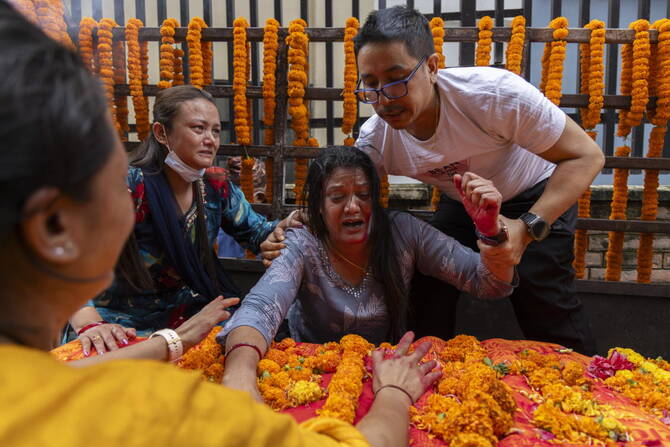
KATMANDU: Nepal’s deposed prime minister KP Sharma Oli said Friday his government did not order police to open fire on protesters and called for a probe into violence that killed at least 73 people.
In his first statement since stepping down last Tuesday, the 73-year-old said “infiltrators” were responsible for inciting bloodshed during youth-led protests that swept the Himalayan nation beginning September 8.
The demonstrations were sparked by a short-lived ban on social media, but fueled by anger at corruption and long-standing economic woes.
At least 19 people were killed in a crackdown on the first day.
“Those who infiltrated (the protests) incited violence, resulting in the tragic loss of young lives,” Oli said in a post in Nepali on Facebook.
“The government did not issue orders to target the protesters and fire shots,” Oli said, as the country marked its constitution day Friday.
Mobs ransacked government offices, set fire to a newly opened Hilton hotel and attacked other symbols of authority – including Oli’s residence – as fury swept across towns and cities.
Some protesters were seen brandishing automatic rifles on the second day of the unrest.
“There should be an investigation on incidents of use of automatic weapons which the police did not have,” Oli said in his post.
“I will not say much about the conspiracy behind this today, time will tell itself,” he added.
Oli has not been seen in public since his removal, with allies saying he was under military protection.
“He was under the protection of the army and returned yesterday,” party colleague Agni Kharel from Oli’s CPN-UML said.
His successor, Prime Minister Sushila Karki, a 73-year-old former chief justice, has been tasked with restoring order and addressing demonstrators’ demands for a corruption-free future ahead of elections in six months.
“The demonstrations and movement led by youth reflect both the aspirations of our young generation, growing public awareness and, the dissatisfaction with prevailing corruption in the country,” Karki said in a speech to mark the country’s constitution day.
“The state machinery should (function) in accordance with the aspirations and expectations of the people.”


![]()

Nepal’s ousted PM calls for probe into deadly youth protests
Short Url
https://arab.news/rmmem
Nepal’s ousted PM calls for probe into deadly youth protests
- Former leader says his government did not order police to open fire on protesters
- Violence that erupted from demonstrations killed at least 73 people

Latest updates





© 2026 SAUDI RESEARCH & PUBLISHING COMPANY, All Rights Reserved And subject to Terms of Use Agreement.