

Pakistan court cancels telecom chief’s appointment over rule violations, favoritism

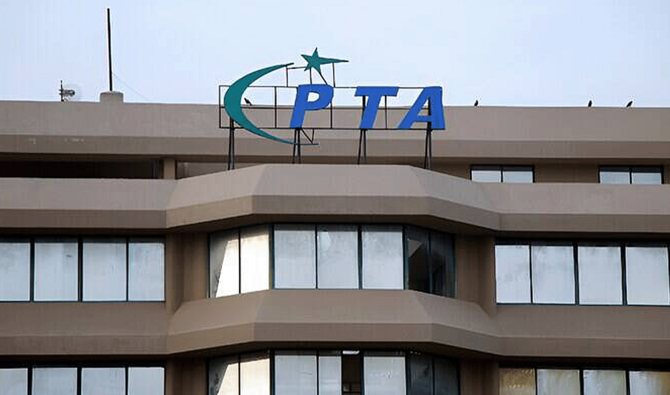
A logo of the Pakistan Telecommunication Authority (PTA) is seen on its headquarters building in Islamabad on August 16, 2024. (AFP/File)
Short Url
Updated 16 September 2025
Follow

Pakistan court cancels telecom chief’s appointment over rule violations, favoritism

  • Major General Hafeez-ur-Rehman was appointed Pakistan Telecommunications Authority chairman in May 2023
  • The court orders the senior-most serving PTA member be given temporary charge of the PTA chairman’s office

ISLAMABAD: A high court in Pakistan’s capital on Tuesday canceled the appointment of Major General (retired) Hafeez-ur-Rehman as the Pakistan Telecommunications Authority (PTA) chairman over violation of rules and favoritism.

Rehman was first appointed PTA member (administration) and in May 2023, he was appointed the chairman of the authority. The petitioner, Usama Khilji, challenged Rehman’s appointment as PTA member (administration), saying it was in contravention of PTA rules.

In his verdict, Islamabad High Court (IHC) judge Babar Sattar stated that Rehman’s appointment as the PTA chairman was not legally valid, adding that a senior member of the authority should be appointed as the chairman temporarily.

“The creation of the office of Member (Administration) and the appointment made under it are void and of no legal effect,” the judge stated in the verdict. “The recruitment process suffered from mala fide in law and lacked transparency.” 

The petitioner said the federal cabinet had not created any additional post and the announcement of the induction of a new member was in breach of the PTA appointment rules, which did not envisage the position of member (administration).

“The statutory criteria were tailored to induct a pre-determined individual… the increase in the age limit also suggests that the respondents have already been tipped as to who the Member (Administration) is to be, and the statutory criteria have been relaxed to accommodate the said person,” the verdict read. 

“Making appointments to public offices that are not the products of a transparent, comparative and manifestly fair process is not a right of an elected government or a matter of Executive policy, but an abdication of the required allegiance to the rule of law.” 

The IHC judge said since the entire process of Rehman’s appointment as the member (administration) and as the PTA chairman was found to “suffer from malice in law being the product of an unconstitutional and illegal recruitment process, he shall cease to hold such appointments and shall immediately relinquish charge.”

He ordered that the senior-most serving PTA member be given charge of the office of PTA chairman till the time the federal government appoints a regular chairman.


Pakistan to launch AI screening in January to target fake visas, agent networks

Updated 5 sec ago
Follow

Pakistan to launch AI screening in January to target fake visas, agent networks

  • New system to flag forged-document travelers before boarding and pre-verify eligibility
  • Move comes amid increasing concern over fake visas, fraudulent agents, forged papers

ISLAMABAD: Pakistan will roll out an AI-based immigration screening system in Islamabad from January to detect forged documents and prevent illegal overseas travel, the government said on Thursday. 

The move comes amid increasing concern over fake visas, fraudulent agents and forged papers, with officials warning that such activity has contributed to deportations, human smuggling and reputational damage abroad. Pakistan has also faced scrutiny over irregular migration flows and labor-market vulnerability, particularly in the Gulf region, prompting calls for more reliable pre-departure checks and digital verification.

The reforms include plans to make the protector-stamp system — the clearance required for Pakistani citizens seeking overseas employment — “foolproof”, tighten labor-visa documentation, and cancel the passports of deportees to prevent them from securing visas again. The government has sought final recommendations within seven days, signalling a rapid enforcement timeline.

“To stop illegal immigration, an AI-based app pilot project is being launched in Islamabad from January,” Interior Minister Mohsin Naqvi said following a high-level meeting chaired by him and Minister for Overseas Pakistanis Chaudhry Salik Hussain.

Naqvi said the new screening technology is intended to determine travelers’ eligibility in advance, reducing airport off-loads and closing loopholes exploited by traffickers and unregistered agents.

The interior minister added that Pakistan remains in contact with foreign governments to improve the global perception and ranking of the green passport, while a uniform international driving license will be issued through the National Police Bureau.

The meeting also approved zero-tolerance measures against fraudulent visa brokers, while the Overseas Pakistanis Ministry pledged full cooperation to streamline the emigration workflow. Minister Hussain said transparency in the protector process has become a “basic requirement,” particularly for labor-migration cases.

Pakistan’s current immigration system has long struggled with document fraud, with repeated cases of passengers grounded at airports due to forged papers or agent-facilitated travel. The launch of an AI screening layer, if implemented effectively, could shift the burden from manual counters to pre-flight verification, allowing authorities to identify risk profiles before departure rather than after arrival abroad.

The reforms also come at a moment when labor mobility is tightening globally. Gulf states have begun demanding greater documentation assurance for imported labor, while European and Asian destinations have increased scrutiny following trafficking arrests and irregular-entry routes from South Asia. For Pakistan, preventing fraudulent departures is increasingly linked to protecting genuine workers, reducing deportation cycles and stabilizing the country’s overseas employment footprint.