

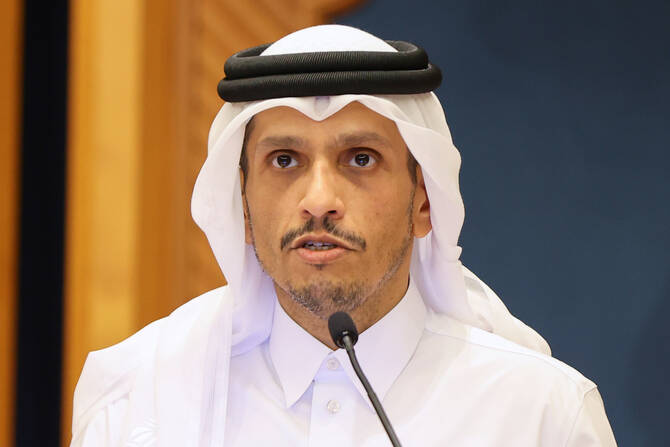

RIYADH: Qatari Prime Minister Sheikh Mohammed bin Abdulrahman Al-Thani urged the international community on Sunday to “stop using double standards” and punish Israel for what he described as its “crimes.”
He was speaking at a preparatory meeting on the eve of an emergency summit of Arab and Islamic leaders organized by Qatar after Israel carried out an unprecedented air strike on Hamas leaders in Doha.
“The time has come for the international community to stop using double standards and to punish Israel for all the crimes it has committed, and Israel needs to know that the ongoing war of extermination that our brotherly Palestinian people is being subjected to, and whose aim is to expel them from their land, will not work,” the prime minister said.
Sheikh Mohammed said Doha remained committed to working with Egypt and the United States to reach a ceasefire in the war that has devastated the Gaza Strip. However, he said that the Israeli strike that killed six people — five members of Hamas and a local Qatari security force member — represented “an attack on the principle of mediation itself.”
“This attack can only be described as state terrorism, an approach pursued by the current extremist Israeli government, which flouts international law,” the minister said. “The reckless and treacherous Israeli aggression was committed while the state of Qatar was hosting official and public negotiations, with the knowledge of the Israeli side itself, and with the aim of achieving a ceasefire in Gaza.”
The preparatory meeting of foreign ministers for the emergency joint Arab-Islamic summit commenced on Sunday in Doha under Sheikh Mohammed’s leadership.

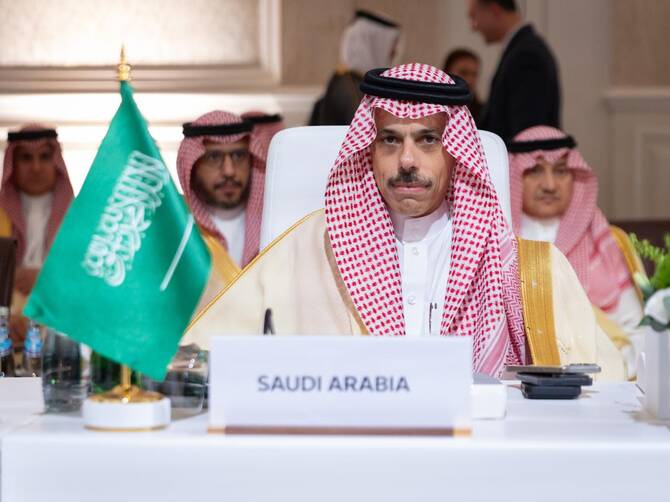
Saudi Foreign Minister Prince Faisal bin Farhan attends the preparatory meeting in Doha on Sunday. (SPA)
The summit is to discuss a draft statement regarding the Israeli attack on Qatar on Sept. 9, which targeted the residences of several Hamas officials in Doha, according to the Qatar News Agency.
The airstrikes were widely condemned across the Arab and Islamic world as a violation of Qatar’s sovereignty and international law.
Foreign ministers of the Arab League and Organisation of Islamic Cooperation member states are attending the summit on Sunday, including Saudi Arabia’s Foreign Minister Prince Faisal bin Farhan.
The Saudi Ministry of Foreign Affairs has denounced the Israeli attack as an “aggressive act” and reiterated the Kingdom’s solidarity with Doha, stressing the need for the international community to hold Israel accountable for its actions, the Saudi Press Agency reported.


