LAHORE: A heavy ax cuts through the air and slams into the center of a wooden board placed in the room, hurled by a youngster clad in an orange Personal Protective Equipment. Behind him, another woman paints bold, looping strokes on a wall after vigorously shaking a spray paint can.
This isn’t the scene of a violent protest in Pakistan, but that of a popular cafe in the eastern city of Lahore named “The Alt Space.” Young people come here in droves every day, smashing glass, hurling axes and breaking stuff in a “rage room” by throwing it around. And if it doesn’t get any better than this, the cafe offers hot and cold beverages ranging from espressos to lattes, frappes and sodas.
Pakistan’s cultural hub, Lahore, has seen activity-theme cafes open up in recent years. These places blend the typical cafe environment with a specific activity or purpose, meant to offer younger audiences unique experiences. While some offer walk-in painting courses, others like The Alt Space feature rage rooms.
Azfar Shahid, co-founder of The Alt Space, said his cafe offers the city’s first rage room and ax throwing experience. He said it attracts mostly people in the 15-35 age group, adding that 70 percent of the people who frequent The Alt Space are women.
“You’ll find young professionals and students in the first half of the day, followed by large friend groups and families in the evening once the activities rush hour kicks in,” Shahid told Arab News.
“Hopefully as Lahore is evolving into much more of a community centered city, and places like us can help galvanize this positive trend,” he said.
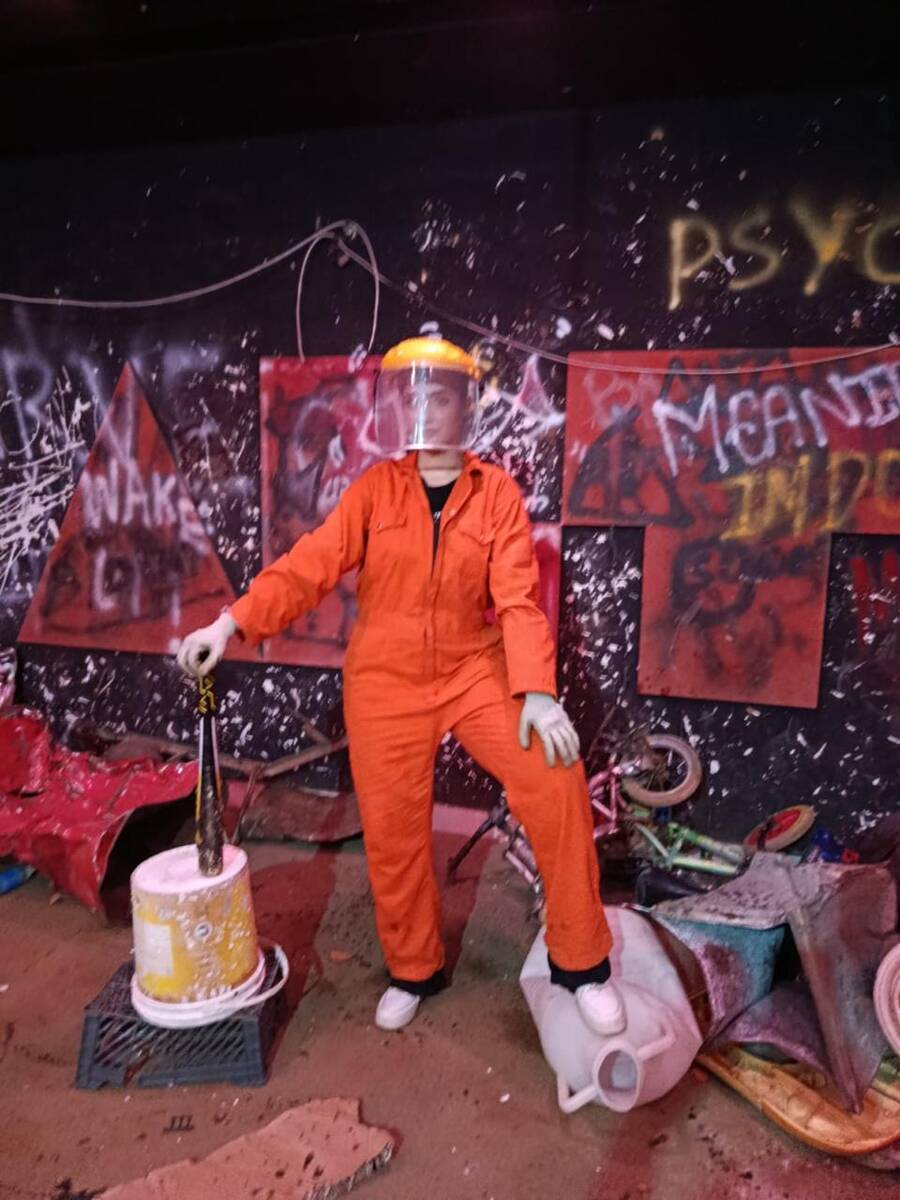
The picture taken on September 8, 2025, shows a customer posing with a baseball bat in a "rage room" in “The Alt Space” cafe in Lahore, Pakistan. (AN photo)
Lili by Deja, a popular restaurant in Lahore, has opened a small studio in its space by the name of Soleil. Here, customers can opt for walk-in painting and pottery sessions and browse through extensive serveware collections featuring intricate artistic designs. While lunch or dinner is being served in one part of the restaurant, aspiring artists a few feet away can be seen sketching on canvases at Soleil.
Khadija Shafqat, a graduate of Lahore’s National College of Arts (NCA) in ceramic design, founded Soleil in 2023. After completing her master’s degree from Paris in luxury brand management--hospitality, Shafqat opened a restaurant named Lily.
She soon started making customized pottery and ceramic pieces for other restaurants and customers. Shafqat realized there was a market for the product, and decided to merge the world of art with food, splitting the restaurant in half. In Lily, one can tantalize their taste buds while in the other, they explore their artistic cravings via walk-in classes.
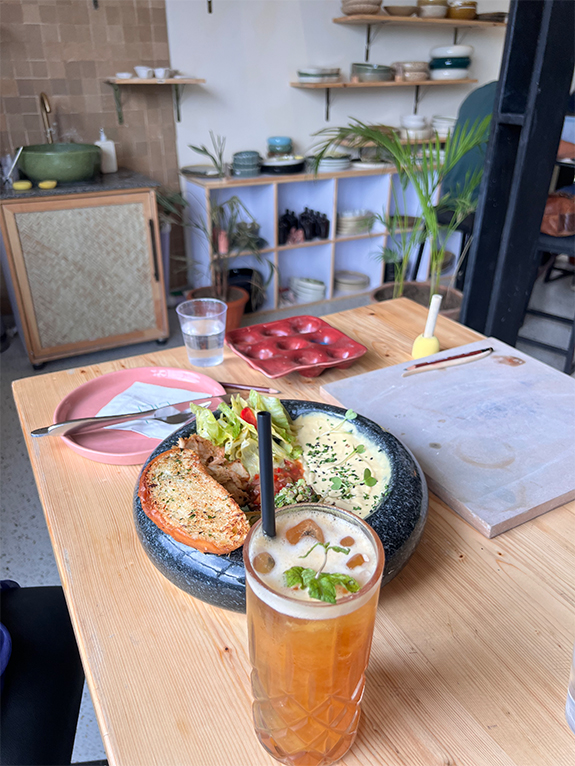
The picture taken on September 8, 2025, shows food being served at Lili by Deja in Lahore, Pakistan. (AN photo)
Shafqat said she knew Lahore was a food-centric city and merging fun activities with it would draw people in.
“So, we thought that this is a good opportunity, that food is also available here, but people are getting another chance to explore their creative side,” she said.
Her customers agree that the initiative is “refreshing.”
“Instead of just sitting around scrolling on my phone, I feel like I’m actually doing something with my friends,” Maryam Azam, a university graduate, told Arab News while painting on a canvas. “It feels memorable.”
‘QUALITY COFFEES, VIBES’
And then there’s cafe Dot, with its brightly painted wall interiors and board game tables, becoming a hub for the city’s student community. The cafe says “anything can happen here,” from drum circles to neon painting and brand pop-ups.
Sannan Tahir, Dot’s co-founder, describes the cafe as a “creative community space,” insisting he doesn’t see it only as a coffee shop.
“It is a space where you can come and whine, paint, dance, do whatever you want to do and be yourself without the fear of being frowned upon,” Tahir said. “At the same time, we give you quality coffee and vibes.”

The picture taken on September 8, 2025, shows board games and painting at Café Dot in Lahore, Pakistan. (AN photo)
Aysel, a student busy playing Jenga with her friends, agreed.
“Dot is a very interactive and fun café to unwind after school and studies,” she said. “We play board games like Jenga and sometimes we draw. It’s a lot more interactive and fun.”
As young people immerse themselves in activity-based cafes and their attractions, Shafqat thinks the trend is “here to stay.”
“It is therapeutic,” she said. “It is an escape from your daily routine.”