

Saudi initiative brings patients to Abha for healing and hope

1 / 3
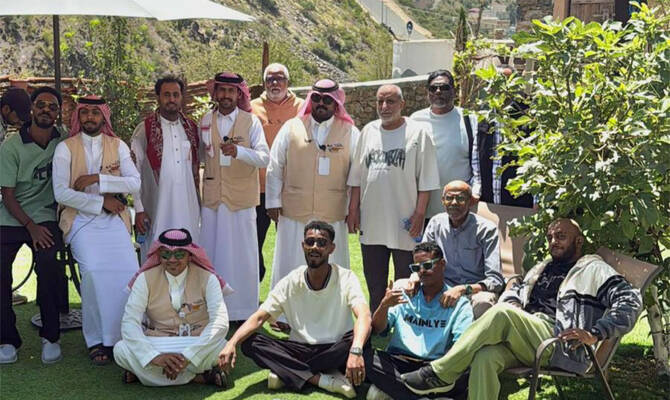
The patients’ trip to Abha combined medical care and psychological support for the participants aged 30 to 66. (Supplied)
2 / 3
The patients’ trip to Abha combined medical care and psychological support for the participants aged 30 to 66. (Supplied)
3 / 3
The patients’ trip to Abha combined medical care and psychological support for the participants aged 30 to 66. (Supplied)
Short Url
Updated 10 September 2025
Follow

Saudi initiative brings patients to Abha for healing and hope

  • In Abha, 17 people with kidney-failure issues discover stories, traditions and a renewed spirit

JEDDAH: For 17 people with kidney-failure issues, a recent three-day journey to Abha offered a chance to step away from hospital routines and embrace joy, culture and the beauty of nature.

The trip, organized by the Charitable Health Promotion Association with the support of the Ministry of Tourism, combined medical care and psychological support for the participants aged 30 to 66.

They visited landmarks including Al-Soudah, Rijal Almaa, Al-Asal Hut, Al-Muftaha Art Village, as well as museums and traditional homes where they enjoyed the mountain climate and rich heritage of Asir.

Dr. Aisha Natto, chairperson of the board of directors of the Charitable Health Promotion Association, told Arab News that the trip reflected the integration of health and tourism.

“This is not just a journey, but a way to a beautiful life. Those patients leave behind the routine of the hospital to experience moments of joy and hope amidst the mountains and heritage paths of Abha,” she said.

She added that the experience highlights Saudi Tourism’s role in improving quality of life by offering patients peace of mind alongside treatment.

“In the historic palaces, they learn the stories of ancestors, and in authentic hospitality sessions, they savor the meaning of Saudi generosity, which revives the soul before the body,” she added.

The patients expressed their gratitude for the initiative and its positive impact.

Syrian participant Riyadh Sheikh said: “Today, we are in this beautiful part of the Kingdom … my happiness knows no bounds.”

He added: “They really gave us the opportunity to go out and live as others do … We enjoyed every minute of this trip since we arrived in Abha. We visited beautiful historic places, museums and learned so much about the Asir region and culture.”

Another patient, Fateh Mohammed Almeazab from Yemen, said: “Going to a beautiful (place) like Abha is not only very relaxing, but it can also improve your health and overall well-being and this is what we are all feeling after (an) enjoyable and educational three days.”

The trip concluded at Al-Muftaha Village, one of Abha’s most iconic cultural destinations.


Saudi researchers develop AI system for camel herders

Updated 14 November 2025
Follow

Saudi researchers develop AI system for camel herders

  • AI-powered drone system can recognize and track camels from the air 
  • Prof. Basem Shihada and his team at KAUST developed the low-cost system

RIYADH: A research team at King Abdullah University of Science and Technology has created a low-cost, AI-powered drone system that can recognize and track camels from the air.

The system promises an affordable option for camel herders to continue one of Saudi Arabia’s oldest labors and for scientists to learn more about camel migration patterns and habits, according to a KAUST press release.

Created by Professor Basem Shihada and his labmates, the system uses inexpensive commercial drones and cameras to enable camel herders to track their camels in real time without relying on expensive GPS collars or satellite connections.

The team used a single drone-mounted camera to capture aerial footage of small camel herds in Saudi Arabia, then trained their AI model using machine learning. The model revealed new insights into the animals’ behaviors.

“We found their migration patterns were not random but showed identifiable patterns,” said KAUST scientist Chun Pong Lau, who was also involved in the project.

The release added that camels, especially elders, showed coordinated grazing migration, covering long distances throughout the day, but always returned to their herder by sunset. They also showed high sensitivity to the drone’s sound, which is why the KAUST scientists kept the drone at least 120 meters above the ground.

For centuries, camels have been central to Arabian life by providing transport, food and a cultural link to the desert. Today, they contribute more than SR2 billion ($534 million) annually to the Saudi economy through industries such as food, textiles and tourism.

However, herding remains a challenge, with camels roaming up to 50 km a day across isolated terrain. This mobility often leads to road accidents, overgrazing and loss of livestock.

As a next step, Shihada and his colleagues plan to collect video of larger camel herds of more heterogeneous sizes and colors to train their AI system for higher performance.