GENEVA: The Red Cross said on Monday it has distributed over 300 tents to displacement camps in southern Gaza in recent days but warned that the current supply of shelter materials to the enclave falls far short of urgent needs on the ground.
In addition to the 300 tents, more than 1,500 are expected to be delivered in coming days, the Red Cross added, but said hundreds of thousands of people desperately need new tents or tarpaulins after months of wear and tear on existing supplies.
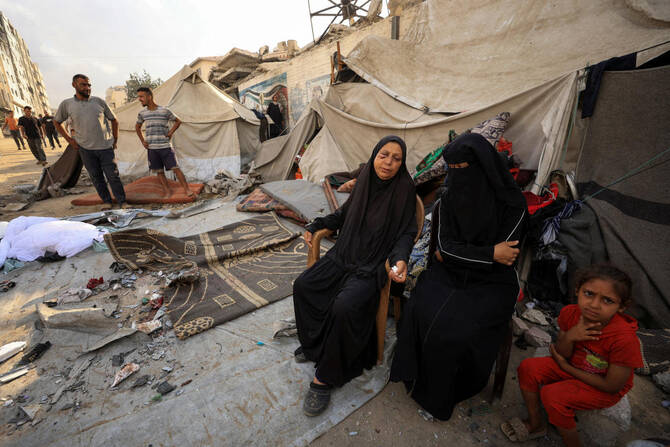
“Many displaced families are living in appalling conditions — some among the rubble of their destroyed homes, others in makeshift tents constructed from tarpaulins and scrap metal,” Sarah Davies, a spokesperson for the International Committee of the Red Cross, told Reuters.
The United Nations Office for the Coordination of Humanitarian Affairs told Reuters separately that humanitarian groups had sent “a limited number of tents” into Gaza in recent weeks, but many more were needed.
Over 1.3 million Gazans currently lack tents, according to the United Nations, and further displacement is anticipated as Israel conducts a major assault on Gaza City, where hundreds of thousands of residents are living among the ruins.
COGAT, the Israeli defense agency that deals with humanitarian issues, told Reuters that 5,000 tents had entered Gaza since restrictions on shelter materials were lifted near the end of August.
Aid organizations say Israel effectively blocked deliveries of materials for shelter for nearly six months, and despite the lifting of the restriction last month, international NGOs such as CARE International, ShelterBox, and the Norwegian Refugee Council reported on Monday they have yet to receive authorization to deliver such materials.
COGAT said: “Every organization that wants to enter tents is absolutely allowed to do so.”
The International Organization for Migration told Reuters it still has about 35,000 tents as well as half a million tarpaulins waiting in Jordan pending customs clearance.
“It’s frustrating. We need political solutions and then you can remove things like customs clearance and then we can move quicker,” said Karl Baker, Regional Crisis Coordinator and head of IOM Gaza Response.
Israel’s assault has reduced much of the enclave to rubble and caused a humanitarian catastrophe. More than 64,000 Palestinians have been confirmed killed, according to health officials in Gaza.
The war began with an assault by Hamas-led fighters on southern Israel in 2023. The attackers killed 1,200 people and took more than 250 hostages to Gaza, according to Israeli tallies.


![]()

Some tents enter Gaza but Red Cross says enclave needs many more
Short Url
https://arab.news/g3nfk
Some tents enter Gaza but Red Cross says enclave needs many more
- In addition to the 300 tents, more than 1,500 are expected to be delivered in coming days, the Red Cross added
- Hundreds of thousands of people desperately need new tents or tarpaulins after months of wear and tear on existing supplies, the Red Cross said


Latest updates


© 2026 SAUDI RESEARCH & PUBLISHING COMPANY, All Rights Reserved And subject to Terms of Use Agreement.