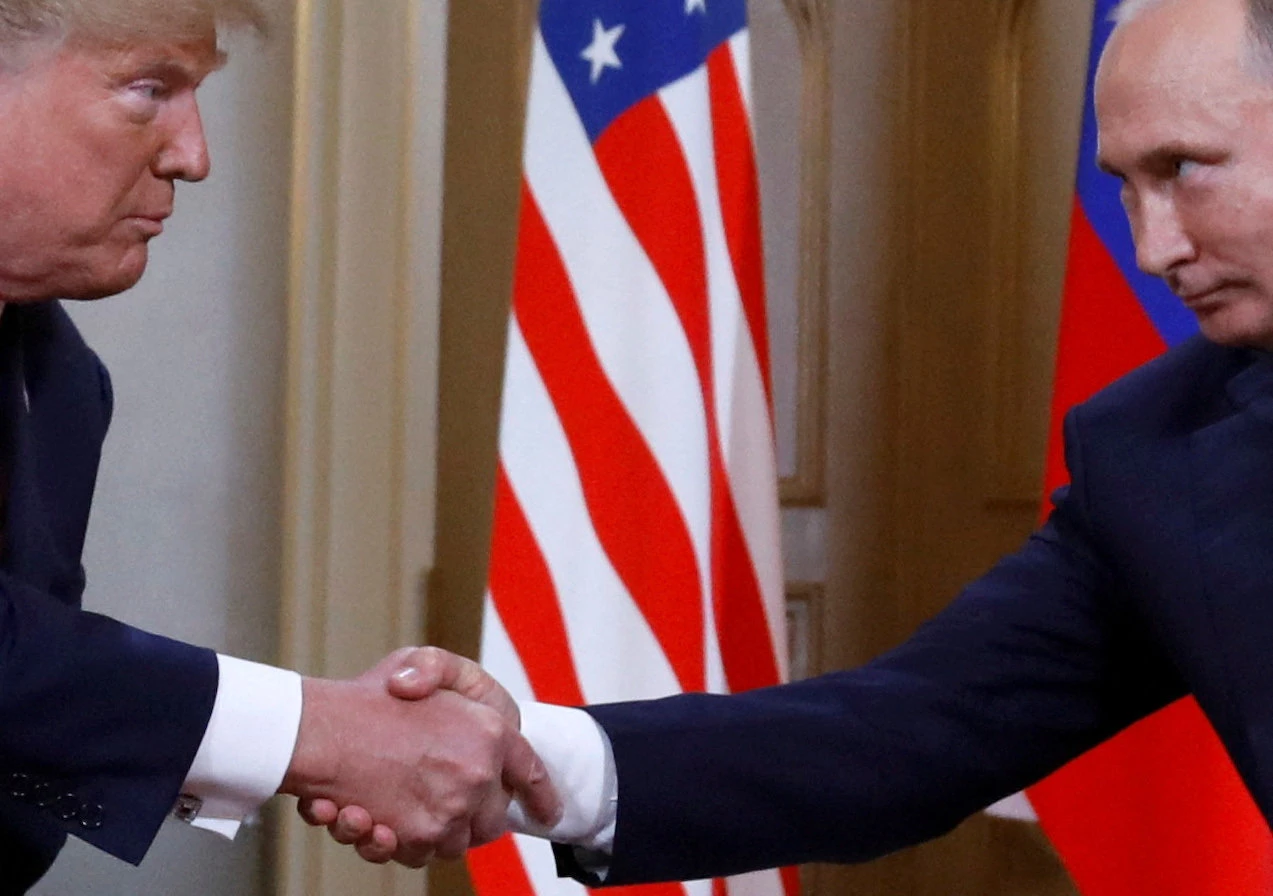
SYDNEY: Australia is expected to pass a law on Thursday making it easier to deport non-citizens to third countries, reviving criticism from human rights groups that it was “dumping” refugees in small island states and drawing comparisons with Trump policies.
As the United States seeks Pacific Island nations willing to accept deported non-citizens, Australia last Friday signed a deal with Nauru to resettle hundreds of people who have been denied refugee visas because of criminal convictions.
The planned new law removes procedural fairness when Australia deports a non-citizen to a third country and is designed to limit court appeals, said the government. It is expected to pass in Australia’s parliament after the opposition Liberal Party said it would support the move.
Australia will pay an upfront A$400 million to establish an endowment fund for the resettlement scheme, plus A$70 million a year in costs, Nauruan President David Adeang said in a budget speech last Friday.
Two-thirds of Nauru’s revenue last year, or A$200 million ($129.96 million), came from hosting an Australian-funded processing center for asylum seekers.
Nauru, which has a population of 12,000 and a land area of just 21 square km (eight square miles), is reliant on foreign aid, and faces a 2025 deadline to repay Taiwan A$43 million ($27.94 million) after switching diplomatic ties to Beijing, according to budget documents.
Under a decade-old policy to discourage people smuggling, Australia sends asylum seekers who arrive by boat to offshore detention centers to have refugee claims assessed, denying them Australian visas. The practice has been criticized by the United Nations Human Rights Committee.
The new Nauru resettlement scheme will cover a different group, whose visas were canceled by Australia because they served prison sentences or were refused visas on character grounds, and cannot return to countries including Iran, Myanmar and Iraq because of the risk of persecution.
Australia’s High Court ruled in 2023 that indefinite immigration detention was unlawful, resulting in around 350 non-citizens being released into the community, with a third subject to electronic monitoring.
One of this group, a 65-year-old Iraqi man, lost a High Court appeal against deportation to Nauru on Wednesday.
Law Council of Australia President Juliana Warner said on Wednesday the deportation law was “troubling” because it could put those sent to Nauru at risk of not receiving necessary health care, and is being rushed through parliament without adequate public scrutiny.
Several independent lawmakers said they were concerned it could be applied more widely than the 350 released by the High Court decision, with up to 80,000 people in the community without a visa.
Home Affairs Minister Tony Burke declined to comment on the 80,000 figure, and has said the law change is needed to maintain the integrity of the migration system.
The move was “absolutely Trump-like,” said Jana Favero, the deputy chief executive of the Asylum Seeker Resource Center.
Independent lawmaker Monique Ryan told parliament she was concerned stateless individuals and refugees who had never been convicted of a crime would be sent offshore without proper oversight, and Australia was “using a small island nation as a dumping ground.”

Australia moves to speed up third country deportation of non-citizens
Short Url
https://arab.news/9te3q
Australia moves to speed up third country deportation of non-citizens
- The planned new law removes procedural fairness when Australia deports a non-citizen to a third country and is designed to limit court appeals, said the government
Iceland joins Eurovision boycott over Israel’s participation
- Decision follows similar moves by Spain, the Netherlands, Ireland and Slovenia over the Gaza war
- Iceland’s national broadcaster says it pulled out 'given the public debate' in the country
LONDON: Iceland’s national broadcaster said Wednesday it will boycott next year’s Eurovision Song Contest because of discord over Israel’s participation, joining four other countries in a walkout of the pan-continental music competition.
Broadcasters in Spain, the Netherlands, Ireland and Slovenia told contest organizer the European Broadcasting Union last week that they will not take part in the contest in Vienna in May after organizers declined to expel Israel over its conduct of the war against Hamas in Gaza.
The board of Iceland’s RÚV met Wednesday to make a decision.
At its conclusion the broadcaster said in a statement that “given the public debate in this country ... it is clear that neither joy nor peace will prevail regarding the participation of RÚV in Eurovision. It is therefore the conclusion of RÚV to notify the EBU today that RÚV will not take part in Eurovision next year.”
“The Song Contest and Eurovision have always had the aim of uniting the Icelandic nation but it is now clear that this aim cannot be achieved and it is on these program-related grounds that this decision is taken,” the broadcaster said.
Last week the general assembly of the EBU — a group of public broadcasters from 56 countries that runs Eurovision — met to discuss concerns about Israel’s participation. Members voted to adopt tougher contest voting rules in response to allegations that Israel manipulated the vote in favor of its competitor, but took no action to exclude any broadcaster from the competition.
The pullouts include some big names in the Eurovision world. Spain is one of the “Big Five” large-market countries that contribute the most to the contest. Ireland has won seven times, a record it shares with Sweden.
Iceland, a volcanic North Atlantic island nation with a population of 360,000, has never won but has the highest per capita viewing audience of any country.
The walkouts cast a cloud over the future of what’s meant to be a feel-good cultural party marked by friendly rivalry and disco beats, dealing a blow to fans, broadcasters and the contest’s finances.
The contest, which turns 70 in 2026, strives to put pop before politics, but has repeatedly been embroiled in world events. Russia was expelled in 2022 after its full-scale invasion of Ukraine.
It has been roiled by the war in Gaza for the past two years, stirring protests outside the venues and forcing organizers to clamp down on political flag-waving.
Opponents of Israel’s participation cite the war in Gaza, where more than 70,000 Palestinians have been killed, according to the territory’s Health Ministry, which operates under the Hamas-run government and whose detailed records are viewed as generally reliable by the international community.
Israel’s government has repeatedly defended its campaign as a response to the attack by Hamas-led militants on Oct. 7, 2023. The militants killed around 1,200 people — mostly civilians — in the attack and took 251 hostage.
A number of experts, including those commissioned by a UN body, have said that Israel’s offensive in Gaza amounts to genocide, a claim Israel has vigorously denied.
Wednesday marked the final day for national broadcasters to announce whether they planned to participate. More than two dozen countries have confirmed they will attend the contest in Vienna, and the EBU says a final list of competing nations will be published before Christmas.
Broadcasters in Spain, the Netherlands, Ireland and Slovenia told contest organizer the European Broadcasting Union last week that they will not take part in the contest in Vienna in May after organizers declined to expel Israel over its conduct of the war against Hamas in Gaza.
The board of Iceland’s RÚV met Wednesday to make a decision.
At its conclusion the broadcaster said in a statement that “given the public debate in this country ... it is clear that neither joy nor peace will prevail regarding the participation of RÚV in Eurovision. It is therefore the conclusion of RÚV to notify the EBU today that RÚV will not take part in Eurovision next year.”
“The Song Contest and Eurovision have always had the aim of uniting the Icelandic nation but it is now clear that this aim cannot be achieved and it is on these program-related grounds that this decision is taken,” the broadcaster said.
Last week the general assembly of the EBU — a group of public broadcasters from 56 countries that runs Eurovision — met to discuss concerns about Israel’s participation. Members voted to adopt tougher contest voting rules in response to allegations that Israel manipulated the vote in favor of its competitor, but took no action to exclude any broadcaster from the competition.
The pullouts include some big names in the Eurovision world. Spain is one of the “Big Five” large-market countries that contribute the most to the contest. Ireland has won seven times, a record it shares with Sweden.
Iceland, a volcanic North Atlantic island nation with a population of 360,000, has never won but has the highest per capita viewing audience of any country.
The walkouts cast a cloud over the future of what’s meant to be a feel-good cultural party marked by friendly rivalry and disco beats, dealing a blow to fans, broadcasters and the contest’s finances.
The contest, which turns 70 in 2026, strives to put pop before politics, but has repeatedly been embroiled in world events. Russia was expelled in 2022 after its full-scale invasion of Ukraine.
It has been roiled by the war in Gaza for the past two years, stirring protests outside the venues and forcing organizers to clamp down on political flag-waving.
Opponents of Israel’s participation cite the war in Gaza, where more than 70,000 Palestinians have been killed, according to the territory’s Health Ministry, which operates under the Hamas-run government and whose detailed records are viewed as generally reliable by the international community.
Israel’s government has repeatedly defended its campaign as a response to the attack by Hamas-led militants on Oct. 7, 2023. The militants killed around 1,200 people — mostly civilians — in the attack and took 251 hostage.
A number of experts, including those commissioned by a UN body, have said that Israel’s offensive in Gaza amounts to genocide, a claim Israel has vigorously denied.
Wednesday marked the final day for national broadcasters to announce whether they planned to participate. More than two dozen countries have confirmed they will attend the contest in Vienna, and the EBU says a final list of competing nations will be published before Christmas.
© 2025 SAUDI RESEARCH & PUBLISHING COMPANY, All Rights Reserved And subject to Terms of Use Agreement.