
LONDON: Journalists in Gaza say fears are mounting that they could be the next targets of Israeli strikes following a smear campaign that links media workers to Hamas.
Several journalists, primarily from Al Jazeera, have reported threats against them on Israeli media and say some have been identified as targets in military statements, prompting some to request anonymity for their safety.
Media watchdogs, including the Committee to Protect Journalists, warn that this Israeli tactic of labeling journalists as Hamas affiliates is designed to “manufacture consent” and justify deadly attacks on the press.
“By labelling journalists and media workers as Hamas operatives, it aimed to legitimize their murder. This is not only dangerous, it is a war crime unleashed through information warfare,” said Sara Qudah, CPJ’s Middle East and north Africa regional director.
Such accusations, often linked to critical reporting on Israeli military operations, reflect a broader pattern to reportedly justify strikes on the press.
“If Israel can kill its most visible reporters without consequence, it signals that no journalist or their family is safe. This sustained targeting of the press is a grave threat to press freedom. The world must act to stop this massacre.”
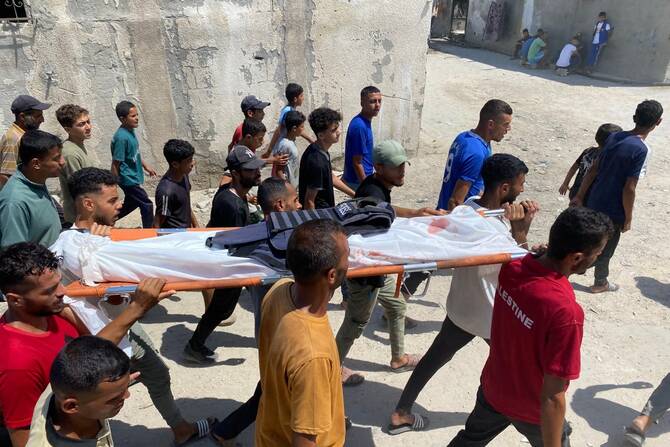
CPJ, Reporters Without Borders, and Al Jazeera have all expressed deep concern for journalists in Gaza who face unfounded allegations and are at imminent risk. The warnings come amid a deadly month for the media; nearly a dozen journalists have been killed in August alone, including Al Jazeera correspondent Anas Al-Sharif and Mariam Dagga of Independent Arabia.
Other victims include Moamen Aliwa, Mohammed Qreiqeh, Mohammed Noufal, Ibrahim Zaher, Mohammed Al-Khaldi, Hossam Al-Masri, Mohammad Salama, Moaz Abu Taha and Ahmed Abu Aziz, all killed in Israeli strikes.
Rights groups say the Israeli military justified the killing of Al-Sharif and others by claiming they were Hamas operatives involved in the Oct. 7 attacks — claims widely dismissed by rights bodies and the international community as “fabricated evidence.”
A similar justification was offered in the strike on Nasser Medical Complex on Aug. 25, where Israel alleged militants used a camera to monitor Israeli forces, leading to further journalist and medic deaths in what was confirmed to be a “double tap” strike, a controversial military tactic designed to maximize casualties.
Israeli media outlet +972 reported the existence of a military “legitimization cell” tasked with portraying Gaza journalists as Hamas militants in an effort to “blunt growing global outrage over Israel’s killing of reporters,” a tactic journalists describe as an attempt to silence the only voices left in Gaza.
One Al Jazeera journalist, Ismail Al-Ghoul — who was killed in an Israeli military claimed targeted killing in July 2024, along with his cameraman, Rami Al-Rifi — was named in military documents as a Hamas operative, although documents cited as evidence were shown to contain inconsistencies, including the fact that he allegedly received military ranks when he was just 10 years old.
At least six Al Jazeera journalists have been targeted using this tactic; two — Al-Sharif and Hossam Shabat — have been killed, and another, Ismail Abu Omar, was critically wounded and evacuated from Gaza earlier this year. Three remain under threat, while others report ongoing social media campaigns against them.
“They are not allowing international journalists in and then are defaming local journalists and justifying ongoing assassinations,” said Tamer Almisshal, a senior presenter at Al Jazeera in Doha who has reported from Gaza for years and faced threats himself.
“What we are saying is very clear: They are trying to kill the only voices and eyes left in Gaza, and they are scaring the others not to work. They give the journalist one choice: If you work, you will be targeted.”
Watchdogs including CPJ, Amnesty International and the UN rapporteur on freedom of expression have warned that this pattern of falsely accusing journalists to justify deadly strikes is escalating.
The Israeli military declined to comment, rejecting accusations of war crimes, but several cases are being reviewed at the International Criminal Court, including the strike that killed Al-Sharif and his colleagues.
In November 2024, the International Court of Justice issued arrest warrants for Israeli officials Benjamin Netanyahu and former defense minister Yoav Gallant as well as former Hamas commanders, citing allegations of war crimes and crimes against humanity.
One journalist in Gaza said: “We live in a state of constant anxiety and real fear that we might be next.”
They added that the targeting of journalists is no longer just exceptional but “a dangerous reality that threatens our lives and targets our message.”
“We call on the international community and journalist protection organizations to take urgent action to provide us with protection, hold those responsible for these crimes accountable, and guarantee our right to work freely and safely in accordance with international conventions,” the reporter said.