DHAKA: Bangladesh’s leader has warned that any deviation from planned elections would be “extremely dangerous,” as violent political rivalries deepen a year after the overthrow of longtime prime minister Sheikh Hasina.
The warning comes after protests in the South Asian nation, which left a key leader hospitalized, with parties vying for power ahead of the first elections since the uprising.
Arguments between parties have escalated, including over who will be able to contest in the polls, scheduled for February, as well as the bid by interim leader Muhammad Yunus to push through a raft of democratic reforms.
“The chief adviser said there is no alternative to an election,” Yunus’ press secretary Shafiqul Alam said late Sunday. “Any deviation from it would be extremely dangerous for the country.”
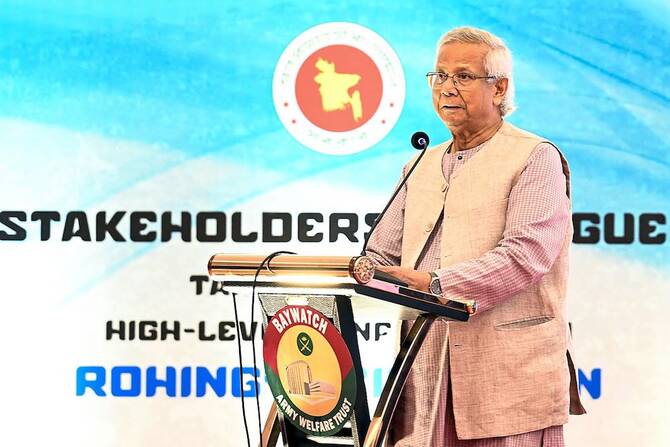
Yunus, the 85-year-old Nobel Peace Prize winner who has been leading the caretaker government as its chief adviser since the August 2024 uprising, held rounds of meetings with key parties on Sunday.
A key recent source of contention is whether the Jatiya Party, seen as a former ally of Hasina, should be allowed to take part in elections.
On Friday, violent clashes erupted in Dhaka when the Gono Odhikar Parishad party held a rally demanding it be banned.
Gono Odhikar Parishad party leader Nurul Haque Nur was badly beaten when the police and military sought to stop the rally.
Jamaat-e-Islami, the main Islamist party in the Muslim-majority nation of 170 million people, has also demanded Jatiya be excluded. Hasina’s Awami League has already been banned.
Violent protests were reported in universities, including at Chittagong University, where around a hundred students were injured on Saturday.
Parties are yet to agree on efforts by Yunus to create a charter for democratic reforms.
Yunus has previously said he inherited a “completely broken down” system of public administration, and that it required a comprehensive overhaul to prevent a future return to authoritarian rule.
A 28-page draft proposes limits on prime ministerial powers to two terms, and the expansion of presidential powers.
Parties are yet to agree on the proposed reforms – and whether they would be legally binding, or even override the existing constitution.


![]()

Bangladesh leader warns ‘extremely dangerous’ if polls derailed
Short Url
https://arab.news/wukuk
Bangladesh leader warns ‘extremely dangerous’ if polls derailed
- A key recent source of contention is whether the Jatiya Party, seen as a former ally of Sheikh Hasina, should be allowed to take part in elections
- Jamaat-e-Islami, the main Islamist party in the Muslim-majority nation of 170 million people, has demanded Jatiya Party be excluded


Latest updates


Recommended


© 2026 SAUDI RESEARCH & PUBLISHING COMPANY, All Rights Reserved And subject to Terms of Use Agreement.