
MOSCOW: The BRICS+ Fashion Summit kicked off this week in Moscow, running from Aug. 28 to 30 at the Zaryadye Concert Hall.
The platform brings together designers, industry leaders and creatives from over 60 countries, with the aim of spotlighting emerging fashion markets and fostering cross-cultural collaboration.
The event features a program of panel discussions, exhibitions and educational events that seek to decentralize the global fashion industry and promote regional diversity, while addressing key topics such as sustainability, innovation and economic opportunity.
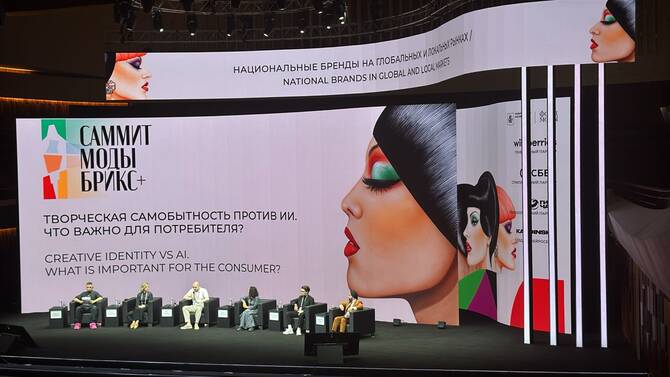
On Friday, a session titled “Creative originality vs. AI: What is important for the consumer” explored how artificial intelligence is reshaping the fashion industry, examining its impact on everything from trend forecasting to design generation.
Panelists discussed how to strike a balance between technological innovation and the emotional value of human-made design, what future skills designers will need, and whether AI can evolve from a mere tool into a true creative collaborator.
Speakers included Maria Shevchenko, creative director of 3D Couture; Karina Diaz Vargas, president and CEO of Costa Rica Fashion Week Forever Green; Emmanuel Muchindu Miyoba, director of Lusaka Fashion Weekend; and Akashdeep Singh, president of the Indian Business Council.
“AI helps in fashion, whether it’s in demand or to avoid mistakes. The spread of operation with the help of AI has sped up. We can launch something new in two weeks and manufacture in a couple of months,” Shevchenko said during the discussion.
Sessions throughout the summit are covering a range of pressing topics shaping the global fashion industry.
The upcoming panel titled “Market privileges: How to attract investors to the fashion industry” will explore strategies for drawing investment into the sector, addressing concerns such as market volatility and trend unpredictability. Speakers are set to discuss what makes fashion appealing to investors, how designers can raise funds without losing control, and which financial tools are most effective.
Another session, “Closed-loop fashion: How to sew, wear, and regenerate,” will focus on the urgent need for sustainability, highlighting the environmental impact of fast fashion and the growing importance of circular production, recycling, and mindful consumer practices.
Also on the agenda is “From gloss to mass market: How styling helps sell,” which will examine the evolving role of stylists as visual storytellers and brand strategists. The panel will look at how styling influences consumer behavior, boosts visibility, and blends luxury with accessibility to drive sales, particularly in the social media space.
A separate panel titled “From logos to meaning: How to build a cultural brand” will explore how branding is shifting in an era of digital saturation. Rather than relying solely on visual symbols, successful brands are now defined by their cultural relevance, shared values and ability to foster communities.
Saturday’s program will feature a range of panels covering key developments in the fashion industry. The session titled “Her rules: Women are the creators of the fashion industry” will spotlight the growing influence of women as leaders, focusing on how they are shaping the Russian market through brand building, education, and innovation.
Another panel, “Anti-trends in education: What to unlearn in fashion,” will explore the evolution of fashion education in response to industry shifts toward AI, 3D design, and sustainability. As programs adopt hybrid models, the session will address the rising demand for cross-disciplinary skills and how automation is transforming future career paths.
The BRICS+ Fashion Summit is taking place alongside Moscow Fashion Week, which runs through Sept. 2. The event offers a multifaceted program that includes runway shows, expert lectures, a fashion market, a business showroom, and the World Fashion Shorts film festival.
The event brings together over 65 designers from Moscow and across Russia, including participants from the Made in Moscow project, an initiative that supports local brands. While more than 40 of the selected brands are based in the capital, designers are also representing cities as far apart as Vladivostok in the far east and Arkhangelsk in the north.
Represented cities include Moscow, Saint Petersburg, Yekaterinburg, Simferopol, Donetsk, Vladivostok, Kazan, and Ulan-Ude, among others.
A key feature of this season’s edition is the Moscow Fashion Week Market, a public-facing retail space located at the Parking Gallery of Zaryadye Park. The market offers visitors the opportunity to shop for exclusive clothing, footwear and accessories created by designers from around 20 Russian cities.