



RIYADH: Aljoharah Albasri is a 32-year-old lawyer in “the energy and infrastructure space” who has been living in New York for the past two years.
What’s the best thing about New York?
At the risk of sounding cliché, it’s the energy. New York has this pulse that makes you feel like you’re part of something bigger. It’s inspiring. You’re constantly surrounded by ambition, culture, and beauty in so many different forms.
And the worst thing?
The chaos. It can get too…. people-y sometimes. There’s always noise, light, and congested streets. You’ve gotta try really hard to relax in the midst of it all.
What’s the general vibe of the city?
People are very career-oriented here, but, at the same time, there’s endless culture around… art, music, exceptional food, history. If I had to summarize the “vibe” in one sentence, it would be: Glamorous yet gritty.
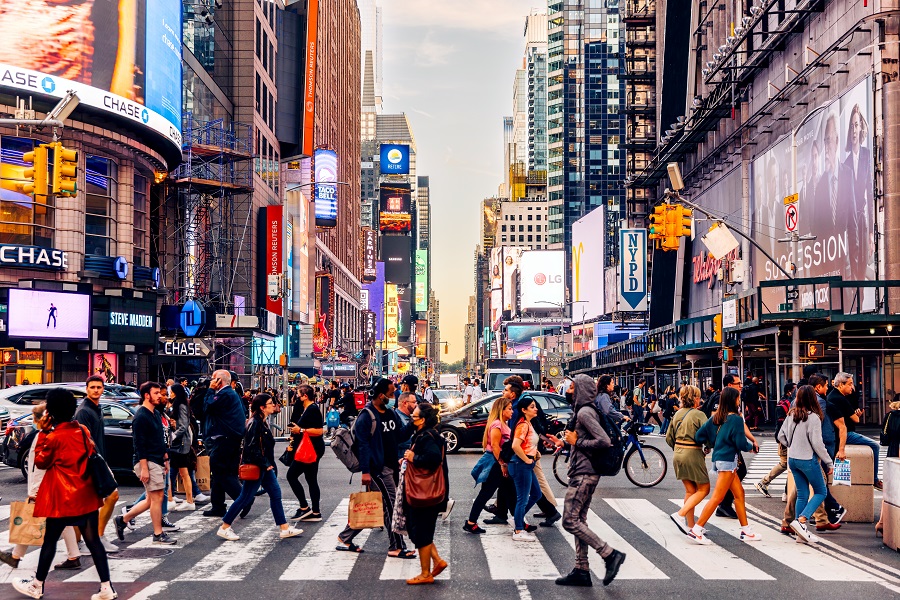
People cross the street in New York’s Times Square. (Getty Images)
Is it expensive to visit?
Oh, definitely. Accommodation and dining can be very pricey, but if you know where to look, you can still find cheaper eats, hidden spots, and neighborhoods that don’t break the bank.
Would you say the city is a good place to travel to with kids?
Parts of it are, yes. Central Park, the museums, the zoos — all great with kids. But, overall, New York isn’t the easiest city for families because of the pace and the crowds.
How easy is it to get around?
The subway is reliable most of the time, but it can be hard to navigate at first. I’d never recommend renting a car here — you’ll just get stuck in traffic and parking can be a nightmare. Walking is my favorite way to see the city. Hitting 10k steps a day doesn’t require planning, especially if the weather is nice.

The Cloisters, part of New York's Metropolitan Museum of Art. (Getty Images)
Would you describe the city as ethnically diverse?
Yes, completely. It’s one of the most diverse cities in the world. You’ll find every culture represented, and people are generally welcoming of multiculturalism.
Would you describe New Yorkers as friendly?
Yes. Not in a chatty, small-towny way — locals here are mostly in a rush — but they’re extremely helpful and will do their best to look out for you when it matters.
Is it an easy place for Muslims to practice their religion?
Yes. There are plenty of halal restaurants, mosques, and communities. There’s a large Arab community in Bay Ride, Brooklyn.
What’s the best time of year to visit, in terms of the weather?
Fall, without a doubt. The weather is perfect, the city looks beautiful with the leaves changing. Winters can be brutal, and summers are sticky.
What’s the most useful phrase to know in the local language?
Honestly, “excuse me,” because you’re constantly squeezing through crowds. Not as “useful,” but iconic nonetheless, is “Fuhgeddaboudit!”
What would you do on your ideal weekend in your city?
For me, it’s brunch at a nice spot in Soho or Noho, a walk and a picnic in Central Park, and then late afternoon Comedy Cellar/dinner in the West Village. If you want more of an outdoors-y day, I’d recommend walking through Conservatory Garden, visiting Salon 94, grabbing ice cream at Glace, and browsing the niche shops around the area like Designer Revival.
Which famous tourist attraction would you recommend people visit?
The Metropolitan Museum of Art. It’s iconic and you can go back a hundred times and still find something new.
What’s the most-overrated tourist attraction?
Times Square. It’s known for its flashing lights and vibrance, but it can feel really congested and not the cleanest part of the city.
What’s New York’s best hidden gem?
I’d say the Cloisters. It’s part of the Met, but tucked away in Upper Manhattan. It feels like stepping into medieval Europe.
What’s your favorite restaurant?
It’s hard to pick one. I’d say the Nines or Minetta Tavern for that old-school New York glamour. Or Kiki’s — a little Greek taverna on the Lower East Side that looks unassuming from the outside, but inside it’s always buzzing.
What’s your favorite store?
Bergdorf Goodman for a classic NYC department store. I also love smaller shops in Soho — Manière De Voir is one of my favorites. Thrifting in Brooklyn can also be fun.

A flea market in Brooklyn. (Getty Images)
Can you pick three places that people should definitely visit if they come to New York?
The New York Public Library — it’s stunning inside; the Whitney Museum for modern art and rooftop views; and a Broadway or Off-Broadway show is a must in New York.
What’s the best hotel in the city?
If you’re opting for five-star hotels: the Aman, The Twenty Two or the Ned are excellent choices. Equinox is great location-wise for business trips. There are beautiful boutique hotels too, like The Marlton and The Bowery.
Which neighborhood would you recommend people look for accommodation in?
Flatiron / NoMad in Midtown Manhattan is great because it’s central but, at the same time, not as hectic as Times Square and the Theatre District. And if you’ve already visited NYC and want to skip the touristy experience, I’d go for Williamsburg in Brooklyn.


