

Saudi, Hong Kong youths reimagine cultural exchange in digital era

1 / 3
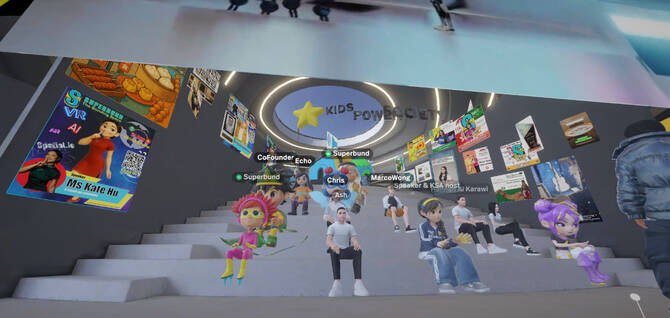
The virtual cultural exchange initiative, called Superbund Bonding Space, was the first of its kind led by teenagers. (Supplied)
2 / 3
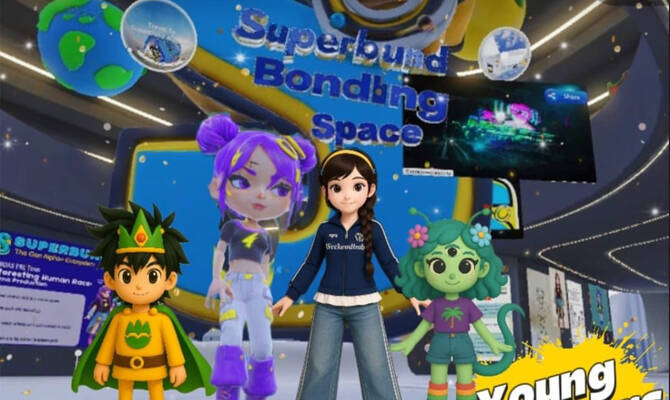
The virtual cultural exchange initiative, called Superbund Bonding Space, was the first of its kind led by teenagers. (Supplied)
3 / 3
The virtual cultural exchange initiative, called Superbund Bonding Space, was the first of its kind led by teenagers. (Supplied)
Short Url
Updated 28 August 2025
Follow

Saudi, Hong Kong youths reimagine cultural exchange in digital era

  • 76 students step into a virtual reality designed to strengthen cultural ties

ALKHOBAR: Seventy-six students from Saudi Arabia and Hong Kong recently stepped into the metaverse, showing how young people are building bridges across borders through technology.

What began as a student-led experiment quickly turned into a cultural-exchange platform that impressed even seasoned diplomats.

When avatars filled the digital stage of the event that was livestreamed on Instagram on Aug. 21, Alaudeen Alaskary, former Saudi Arabia consul general in Hong Kong, said he was surprised.

“I never would have believed that tech can strengthen bonds of humanity,” he said.

The Aug. 21 initiative, called Superbund Bonding Space, was the first of its kind led by teenagers. It was founded and organized by Alia Kong, 14, founder of Kids Power Society and creator of Superbund, who initiated the world’s first virtual cultural exchange led by teens.

The event also featured students from Hong Kong Baptist University Affiliated School and Al-Faris International School in Riyadh. 

Inside this virtual world, students designed avatars, held workshops, and staged esports tournaments.

The virtual society was hosted on the metaverse platform Spatial.io, where they logged in as digital avatars to interact in real time.

They shared Saudi Arabia traditions, performed Hong Kong stand-up comedy, and demonstrated how this type of diplomacy can thrive in the digital age.

Educators and business leaders praised the initiative.

“I fully support the young generation to proceed their futures and (who have) found their identity and purpose,” said Aaron Shum, head of the Hong Kong Middle East Business Chambers.

Tommy Wong, co-head of student management at Hong Kong Baptist University Affiliated School, praised the Kingdom for its transformation.

“I’m fascinated by Saudi Arabia’s transformative journey, particularly through Vision 2030, which drives economic diversification and cultural openness.

“The booming esports scene, with events like the Esports World Cup in Riyadh, showcases the country’s embrace of modern entertainment, uniting global gamers in a vibrant, tech-driven atmosphere.”

But the most powerful voices came from the students themselves.

For Linda Al-Faisal, a 14-year-old podcaster in Riyadh, it was an “inspiring” exchange. “It felt like stepping into the future, seeing tech erase borders and empower young people to connect globally.

“This exchange wasn’t just an event; it was a promise that the next gen will lead global unity and innovation.”

“I love esports and was so excited to create my own game player,” said Charles Chen, a grade nine student in Hong Kong. “Seeing it can really run on game platform and own the identity is totally awesome.”

“I designed my own Avatar and she is on Spatial,” said Cherene Ho, a 9-year-old student from Hong Kong. “I love to share my idea of building a bubble in the bonding space with others. It will make others feel safe.”

“Have you ever felt like the whole world was right at your fingertips? Today, it truly is,” said Ammar Al-Thawab, a grade 10 student at Al-Faris International School.

“The Superbund event captured the spirit of exchange, offering more than just preset talks. It created a space where people of all ages could connect, exchange ideas, and genuinely understand one another.”

For teachers in Riyadh, the bigger lesson was about youth empowerment.

“Our students were pleasantly surprised to discover that this entire event was created for young adults by young adults,” said Mish’al Sammans, principal of Al-Faris International School.

“That, for me, is the real takeaway — to show them that you don’t always have to wait around for parents or grown-ups to make things happen.”

From seasoned diplomats to schoolchildren designing avatars, the message of the day was clear: the metaverse is no longer just about games.

In the hands of Generation Alpha, it is becoming a tool for global friendship, one that can turn a virtual handshake into real bridges between nations.


Hail’s Madafa guesthouses open doors to friends and strangers throughout Ramadan

Updated 20 sec ago
Follow

Hail’s Madafa guesthouses open doors to friends and strangers throughout Ramadan

  • There are many madafas in Hail, which is the home of Hatem Al-Tai, the historical ruler of the area whose name has become a byword in Arabic for generosity
  • Events held during the month include group iftar dinners, guest speakers who talk about Ramadan values, prayer sessions, and various charitable initiatives

RIYADH: Madafas, or guesthouses, in the northern Saudi city of Hail begin to welcome visitors of all ages and walks of life after Isha prayer during Ramadan.

Many of them may not even be invited, yet they attend knowing that the host’s doors are open to everyone.

There are many madafas in Hail, which is the home of Hatem Al-Tai, the historical ruler of the area whose name has become a byword in Arabic for generosity.

Among the most prominent of them are the madafas of Al-Na’am and Al-Ebedah.

The gate of the madafa is typically large and remains open most hours of the day, except during Ramadan when it opens just before the Maghrib afternoon prayer and remains open until the Fajr prayer in the early hours of the morning.

Supervisor Mohammed Al-Na’am spoke to Arab News about his preparations for hosting guests during the holy month.

He has set up soft lighting and a special corner for the Qur’an and Dhikr (remembrance) so that the madafa is perfectly prepared to offer comfort and tranquility, welcoming guests into a distinctive Ramadan atmosphere.

He believes that the madafa contributes to promoting a spirit of solidarity by being open to everyone without discrimination and encouraging simple initiatives such as donating, helping those in need or adopting a collective charitable cause.

Events held during the month include group iftar dinners, guest speakers who talk about Ramadan values, prayer sessions, and various charitable initiatives.

When the weather is mild, guests sit in the courtyard around the fire on wooden chairs adorned with traditional cotton-stuffed fabric.

In cases of extreme cold or hot weather, guests sit on floor cushions inside a richly-decorated majlis or a large tent.

The guest usually eats one or two dates, after which the coffee server approaches, offering a cup of coffee filled enough for about three sips.

It is considered rude for a guest to refuse coffee, and it is socially unacceptable to stop after just one cup.

Guests must drink at least two cups, and when they have finished, they shake the cup to indicate that they have had enough.

If the visitor is a stranger to the host’s family, the host will insist that they drink more coffee, and the guest has the choice to accept or decline.

The coffee maker then returns to his secluded spot at the end of the majlis behind several coffee pots, teapots, and at least one plate of dates.

He then returns carrying the teapot and an empty teacup until he approaches the guest, allowing the guest to refuse the tea or remain silent, indicating his agreement to drink the tea.

The walls of the madafa are usually decorated with pictures of the host’s ancestors, and the hall is usually decorated with motifs reflecting the local Hail character.

Those present make sure that the guest, especially a stranger, sits next to the marka or armrest so he may recline comfortably.

During Ramadan, it is customary for the conversation to focus on spiritual topics, charity, and stories of patience and concern for the poor, the needy and those who are struggling to pay their debts.