

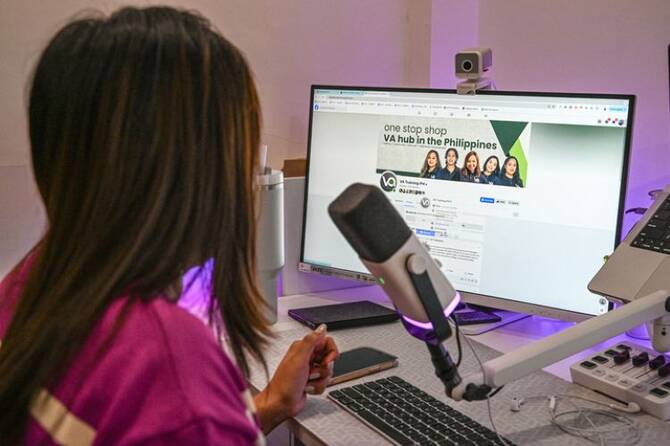

MANILA: Filipino virtual assistants are emerging as a new sector in overseas work, with more than 1 million believed to be serving foreign clients online, from their homes in the Philippines.
The Philippine Department of Labor and Employment defines a virtual assistant as “a self-employed worker who specializes in offering administrative services to clients from a remote location, usually a home office,” and the typical tasks as “scheduling appointments, making phone calls, making travel arrangements, and managing email accounts.”
The trend has been fueled by the practice of remote work during the COVID-19 pandemic. While in many other Asian countries, people started to return to the office, Filipinos, due to their English skills started to find employers abroad.
In its 2023 advisory, the DoLE estimated that 1 out of 8 million virtual assistants on the global freelancing platform Upwork were from the Philippines. By 2025, that number could reach 1.5 million, according to HireTalent.ph — a service launched in response to the sector’s boom.
“Post-COVID things went up, because a lot of companies shifted online and wanted to build a remote-first workforce. The Philippines was a great place because of affordability, time zone ... great English skills, cultural adaptability with Western standards,” Justin Gluska, HireTalent.ph CEO and founder, told Arab News.
Filipino virtual assistants work for both individual clients and small companies, mainly in the US, UK, and Australia, but interest has been growing as well in Gulf countries, where more than 2 million Filipinos live and work.
“Markets in the Middle East are definitely becoming popular. We’re seeing a big influx in our UAE registrations. Employers with businesses there are starting to hire more and more in the Philippines,” Gluska said.
“The Middle East is great because the time zone difference is very good compared to most other regions in the world.”
Working from home and saving time and money on commuting — especially in traffic-heavy cities such as Manila — virtual assistants can comparatively earn more than their office-based peers.
Angel Cuala, operations lead at HireTalent.ph, estimates that the lowest pay for virtual assistants is around $34 per day, compared with the government-set minimum daily wage of about $12 in the country’s capital region.
But the job comes with no insurance, benefits and guarantees.
“Comparatively, VAs earn much more than those in local office jobs. Yet, we should understand that many VAs are offered to work part-time only, so they often seek a second client,” Cuala said. “Let’s also not forget that many clients don’t give 13th-month pay and other benefits.”
What this form of employment gives, especially to young talent, is a sense of freedom and flexibility.
Keziah Mendoza, a 20-year-old from Mindoro province, has been working as a virtual assistant for over a year now. She chose the job after the example of her mother, who worked in the business before it became a trend.
“A friend introduced her to Craigslist, which at the time was a good place to find online jobs. As I grew up, I saw how working online gave her the freedom to travel, spend time with family, and pursue hobbies while still earning a living. That kind of flexibility inspired me to do the same,” Mendoza said.
For now and at her age, what the job offers is enough for her to live comfortably, with the only challenges being occasional problems with internet or power interruptions during typhoons.
“I haven’t worked in a traditional office job, but working online has given me a great deal of freedom,” she said. “Like my mom, I can travel, spend time with my family, and enjoy hobbies or time with friends, all while working from home.”


