

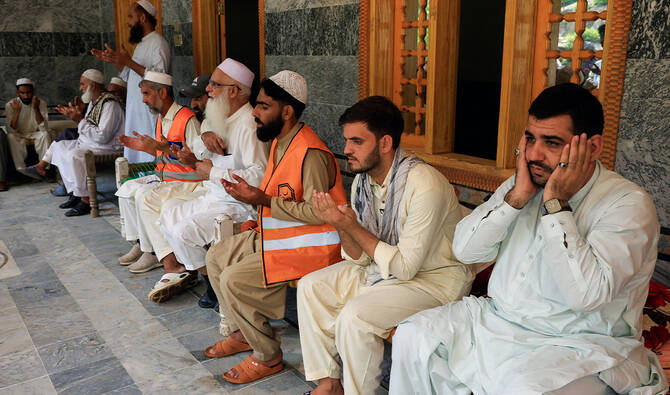

QADIR NAGAR, Pakistan: Two days before his wedding, Noor Muhammad had a long phone call with his mother, just hours before devastating floods in Pakistan killed her along with 23 family members and relatives.
“I cannot explain how happy she was,” he said standing by the rubble of his family’s large 36-room house, perched on the bank of a flood water channel in Qadir Nagar village.
The village in mountainous Buner district has been the worst hit by recent massive rain in the country, accounting for over 200 deaths out of nearly 400 in floods in the northwest since August 15.
Buner is a three-and-a-half-hour drive from the capital Islamabad.
“Everything was finished,” sobbed Muhammad, 25, as mourners sat at his damaged house to offer condolences, saying there was nothing left when he got home except for rubble and heavy rocks, which swept down from the mountains along with mud and raging flood waters, smashing into houses, markets and buildings.
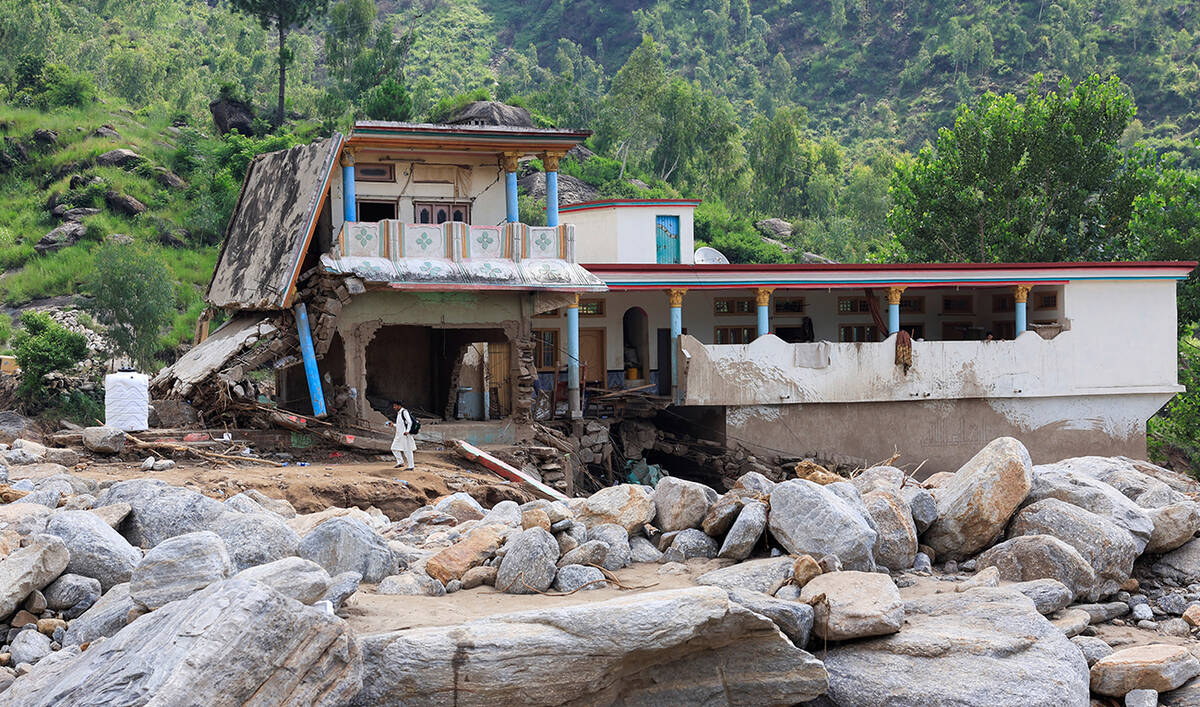
A view of the damaged family house of Noor Muhammad, 25, who lost 24 family members and relatives, which was hit by devastating floods in the mountainous Qadir Nagar village of Buner district, Khyber Pakhtunkhwa province, Pakistan, August 21, 2025. (REUTERS)
“The flood came, a huge flood came, it swept away everything, home, mother, sister, brother, my uncle, my grandfather and children.”
Muhammad works as a laborer in Malaysia. He arrived at the Islamabad airport on August 15 to drive home where his wedding preparations were in full swing for two days later.
Instead, he attended 24 funerals.
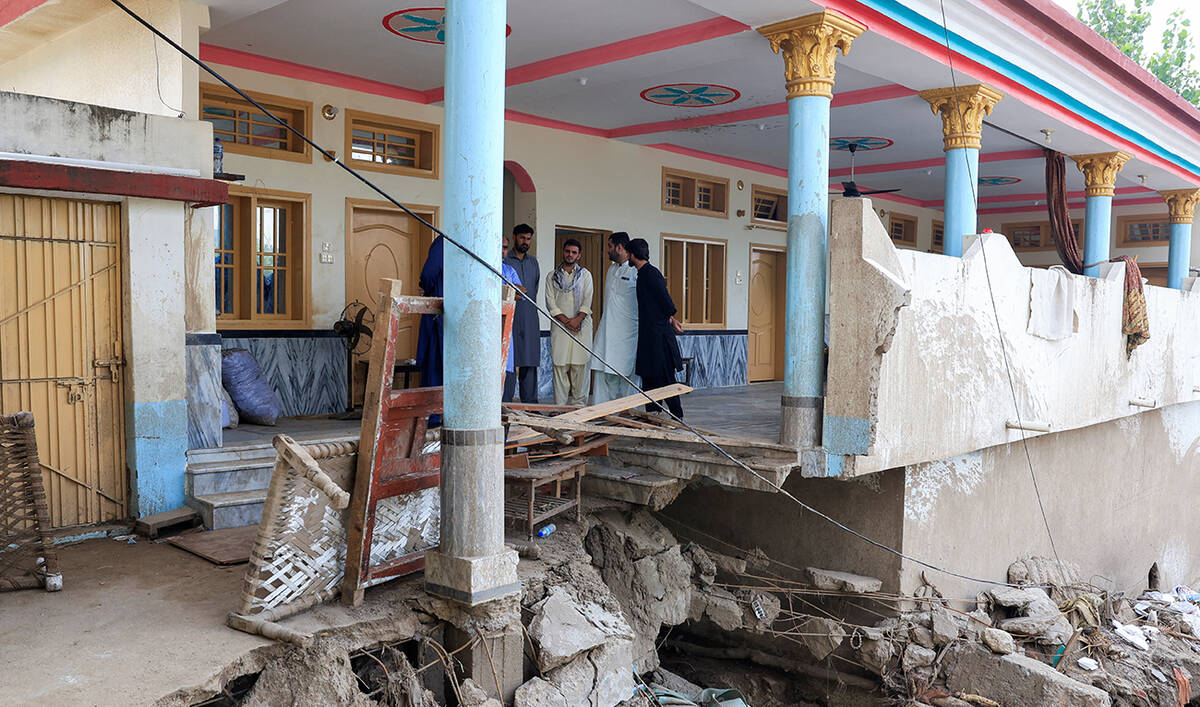
Noor Muhammad, 25, (3rd R) who lost 24 family members and relatives, stands at his damaged 36-room family house which was hit by devastating floods in the mountainous Qadir Nagar village of Buner district, Khyber Pakhtunkhwa province, Pakistan, August 21, 2025. (REUTERS)
They included his mother, a brother and a sister, he said, adding that his father and another brother survived because they had gone to pick him up at the airport.
The rest of the fatalities were among his uncles’ families who shared the house built by his grandfather, and relatives who are attending his marriage.

Noor Muhammad, 25, who lost 24 family members and relatives, pauses while speaks about his mother as he stands by the rubble of his 36-room house which was hit by devastating floods in the mountainous Qadir Nagar village of Buner district, Khyber Pakhtunkhwa province, Pakistan, August 21, 2025. (REUTERS)
His fiance survived. Her home was away from the worst of the damage.
DEVASTATING FLASH FLOODS
The flash floods triggered by the worst of this year’s monsoon and cloudbursts, which started in the mountainous northwest have spread to other parts of the country of 240 million, bringing death and destruction at a large scale.
Authorities have said the longer spell of heavy rain and rare cloudbursts were rooted in climate change due to global warming, fearing the intensity will increase in the coming years.
“We and our elders have never seen a storm like this in our lives,” said Muhammad Zeb, 28, a resident in Buner. It was a complete chaos, and massive disaster, he added.
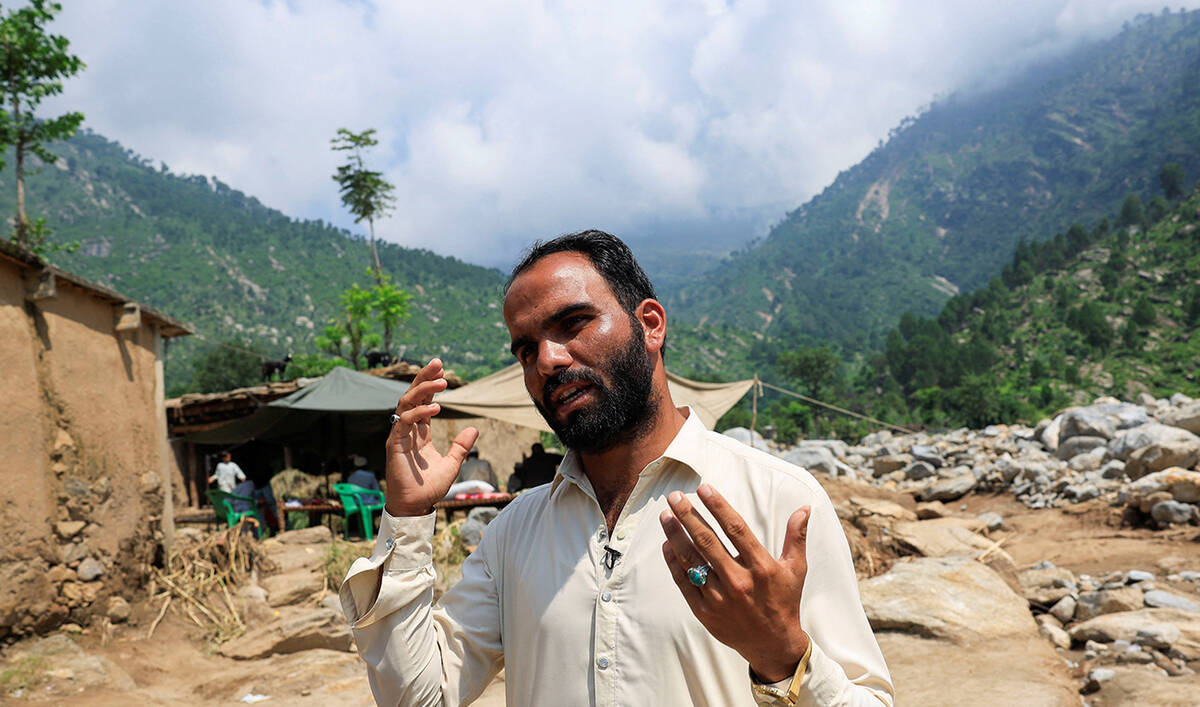
Muhammad Zaib, 28, speaks with Reuters outside his cousin's house, days after devastating floods in the mountainous Qadir Nagar village of Buner district, Khyber Pakhtunkhwa province, Pakistan, August 21, 2025. (REUTERS)
“You can see for yourself, this was a beautiful place with homes. But now, as you can see, the flood and storm have swept everything away.”
An unknown number of people remain missing, with dead bodies still being recovered, officials said.
The overall death toll across the country in the monsoon rains which began in late June stood at 776, according to the National Disaster Management Authority, which said more than 25,000 people had been rescued in the northwest.
The army and air force have joined the rescue and relief efforts.
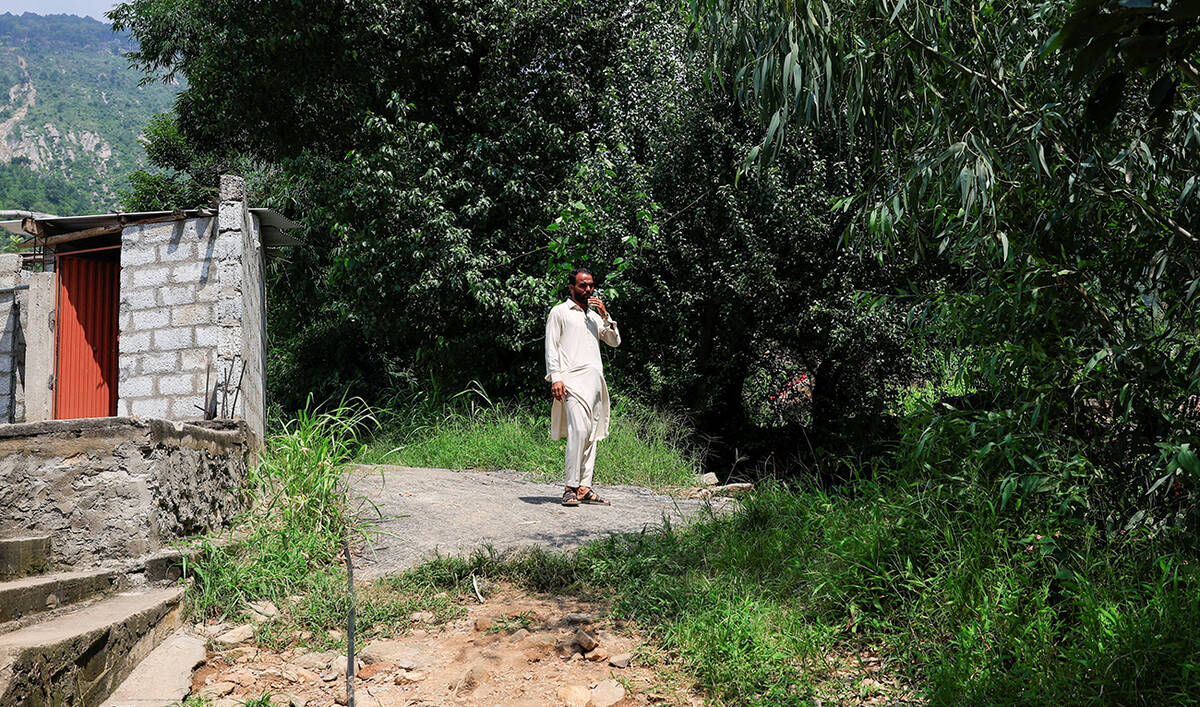
Muhammad Zaib, 28, stands outside his home, days after devastating floods in the mountainous Qadir Nagar village of Buner district, Khyber Pakhtunkhwa province, Pakistan, August 21, 2025. (REUTERS)
Officials have warned of more storms ahead with another two spells of monsoon rain expected until September 10.
Buner received more than 150 mm (5.91 inches) of rain within an hour triggered by a cloudburst in the single most destructive event in this monsoon season.
A cloudburst is a rare phenomenon where more than 100mm (3.9 inches) of rainfall within an hour in a small area.
Only four people of the 28 in his house survived, Muhammad said.
“What else can we say? It’s God’s will,” he said.


