

ADB approves $410 million for Pakistan copper-gold mine

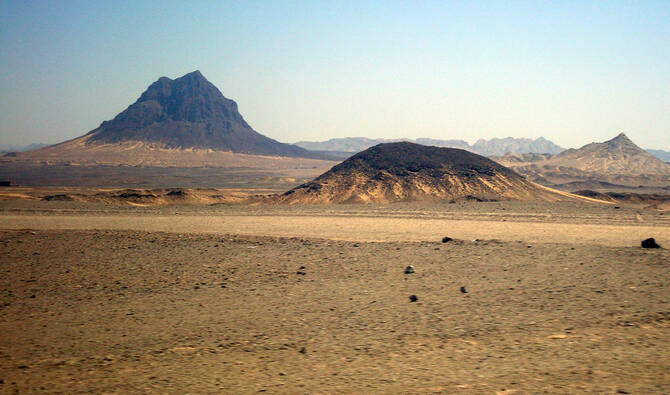
The hills near the proposed site of the Reko Diq copper mine in Pakistan's province of Balochistan are seen in this undated 2010 photo. (Reuters/File)
Short Url
Updated 31 August 2025
Follow

ADB approves $410 million for Pakistan copper-gold mine

  • Reko Diq is expected to start production by 2028 and become the world’s fifth-largest copper mine
  • Civil society groups have raised concerns over the project’s impact on human rights, environment

ISLAMABAD: The Asian Development Bank approved a $410 million package for developing Pakistan’s Reko Diq copper and gold mine on Friday, as the country’s rare earth deposits draw foreign interest and human rights concerns.

The potentially hugely lucrative open-pit project in Pakistan’s Balochistan province seeks to develop one of the world’s largest untapped copper and gold deposits, with production expected to start in 2028.

For decades, Pakistan has battled a separatist insurgency in the mineral-rich southern province, where foreign-backed energy projects — mostly Chinese-operated — have come under attack.

The ADB package includes $300 million in loans to Canadian firm Barrick and a $110 million credit guarantee for the local government.

When completed, Reko Diq is projected to be the world’s fifth-largest copper mine, a metal critical for wiring, motors and renewable energy technology.

“Reko Diq will help the critical minerals supply chain, while advancing the clean energy transition and driving digital innovation,” ADB President Masato Kanda said in a statement.

Kanda called the package “a game-changer for Pakistan... underpinning the nation’s transition toward a more resilient and diversified economy.”

Activists have criticized the Reko Diq project in Balochistan, where the insurgency has in part been fueled by resentment over the division of spoils from natural resource extraction.

While Balochistan is rich in hydrocarbons and minerals, 70 percent of its 15 million inhabitants live below the poverty line.

Three dozen civil society groups called on the ADB as well as the International Finance Corporation to postpone investing in the Reko Diq mine.

“This project risks exacerbating the insecurity of human rights defenders and contributing to environmental and social destruction,” the groups, including MiningWatch Canada and the Asia-Pacific Network of Environmental Defenders, wrote in an open letter published Tuesday.

Barrick defended its mining practices in a statement emailed to AFP.

“Barrick is committed to responsible mining and sharing the benefits of its operations with local stakeholder and partners, based on open and transparent engagement and the highest environmental and social safeguards,” it said.

Pakistan’s military chief has recently sought to play up the country’s potential as a minerals and rare earths hub, touting them while negotiating trade tariffs with US President Donald Trump’s administration.

Pakistani officials have long promoted the Reko Diq project as a cornerstone of the country’s economic revival strategy.

Despite its potential, the mine has advanced slowly over the years, waylaid by legal disputes, bureaucratic complications and divisions between federal and provincial authorities.



Islamabad dismisses claims about paying up to 8 percent interest on foreign loans as ‘misleading’

Updated 22 February 2026
Follow

Islamabad dismisses claims about paying up to 8 percent interest on foreign loans as ‘misleading’

  • Pakistan has long relied on external loans to help bridge persistent gaps in public finances and foreign exchange reserves
  • Pakistan’s total external debt, liabilities stand at $138 billion at an overall average cost of around 4 percent, ministry says

KARACHI: Pakistan’s finance ministry on Sunday dismissed as “misleading” claims that the country is paying up to 8 percent interest on external loans, saying the overall average cost of external public debt is approximately 4 percent.

Pakistan has long relied on external loans to help bridge persistent gaps in public finances and foreign exchange reserves, driven largely by a narrow tax base, chronic trade deficits, rising debt-servicing costs and repeated balance-of-payments pressures.

Over the decades, successive governments have turned to multilateral and bilateral lenders, including the International Monetary Fund, the World Bank and the Asian Development Bank, to support budgetary needs and shore up foreign exchange reserves.

The finance ministry on Sunday issued a clarification in response to a “recent press commentary” regarding the country’s external debt position and associated interest payments, and said the figures required contextual explanation to ensure accurate understanding of Pakistan’s external debt profile.

“Pakistan’s total external debt and liabilities currently stand at $138 billion. This figure, however, encompasses a broad range of obligations, including public and publicly guaranteed debt, debt of Public Sector Enterprises (both guaranteed and non-guaranteed), bank borrowings, private-sector external debt, and intercompany liabilities to direct investors. It is therefore important to distinguish this aggregate figure from External Public (Government) Debt, which amounts to approximately $92 billion,” it said.

“Of the total External Public Debt, nearly 75 percent comprises concessional and long-term financing obtained from multilateral institutions (excluding the IMF) and bilateral development partners. Only about 7 percent of this debt consists of commercial loans, while another 7 percent relates to long-term Eurobonds. In light of this composition, the claim that Pakistan is paying interest on external loans ‘up to 8 percent’ is misleading.

The overall average cost of External Public Debt is approximately 4 percent, reflecting the predominantly concessional nature of the borrowing portfolio.”

With respect to interest payments, public external debt interest outflows increased from $1.99 billion in Fiscal Year (FY) 2022 to $3.59 billion in FY2025, representing an increase of 80.4 percent, not 84 percent as reported. In absolute terms, interest payments rose by $1.60 billion over this period, not $1.67 billion, it said.

According to the State Bank of Pakistan’s records, Pakistan’s total debt servicing payments to specific creditors during the period under reference were as follows: the IMF received $1.50 billion, of which $580 million constituted interest; Naya Pakistan Certificates payments totaled $1.56 billion, including $94 million in interest; the Asian Development Bank received $1.54 billion, including $615 million in interest; the World Bank received $1.25 billion, including $419 million in interest; and external commercial loans amounted to nearly $3 billion, of which $327 million represented interest payments.

“While interest payments have increased in absolute terms, this rise cannot be attributed solely to an expansion in the debt stock,” the ministry said. “Although the overall debt stock has increased slightly since FY2022, the additional inflows have primarily originated from concessional multilateral sources and the IMF’s Extended Fund Facility (EFF) under the ongoing IMF-supported program.”

Pakistan secured a $7 billion IMF bailout in Sept. 2024 as part of Prime Minister Shehbaz Sharif’s efforts to stabilize the South Asian economy that narrowly averted a default in 2023. The government has since been making efforts to boost trade and bring in foreign investment to consolidate recovery.

“It is also important to note that the increase in interest payments reflects prevailing global interest rate dynamics. In response to the inflation surge of 2021–22, the US Federal Reserve raised the federal funds rate from 0.75-1.00 percent in May 2022 to 5.25–5.50 percent by July 2023. Although rates have since moderated to around 3.75 percent, they remain significantly higher than 2022 levels,” the finance ministry said.

“The government remains committed to prudent debt management, transparency, and the continued strengthening of Pakistan’s macroeconomic stability,” it added.