ADB approves $410 million for Pakistan copper-gold mine

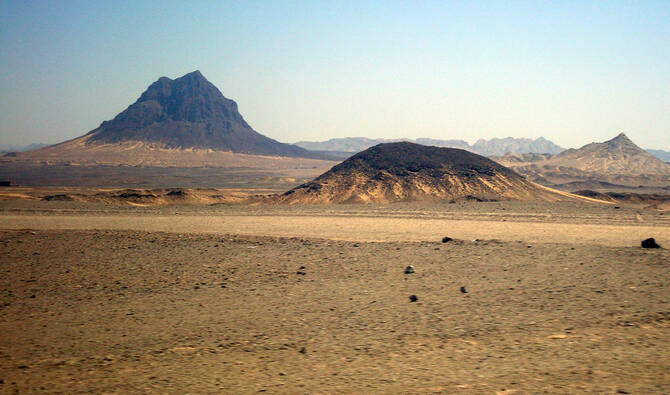
The hills near the proposed site of the Reko Diq copper mine in Pakistan's province of Balochistan are seen in this undated 2010 photo. (Reuters/File)
Short Url
Updated 31 August 2025
Follow

ADB approves $410 million for Pakistan copper-gold mine

  • Reko Diq is expected to start production by 2028 and become the world’s fifth-largest copper mine
  • Civil society groups have raised concerns over the project’s impact on human rights, environment

ISLAMABAD: The Asian Development Bank approved a $410 million package for developing Pakistan’s Reko Diq copper and gold mine on Friday, as the country’s rare earth deposits draw foreign interest and human rights concerns.

The potentially hugely lucrative open-pit project in Pakistan’s Balochistan province seeks to develop one of the world’s largest untapped copper and gold deposits, with production expected to start in 2028.

For decades, Pakistan has battled a separatist insurgency in the mineral-rich southern province, where foreign-backed energy projects — mostly Chinese-operated — have come under attack.

The ADB package includes $300 million in loans to Canadian firm Barrick and a $110 million credit guarantee for the local government.

When completed, Reko Diq is projected to be the world’s fifth-largest copper mine, a metal critical for wiring, motors and renewable energy technology.

“Reko Diq will help the critical minerals supply chain, while advancing the clean energy transition and driving digital innovation,” ADB President Masato Kanda said in a statement.

Kanda called the package “a game-changer for Pakistan... underpinning the nation’s transition toward a more resilient and diversified economy.”

Activists have criticized the Reko Diq project in Balochistan, where the insurgency has in part been fueled by resentment over the division of spoils from natural resource extraction.

While Balochistan is rich in hydrocarbons and minerals, 70 percent of its 15 million inhabitants live below the poverty line.

Three dozen civil society groups called on the ADB as well as the International Finance Corporation to postpone investing in the Reko Diq mine.

“This project risks exacerbating the insecurity of human rights defenders and contributing to environmental and social destruction,” the groups, including MiningWatch Canada and the Asia-Pacific Network of Environmental Defenders, wrote in an open letter published Tuesday.

Barrick defended its mining practices in a statement emailed to AFP.

“Barrick is committed to responsible mining and sharing the benefits of its operations with local stakeholder and partners, based on open and transparent engagement and the highest environmental and social safeguards,” it said.

Pakistan’s military chief has recently sought to play up the country’s potential as a minerals and rare earths hub, touting them while negotiating trade tariffs with US President Donald Trump’s administration.

Pakistani officials have long promoted the Reko Diq project as a cornerstone of the country’s economic revival strategy.

Despite its potential, the mine has advanced slowly over the years, waylaid by legal disputes, bureaucratic complications and divisions between federal and provincial authorities.



Pakistan reports current account surplus in Jan. owing to improved trade, remittances

Updated 17 February 2026
Follow

Pakistan reports current account surplus in Jan. owing to improved trade, remittances

  • Pakistan’s exports crossed the $3 billion mark in Jan. as the country received $3.5 billion in remittances
  • Last month, IMF urged Pakistan to accelerate pace of structural reforms to strengthen economic growth

ISLAMABAD: Pakistan recorded a current account surplus of more than $120 million in January, the country’s finance adviser said on Tuesday, attributing it to improved trade balance and remittance inflows.

Pakistan’s exports rebounded in January 2026 after five months of weak performance, rising 3.73 percent year on year and surging 34.96 percent month on month, according to data released by the country’s statistics bureau.

Exports crossed the $3 billion mark for the first time in January to reach $3.061 billion, compared to $2.27 billion in Dec. 2025. The country received $3.5 billion in foreign remittances in Jan. 2026.

Khurram Schehzad, an adviser to the finance minister, said Pakistan reported a current account surplus of $121 million in Jan., compared to a current account deficit of $393 million in the same month last year.

“Improved trade balance in January 2026, strong remittance inflows, and sustained momentum in services exports (IT/Tech) continue to reinforce the country’s external account position,” he said on X.

Pakistan has undergone a difficult period of stabilization, marked by inflation, currency depreciation and financing gaps, and international rating agencies have acknowledged improvements after Islamabad began implementing reforms such as privatizing loss-making, state-owned enterprises (SOEs) and ending subsidies as part of a $7 billion International Monetary Fund (IMF) loan program.

Late last month, the IMF urged Pakistan to accelerate the pace of these structural reforms to strengthen economic growth.

Responding to questions from Arab News at a virtual media roundtable on emerging markets’ resilience, IMF’s director of the Middle East and Central Asia Jihad Azour said Islamabad’s implementation of the IMF requirements had been “strong” despite devastating floods that killed more than 1,000 people and devastated farmland, forcing the government to revise its 4.2 percent growth target to 3.9 percent.

“What is important going forward in order to strengthen growth and to maintain the level of macroeconomic stability is to accelerate the structural reforms,” he said at the meeting.

Azour underlined Pakistan’s plans to privatize some of the SOEs and improve financial management of important public entities, particularly power companies, as an important way for the country to boost its capacity to cater to the economy for additional exports.

“This comes in addition to the effort that the authorities have made in order to reform their tariffs, which will allow the private sector of Pakistan to become more competitive,” the IMF official said.